

Republic Day on January 26 marks India’s adoption of its Constitution in 1950, celebrated with a grand parade on Kartavya Path in New Delhi. The event showcases military strength, cultural diversity, and national pride through marching contingents, tableaux, fly-pasts, and unique displays. In 2026, the 77th Republic Day parade featured several firsts, including a dedicated animal contingent from the Indian Army’s Remount and Veterinary Corps (RVC). This historic inclusion drew widespread attention, especially videos of animals like dogs, camels, and ponies participating.
Viral clips showing dogs with flags, animals marching in formation, or humorous animal behaviors have circulated online, often with captions claiming they are part of the official parade or adding patriotic fun. Some videos appear edited for comedy, raising questions about authenticity. This matters because Republic Day is a solemn national event, and distinguishing official elements from fan-made content prevents misinformation, preserves the dignity of the occasion, and respects the real contributions of animals in the armed forces.
Historically, animals have supported Indian military operations for centuries—camels in deserts, mules and ponies in mountains, dogs in detection and patrol. The 2026 parade highlighted this tradition in a modern context, emphasizing self-reliance (Atmanirbhar Bharat) through indigenous breeds and high-altitude capabilities. Social media amplifies such moments, blending genuine pride with creative edits.
This article examines 4–5 major claims from viral posts, news reports, and official coverage around January 26, 2026. It relies on verified sources like Hindustan Times, The Times of India, Indian Express, ANI, and Doordarshan broadcasts to separate real ceremonial segments from montages or unrelated clips.
Claim 1: Viral Videos Show Dogs Leading the Republic Day Parade as Official Participants
Many clips depict dogs marching proudly, sometimes carrying small flags or in formation, claimed to be leading segments.
Official coverage confirms dogs participated but not as leaders. The Army’s animal contingent, part of the “Him Yodha” group for high-altitude operations, included 10 indigenous breeds (Mudhol Hound, Rampur Hound, Chippiparai, Kombai, Rajapalayam) and six conventional military dogs. These dogs, equipped with bullet-resistant jackets, cameras, GPS, and radios, marched toward the rear of the contingent. They were handled by soldiers and showcased their roles in patrol, detection, and surveillance.
Bactrian camels led the column, followed by Zanskar ponies and raptors (black kites). Dogs did not lead; viral clips showing them “leading” often use close-up footage from the parade or are montages emphasizing their presence for emotional appeal.
Historically, Army dogs have marched in past parades, but 2026 marked a broader animal debut led by Captain Harshita Raghav. No official segment had dogs at the front.
Verdict: Misleading. Dogs were real participants in ceremonial segments, but videos claiming they led are often edited or selectively framed montages.
Claim 2: Clips of Dogs with Flags or Saluting Are Official Parade Footage
Some videos show dogs holding or near tricolor flags, appearing to “salute” or march patriotically.
Real footage from the parade shows trained dogs marching disciplinedly with handlers, but no evidence of dogs independently carrying flags or performing salutes in the official event. Such clips typically come from separate patriotic videos or fan edits timed to Republic Day. One viral example featured a dog choosing India’s map over others (Pakistan, England, Germany), praised as a “sweet salute,” but it was a home video unrelated to the parade.
Official broadcasts (Doordarshan, ANI) depict animals in formation without props like flags on dogs. Humorous or symbolic edits add flags for virality.
Culturally, animals evoke pride, but official protocol keeps focus on discipline and utility.
Verdict: False for official segments. These are social media montages or unrelated clips edited for humor/patriotism.
Claim 3: Animals Like Camels and Ponies Leading the March Are Real and Historic
Reports highlight Bactrian camels and Zanskar ponies as highlights.
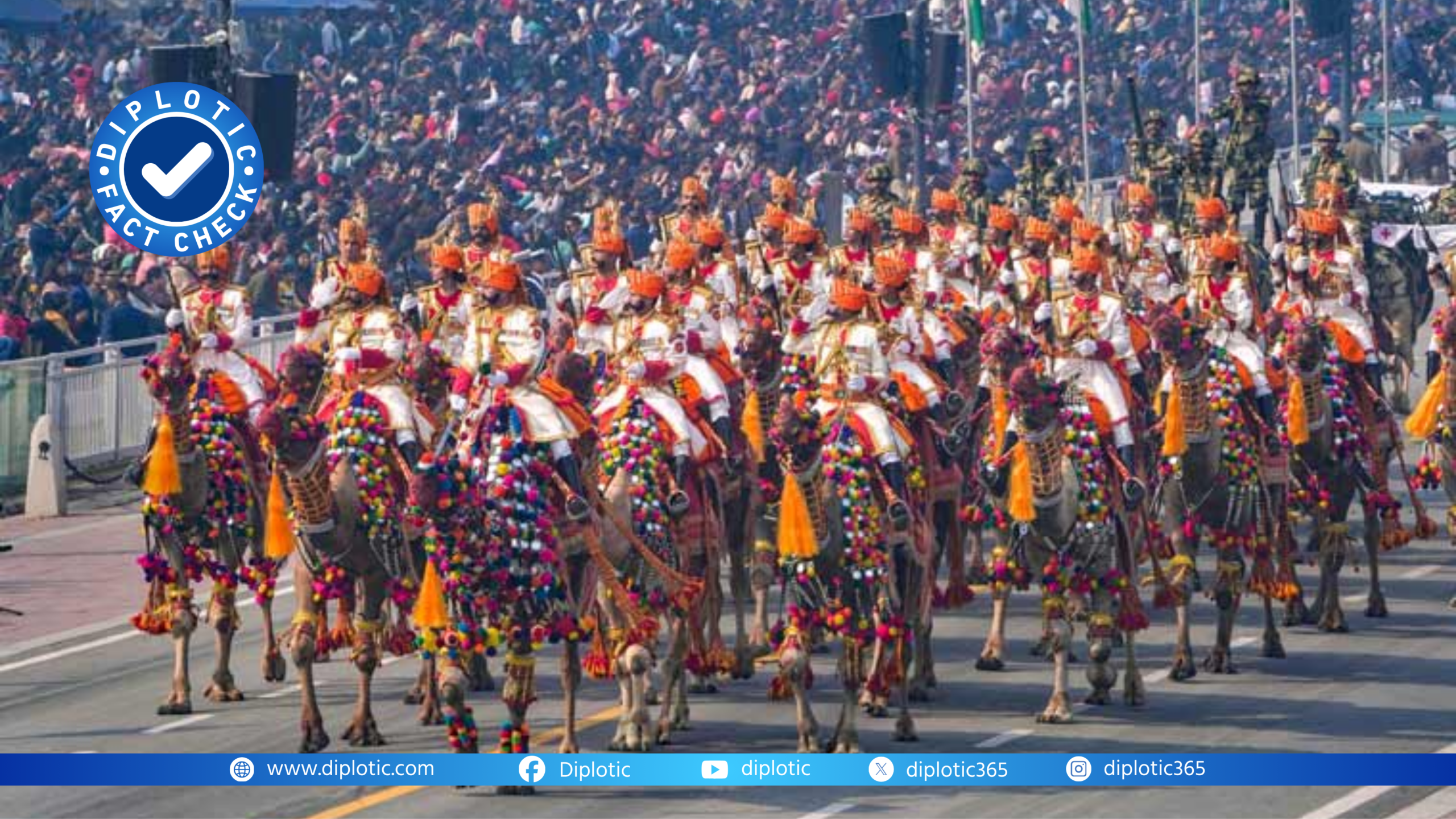
This is accurate. For the first time, the RVC contingent featured two Bactrian camels (inducted for Ladakh’s cold deserts) leading, followed by four Zanskar ponies (for high-altitude logistics). They represented operational roles in Himalayas and Siachen. Camels also appeared in the BSF contingent, with the Camel Mounted Band.
Videos of these animals marching are from genuine parade footage, shared by news outlets and official channels.
A trade-off: while innovative, including animals balances tradition with modern tech displays.
Verdict: True. These are authentic ceremonial segments, not edits.
Claim 4: Viral Humorous Animal Content (Dogs “Dancing” or “Waving Flags”) Is Part of the Official Parade
Some clips add funny effects or show animals in playful ways, claimed as parade moments.
These are montages. Official parade footage shows disciplined marching; no humorous antics like dancing dogs occurred. Viral humor often uses parade clips with added music, effects, or unrelated animal videos for laughs during national fervor.
Social media thrives on such content, but it misrepresents the event’s formality.
Verdict: False. Humorous versions are internet fan edits, not real ceremonial parts.
Claim 5: The Animal Contingent Was Just for Show and Not Real Military Assets
Skeptics claim the animals were props rather than functional.
Evidence counters this. Dogs, ponies, camels, and raptors serve active roles: dogs in counter-terrorism and rescue, ponies/camels in logistics, raptors in vigilance. The 2026 display honored these “silent warriors” and promoted indigenous breeds under self-reliance goals.
Contradiction: ceremonial parades are symbolic, yet these animals have proven field utility.
Implication: it educates on military-animal bonds, encouraging appreciation beyond memes.
Verdict: False. They represent genuine military capabilities.
In summary, viral videos mix real elements with creative edits. Official segments included dogs, Bactrian camels, Zanskar ponies, and raptors in the Army’s animal contingent—a historic debut showcasing utility in tough terrains. Dogs marched but did not lead, and no official footage shows them with flags or in humorous acts. Those are social media montages for entertainment and patriotism.
This reflects how national events inspire both genuine coverage and playful content online. Distinguishing them honors the parade’s purpose—celebrating discipline, heritage, and service—while enjoying light-hearted shares responsibly. For accurate views, refer to official sources like Doordarshan or defense ministry releases.




