

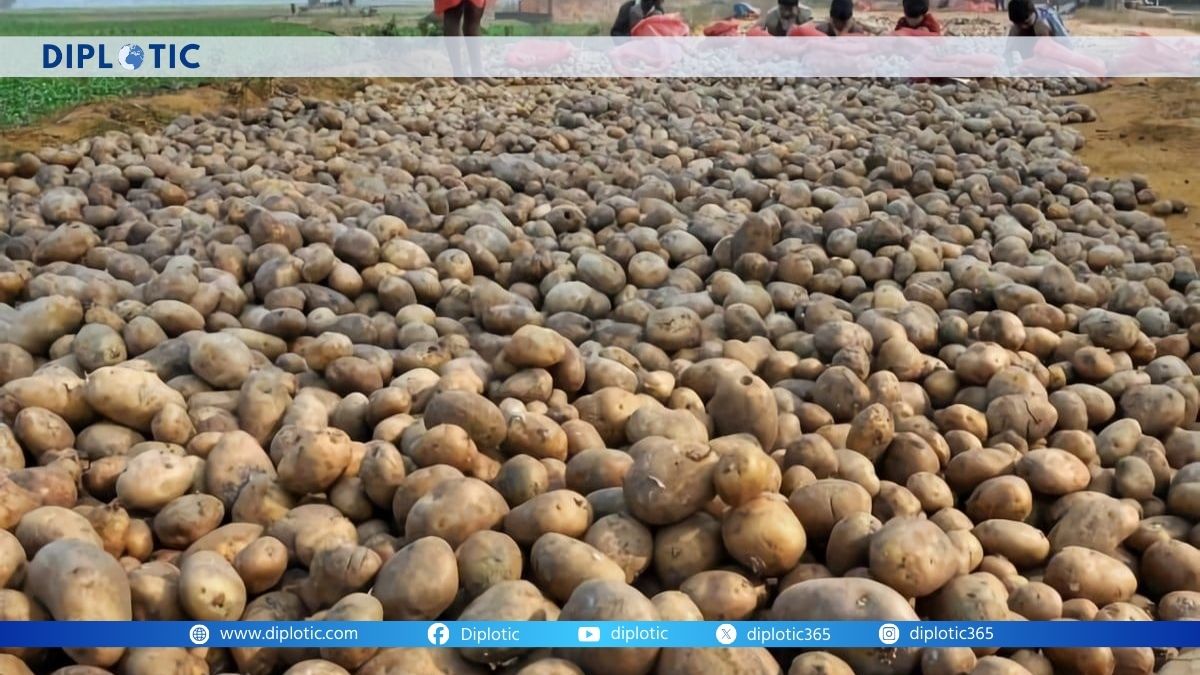
For years, potatoes have been one of Bhutan’s most reliable cash crops, quietly supporting thousands of farming households and forming a steady export link with neighboring India. In 2024, that link appeared stronger than ever. A shortage in Indian markets sent prices soaring, and Bhutanese farmers enjoyed returns that few had seen before. Encouraged by prices that crossed Nu 60 per kilogram, many farmers expanded production, stored more harvests, and entered 2025 with optimism. But as the year ended, that optimism gave way to anxiety. Early potato harvests in India, falling prices, and shrinking demand have sharply reduced Bhutan’s export window, leaving large stocks unsold and farmers uncertain about the future. The unfolding situation raises deeper questions about market dependence, planning, and how a small farming economy navigates forces far beyond its borders.
How a strong year created risky expectations
The current crisis cannot be understood without looking back at the price surge of last year. In 2024, poor harvests and supply gaps in India pushed potato prices up across eastern and northeastern markets. Bhutanese potatoes, long valued for their quality, suddenly became highly sought after. For farmers in Bhutan’s highlands and southern foothills, the gains were real and immediate. Higher prices meant better incomes, repayment of old debts, and confidence to invest more in the next season.
As a result, production expanded in 2025. Farmers planted larger areas, improved storage, and in many cases chose to hold back stocks instead of selling early. The belief was simple: if prices rose last year, they might rise again, especially later in the season when supplies usually tighten. According to the Ministry of Agriculture and Livestock, Bhutan produced about 39,488 metric tonnes of potatoes by the third quarter of 2025. By late December, nearly half of that—around 19,348 metric tonnes—had been exported.
Yet these decisions were shaped more by memory than by market signals. Officials from the Food Corporation of Bhutan Limited repeatedly advised farmers against hoarding and delaying sales. But after a year of strong returns, expectations were hard to manage. Many farmers assumed demand would remain steady until November, as it had in earlier years. What they did not fully anticipate was how quickly conditions in India could change, and how little control Bhutan had over that shift.
India’s early harvest and the shrinking export window
Bhutan’s potato exports rely heavily on a seasonal gap in India’s own production. Normally, demand peaks between June and November, when Indian supplies are low and buyers turn to imports. This year, however, that gap closed much earlier. Potato harvests in Indian states such as West Bengal and Punjab began ahead of schedule, flooding local markets with fresh produce by early December.
The impact was immediate. Indian traders, faced with abundant and cheaper local potatoes, reduced purchases from Bhutan. Prices in Indian markets fell sharply. Fresh Indian potatoes were selling for as low as Nu 10 to 17 per kilogram, while cold-stored potatoes dropped to Nu 6 or 7. Against such prices, stored Bhutanese potatoes struggled to compete, especially smaller-sized produce that buyers preferred less.
By late December, Indian traders were left holding about 625 metric tonnes of unsold Bhutanese potatoes. With storage costs rising and resale options limited, demand almost disappeared. Even Indian farmers were feeling the pressure, with reports of cold stores considering giving potatoes away for free to clear space. For Bhutanese farmers watching this unfold, the message was clear but painful: the market had turned, and there was little they could do to reverse it.
Farmers caught between advice and survival needs
While market forces played the main role, the human dimension of the crisis is equally important. Many Bhutanese farmers depend heavily on potato income to meet yearly expenses. When prices were high last year, expanding production seemed like a rational choice. Holding back stocks also made sense to farmers who hoped to catch higher late-season prices.
The Agriculture and Livestock Minister, Younten Phuntsho, acknowledged these realities while addressing the issue publicly. He noted that high prices in 2024 created strong expectations that did not match this year’s conditions. Despite advisories from FCBL, many farmers delayed deliveries, believing patience would pay off. Instead, the early Indian harvest erased the usual advantage Bhutan enjoyed.
The government has tried to respond quickly. Awareness campaigns were launched across several dzongkhags and gewogs, reaching over 1,100 farmers. These sessions focused on discouraging hoarding, encouraging timely delivery, and helping farmers better understand auction systems. Real-time price updates were shared through messaging platforms, and farmers were warned when markets became saturated.
Auction periods were extended to allow additional sales, and officials assessed stocks directly at farm level. Small volumes have been absorbed by domestic vendors, but these purchases are limited. While such steps may ease immediate pressure, they cannot fully offset the loss of a major export market in a single season. For farmers with large unsold stocks, the question is not only about this year’s income, but about whether potatoes will remain a dependable crop in the years ahead.
Can Bhutan reduce its dependence on one market?
The potato crisis has exposed a long-standing vulnerability in Bhutan’s agricultural trade: heavy dependence on a single external market. India remains Bhutan’s largest and most natural trading partner, offering proximity, scale, and established trade routes. But this dependence also means that changes in Indian production cycles, prices, or policies can quickly spill over into Bhutanese farms.
In the short term, authorities are considering measures such as government procurement of potatoes for use in schools, hospitals, Gyalsung Academies, and the armed forces. This could help clear some stocks and provide farmers with modest returns. However, such measures are limited by storage capacity, budgets, and logistics.
Looking further ahead, the Ministry of Agriculture plans a closer study of Indian potato markets to better align Bhutan’s production with demand patterns. Better data, earlier warnings, and clearer price signals could help farmers make more informed decisions. Yet information alone may not be enough if structural dependence remains unchanged.
Diversification is increasingly seen as essential. Exploring markets in Bangladesh, Nepal, and other regional destinations could reduce risk, even if volumes remain smaller than exports to India. At the same time, diversification within agriculture—into processing, value-added products, or alternative crops—could provide farmers with more stable income sources. These shifts will not be easy, and they will take time, investment, and learning.
A lesson rooted in uncertainty
Bhutan’s potato slump is not just about one crop or one season. It is a reminder of how quickly fortunes can change in agriculture, especially for small economies tied closely to larger neighbors. Last year’s boom encouraged growth and confidence, but it also masked deeper risks. This year’s downturn has revealed those risks in a stark way.
As policymakers look for solutions, the challenge will be to balance immediate relief with long-term resilience. For farmers, the experience may reshape how they view markets, storage, and expansion. And for Bhutan as a whole, the episode raises a broader question: how can the country protect rural livelihoods while staying connected to regional trade systems that it cannot control?
The answer will not come from a single policy or season. But the lessons from this year’s potato crisis are likely to shape agricultural planning for many years to come.




