

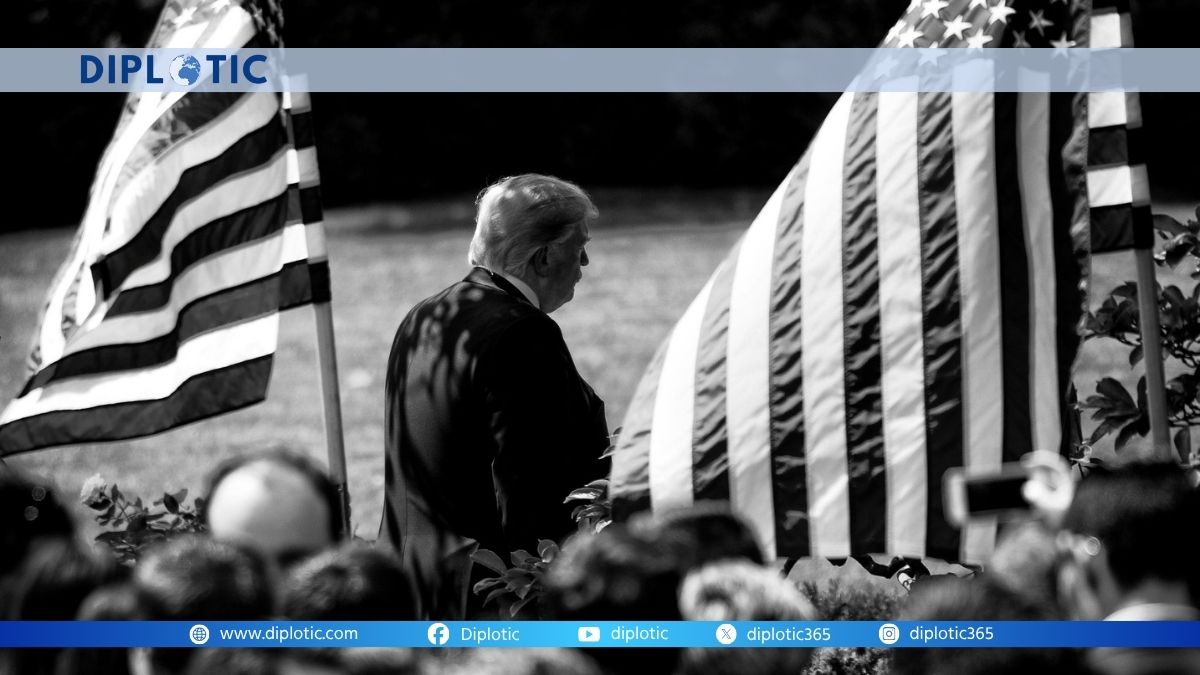
When US President Donald Trump returned to office in January 2025, he pledged to be a “president of peace,” promising to end foreign bombs, wars and avoid new entanglements. The reality of the year that followed tells a different story. From the Caribbean to the Horn of Africa, the Middle East to West Africa, the United States military conducted strikes in at least seven countries over the course of the year. Independent conflict monitors recorded more than 600 separate overseas bombings by the U.S. since the inauguration. This widespread use of military force, often justified under the banner of counterterrorism or counternarcotics operations, marks a significant and aggressive turn in American foreign policy. While the administration claims these actions protect national security and uphold justice, critics see a pattern of escalation that risks new conflicts and civilian casualties. The final days of the year saw this pattern continue, with a new strike on Venezuelan soil. The breadth of these interventions raises a critical question: does this record of military action represent a coherent strategy, or a series of disconnected, politically-driven escalations?
What Were the Major Theaters of US Military Action in 2025?
The year’s military engagements spanned multiple continents, each with its own stated justification. The most sustained and controversial campaign unfolded in the Caribbean Sea. Beginning in September, the U.S. Navy initiated a series of missile strikes on small boats it alleged were smuggling drugs from Venezuela. By year’s end, more than 30 vessels had been struck, killing at least 95 people according to human rights monitors. The administration claimed the boats were operated by Venezuelan “terrorist” groups but provided little public evidence. This maritime campaign escalated in December with the seizure of Venezuelan oil tankers and culminated in the first acknowledged U.S. strike on Venezuelan land territory—a docking facility allegedly used for drug loading. The administration framed this as a necessary step in a “war on drugs,” but regional governments and analysts viewed it as a thinly veiled effort to pressure and destabilize the government of President Nicolás Maduro.
In the Middle East, operations continued against remnants of the Islamic State (ISIL). The U.S. conducted a major retaliatory strike on dozens of ISIL positions in Syria in December after an attack killed American soldiers. In Iraq, a precision strike in March eliminated a high-ranking ISIL leader, coordinated with Iraqi forces. Perhaps the most dramatic single action in the region was the June strike on Iran. In a sophisticated operation, U.S. forces hit three key Iranian nuclear facilities—Natanz, Isfahan, and Fordow—claiming they were curtailing a “nuclear threat.” This attack, during a brief period of open Iran-Israel conflict, set back Iran’s nuclear program but also carried a high risk of triggering a wider regional war. In Yemen, a U.S. bombing campaign against Houthi targets, which began in 2024, intensified in early 2025 before ending with a May ceasefire.
How Did US Military Action Expand into New Regions?
The year 2025 also saw the U.S. military extend its reach into conflicts where its direct involvement was less established. The most notable new front opened in West Africa. On Christmas Day, the U.S. launched airstrikes in northwest Nigeria’s Sokoto State, targeting camps of groups linked to ISIL. This intervention followed weeks of political pressure from Washington, with senior U.S. officials accusing Nigeria of enabling a “Christian genocide”—a claim the Nigerian government firmly rejects, noting violence affects all communities. While the U.S. and Nigeria have a long history of security cooperation, the Christmas strike marked the first known direct U.S. kinetic military action in the country, signaling a willingness to intervene in complex internal African conflicts under a religious freedom narrative.
Simultaneously, the U.S. dramatically escalated its air war in Somalia. Over 111 strikes were recorded against al-Shabab and an ISIL affiliate, a number surpassing the totals from the Bush, Obama, and Biden administrations combined. This surge in activity, conducted at the invitation of the Somali government, resulted in significant armed group casualties but also raised alarms about civilian deaths, with investigations revealing strikes that killed non-combatants, including children. These expansions into Nigeria and Somalia suggest a broadening definition of U.S. national security interests to include counterterrorism operations across Africa, conducted with fewer apparent constraints.
What Are the Stated Reasons and the Criticisms of This Approach?
The Trump administration’s public justifications for these strikes follow familiar themes: national security, counterterrorism, and law enforcement. The Caribbean strikes are framed as protecting Americans from the scourge of drugs. The actions in Syria, Iraq, and Somalia are portrayed as necessary to degrade terrorist networks that threaten the U.S. and its allies. The Iran strike was justified as nonproliferation. The Nigeria intervention was couched in terms of protecting religious minorities and combating ISIL.
However, each rationale faces serious scrutiny. In Venezuela, evidence linking the targeted boats to major drug flows to the U.S. is scant, leading to accusations that the “drug war” is a pretext for regime change aimed at controlling Venezuela’s vast oil reserves. The Nigeria strikes conflate violence in the country’s central Middle Belt region with the distinct conflict against ISIL affiliates in the northwest, basing action on a politically charged “genocide” narrative disputed by experts and the Nigerian state. In Somalia and Yemen, the intense bombing campaigns have caused civilian casualties, raising questions about proportionality and adherence to international humanitarian law. Furthermore, the sheer number of strikes suggests a strategy reliant on military force as a first resort, contradicting the president’s inaugural promise to end wars and avoid new ones. Critics argue the actions are often “performative,” driven more by domestic political messaging—appealing to base voters with shows of strength—than by a sober, diplomatic strategy for long-term stability.
What Does This Military Record Mean for Global Stability?
The cumulative effect of these widespread strikes is a more militarized and volatile American foreign policy. By acting unilaterally in Venezuela’s Caribbean waters and on its soil, the U.S. is reviving 20th-century “gunboat diplomacy” in Latin America, straining relations across the region. The strikes in Nigeria set a precedent for direct military intervention in African nations based on the U.S.’s assessment of internal religious or security dynamics, which could undermine sovereignty and complicate local peace efforts. The massive escalation in Somalia risks entrenching the U.S. in a long-term conflict with significant humanitarian costs.
Perhaps the most dangerous precedent is the normalization of preemptive strikes on sovereign territory for law enforcement purposes, as seen with Venezuela, or for nonproliferation, as with Iran. This approach erodes international norms against the use of force and invites other powerful nations to adopt similar justifications for their own interventions. While the administration claims to have ended some conflicts, its methods have often involved escalating military pressure first. The record of 2025 suggests a foreign policy that is heavily reliant on coercion and kinetic action, creating numerous flashpoints that could easily ignite into larger wars. As the year closed with a new strike in Venezuela and promises of more in Nigeria, the pattern points toward a 2026 where the “president of peace” may find himself managing multiple, simultaneous conflicts sparked by the very bombs he ordered.




