

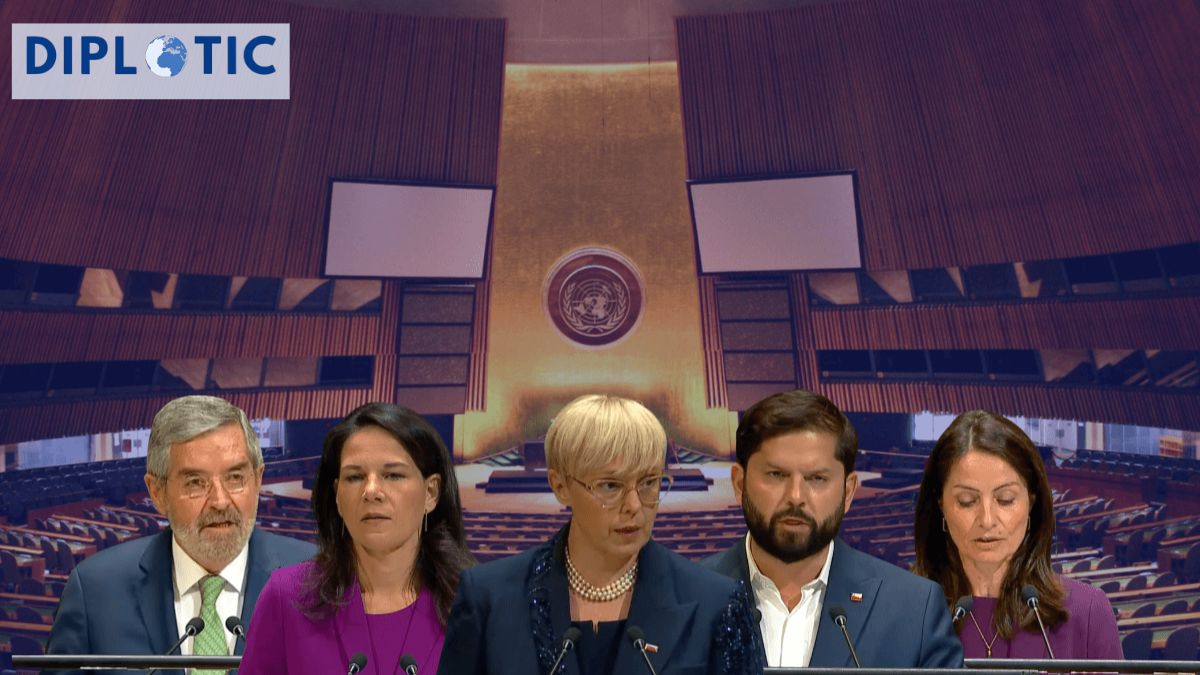
The office of the United Nations Secretary-General has long been described as the world’s most impossible job. But as António Guterres approaches the end of his second term in 2026, that description feels less like a metaphor and more like an understatement. The next UN Secretary-General will inherit an organization under historic strain, financially weakened, politically paralyzed, and reputationally bruised while facing a world increasingly defined by war, climate anxiety, and declining faith in multilateral cooperation.
In diplomatic corridors, the question is no longer whether the UN needs renewal. It is whether the institution can still be renewed at all and whether a long-awaited “Madam SG” could become the catalyst for that revival.
A Multilateral System Under Pressure
From its founding promise to save “succeeding generations from the scourge of war,” the United Nations has been the moral and procedural backbone of global governance. Yet today, it often appears more like a witness to crisis than a resolver of it. Major conflicts grind on without a political settlement. Humanitarian emergencies expand faster than the system’s ability to respond. Climate-related disasters grow more frequent and more severe.
At the heart of this crisis is the UN’s financial fragility. Funding shortfalls, delayed contributions, and donor fatigue have forced agencies to scale back operations, freeze recruitment, and postpone essential programs. In parallel, geopolitical rivalries among major powers have turned the Security Council, once the core of collective security, into a forum of procedural gridlock.
The next secretary-general will inherit not just an institution in need of reform, but a multilateral order searching for relevance.
Geopolitics and the Limits of Leadership
The Secretary-General’s role is defined by contradiction. The office demands moral clarity, yet punishes political boldness. It requires independence, yet depends on the goodwill of the very powers whose rivalries often paralyze the system. A single misjudged statement can sideline the world’s top diplomat for years.
Guterres’s tenure illustrated both the possibilities and limits of the role. His advocacy on climate change, pandemic preparedness, and conflict prevention was widely praised, but his room for maneuver was consistently narrowed by great-power competition. His successor will face the same structural reality, but with fewer resources, higher expectations, and a more fractured global environment.
Regional Rotation and a Crowded Field
By long-standing convention, the post of Secretary-General rotates among regional groups, with Latin America and the Caribbean widely viewed as next in line. For the region, this represents not only an opportunity but also a symbolic restoration of balance in global leadership.
Several prominent figures are already being discussed in diplomatic circles, including former heads of state, senior UN officials, and globally recognised policy leaders. Their experience spans human rights, development, climate diplomacy, and international economic governance precisely the areas now central to the UN’s future relevance.
Beyond the region, experienced multilateral leaders from Africa, Europe, and the Middle East are also quietly positioning themselves. The emerging field reflects both the gravity of the moment and the enduring prestige of the office, even as its practical influence is tested.
The Historic Case for a “Madam SG”
Hovering over the entire selection process is a question that has become a global movement: should the tenth Secretary-General finally be a woman?
After more than eight decades and nine male officeholders, the absence of a woman at the helm of the UN is increasingly viewed as an institutional anomaly. Over 90 countries have publicly endorsed the principle of a female secretary-general, and civil-society networks have mobilized around the idea as a symbol of overdue reform.
The argument is not simply about representation. Advocates contend that a woman secretary-general could help restore legitimacy, signal renewal, and challenge the perception of global leadership as an exclusive club of entrenched power. In a moment when trust in international institutions is fragile, symbolism and substance have become inseparable.
Transparency, Tradition, and Power Politics
Since 2016, the UN has taken modest steps to make the Secretary-General selection process more transparent. Public hearings, vision statements, and civil-society engagement now coexist with rather than replace the traditional closed-door negotiations among the permanent members of the Security Council.
This hybrid system reflects a deeper tension within the UN: an organisation seeking openness while remaining structurally dependent on five veto-wielding capitals. While the General Assembly may champion transparency and reform, the final decision remains firmly in the hands of the permanent members making the process both more visible and no less political.
The Qualities the Next SG Must Embody
Whoever assumes office on 1 January 2027 will need to be more than an administrator. The next Secretary-General must be:
A strategic mediator, capable of quiet diplomacy before crises erupt.
A reform architect, willing to rationalise agencies, modernise mandates, and stabilise finances.
A moral communicator, able to restore confidence in multilateralism among sceptical publics.
A political gymnast, balancing principle with pragmatism in an unforgiving geopolitical arena.
The stakes are not theoretical. The credibility of global governance, the effectiveness of humanitarian action, and the UN’s ability to shape a cooperative international order all hang in the balance.
A Defining Choice for Global Governance
The selection of the next UN Secretary-General will be more than a leadership transition. It will be a referendum on whether the United Nations can still adapt, renew, and lead in a fragmented world.
A woman Secretary-General would not, by itself, resolve the UN’s structural challenges. But it would mark a visible break with institutional inertia and offer a powerful narrative of renewal. Conversely, a compromise candidate perceived primarily as a product of great-power bargaining could deepen doubts about the UN’s independence and relevance.
Conclusion: Renewal or Decline
The next Secretary-General will inherit a multilateral system on life support but not beyond hope. With strategic reform, diplomatic skill, and moral authority, the office can still be a force for stability, cooperation, and collective action.
Whether that future begins with a “Madam SG” or another familiar face, the decision will shape not only the UN’s next chapter, but the credibility of multilateralism itself in a world that urgently needs it.
The poisoned chalice now waits. What happens next may determine whether the United Nations rediscovers its founding purpose or drifts further from it.




