

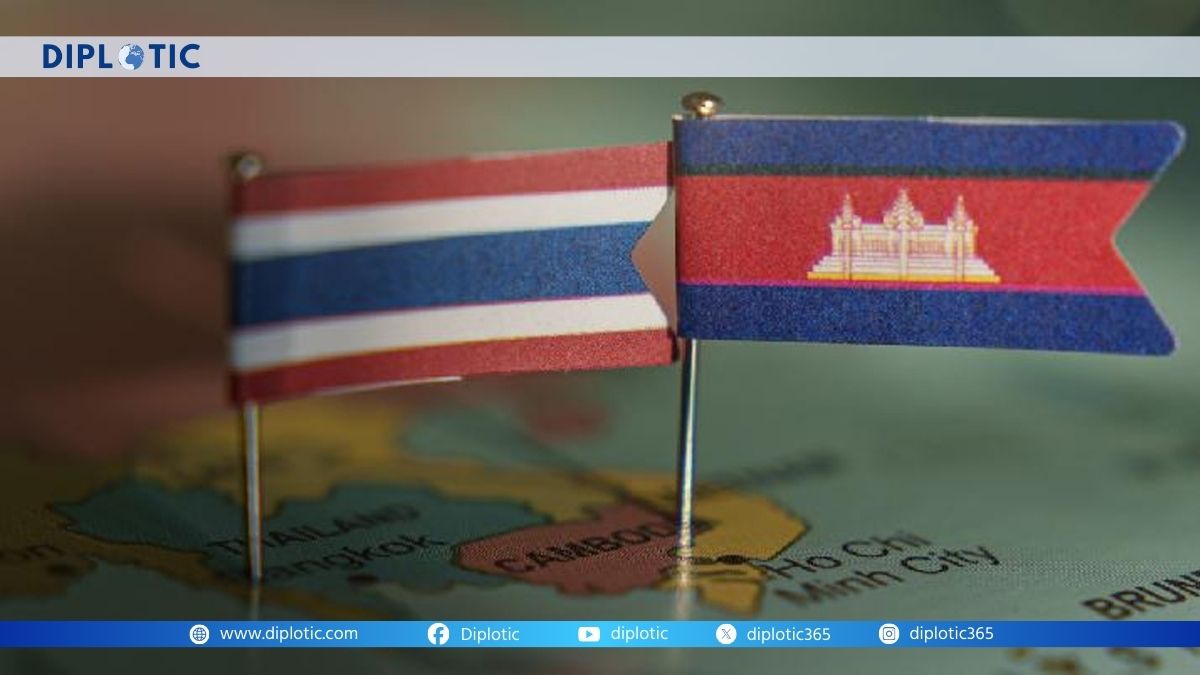
In late December 2025, a fragile ceasefire between Thailand and Cambodia faced an immediate test when Thailand’s military reported detecting more than 250 drones crossing into its airspace from the Cambodian side. This incident happened just one day after the two countries signed an agreement to end weeks of intense border clashes that had killed over 100 people and displaced more than half a million civilians on both sides. The ceasefire, which took effect at noon on December 27, aimed to freeze troop positions, ban reinforcements, and allow displaced people to return home safely. Thailand viewed the drone flights as a direct breach, warning that it might reconsider releasing 18 Cambodian soldiers captured earlier in the year. Cambodia downplayed the event, calling it a minor issue involving drones from both sides along the border. As foreign ministers from both nations met in China to build on the truce, questions arose about whether this accusation signals deeper mistrust or if it can be resolved through ongoing talks. The situation highlights the challenges in maintaining peace along a disputed border with a history of recurring violence.
What Led to the Latest Accusations Over Drone Incursions?
The immediate cause of Thailand’s accusation centers on events late on December 28, when its army detected over 250 unmanned aerial vehicles entering Thai territory from Cambodia. These flights occurred across several locations in northeastern provinces like Buri Ram, Sisaket, Surin, and Ubon Ratchathani. Thai military spokespeople described the actions as provocative and inconsistent with the ceasefire terms, which include commitments to reduce tensions and avoid airspace violations for military purposes. Thailand warned that continued incidents could force it to protect its sovereignty and rethink the planned release of captured Cambodian soldiers after a 72-hour ceasefire period.
Cambodia responded by minimizing the incident. Its foreign minister called it a small matter related to drones observed by both sides near the border line, and officials said the two countries had agreed to investigate and resolve it quickly. This differing view points to possible misunderstandings about what constitutes a violation in the sensitive border zone. Parallel to this, diplomatic efforts continued. Foreign ministers met in China’s Yunnan province, where host Wang Yi praised the ceasefire as hard-won and urged both sides to avoid resuming fights. The talks focused on rebuilding trust and planning further border demarcation discussions in early January.
Looking at related factors, the drone issue fits into a pattern of mutual suspicions. Earlier clashes involved accusations of landmine use and airstrikes, with each side claiming self-defense. The ceasefire itself built on a previous truce from July that had collapsed in early December amid renewed fighting, including artillery and air attacks. International players like China, the US, and ASEAN members encouraged the latest agreement, seeing it as a step toward stability. Yet the quick accusation raises curiosity about enforcement mechanisms—does the deal lack clear monitoring, or are both sides testing limits? Broader stakes include humanitarian needs, as displaced families wait to return, and economic ties, since the border supports trade and tourism. Investigating these details shows how a single event can threaten progress in a conflict marked by blame on both sides.
How Have Thailand and Cambodia Responded to the Ceasefire Challenges?
Thailand’s response has been firm but measured, with its army issuing statements highlighting the drone incursions as a breach that endangers security for troops and civilians. Officials indicated they might delay or cancel the release of 18 Cambodian soldiers if violations persist, tying compliance directly to the truce’s success. This stance reflects caution after the previous ceasefire failed, when Thailand felt Cambodia did not fully withdraw forces or address issues like landmines.
Cambodia has taken a calmer approach, framing the drone sightings as mutual and resolvable. Its leaders expressed confidence that the ceasefire would hold and create space for better relations, including joint border surveys. During talks in China, Cambodian officials emphasized peaceful resolution and cooperation on issues like demining. Both sides committed to no further military movements and airspace respect in the agreement, though only Thailand had used airstrikes in recent fighting.
Different angles reveal shared interests in peace. The US welcomed the truce and urged full implementation, while China positioned itself as a facilitator for dialogue. ASEAN, led by Malaysia earlier in the year, supported monitoring efforts. Yet domestic pressures play a role—nationalist sentiments in both countries can fuel escalation, and leaders face expectations to defend territory. Parallel insights from the July truce show similar patterns: quick agreements followed by accusations of non-compliance. Curiosity arises about verification—could joint observer teams help, or do deeper talks on demarcation need priority? The responses so far suggest both governments want to avoid full resumption of clashes, given the human cost and regional concerns, but trust remains low.
What Are the Deep Roots of the Thailand-Cambodia Border Dispute?
The current tensions trace back over a century to colonial-era border drawings. In 1904 and 1907, treaties between France, which controlled Cambodia, and Siam (now Thailand) set the boundary, meant to follow natural features like watersheds in the Dangrek Mountains. However, maps from that time placed ancient temples, including Preah Vihear, in ambiguous zones, leading to lasting claims. In 1962, the International Court of Justice ruled the main Preah Vihear temple belongs to Cambodia, but surrounding land stayed disputed, setting the stage for periodic conflicts.
Modern flare-ups often center on these temples and nearby areas. Tensions rose in 2008 over UNESCO listing Preah Vihear as a Cambodian World Heritage site, sparking clashes. The 2025 conflict escalated from a May incident where a Cambodian soldier died, followed by July’s five-day intense fighting with dozens killed. A truce then, supported by US and Malaysian mediation, formalized in October’s Kuala Lumpur agreement, but collapsed in December amid accusations of provocations like landmines and troop buildups.
Related views include cultural ties—both nations share Khmer heritage in the temples, yet rivalry persists. Economic factors matter too, with border areas vital for local livelihoods and cross-border trade. International involvement adds layers: China hosts talks for influence in Southeast Asia, while the US pushes stability for regional alliances. Parallel to other disputes, like those in the South China Sea, this shows how old maps fuel modern risks. Questions linger on resolution—can bilateral demarcation work, or does third-party help needed? The history explains why small incidents, like songs in a temple or drone flights, can ignite broader issues, as national pride ties to these sites.
Can the Latest Ceasefire End the Cycle of Border Violence?
As 2025 closes, the drone accusation tests whether the December 27 ceasefire can endure or repeat past failures. Experts note that while agreements halt immediate fighting, underlying disputes over land and temples remain unresolved, inviting future sparks. The quick response—discussing the issue in China and planning investigations—offers hope for de-escalation, but Thailand’s warnings signal readiness to act if needed.
Broader implications tie to regional peace. ASEAN values non-conflict among members, and major powers like China and the US see stability as key for trade and security. Humanitarian angles persist, with displaced people needing safe returns and areas cleared of mines. Parallel concerns include modern warfare elements, like drones in surveillance or attacks, raising risks of miscalculation.
Looking ahead, planned January meetings on demarcation could address roots, but success depends on political will. Past patterns—from 1962 court ruling to 2008 clashes—show ceasefires hold temporarily without full settlement. Yet positive steps, like prisoner releases if the truce lasts 72 hours, build small trust. Connecting history to now, this episode reminds that colonial legacies shape current ties, but dialogue offers a path forward. The world watches if Thailand and Cambodia can break the cycle, ensuring border peace benefits both peoples and the region long-term.




