

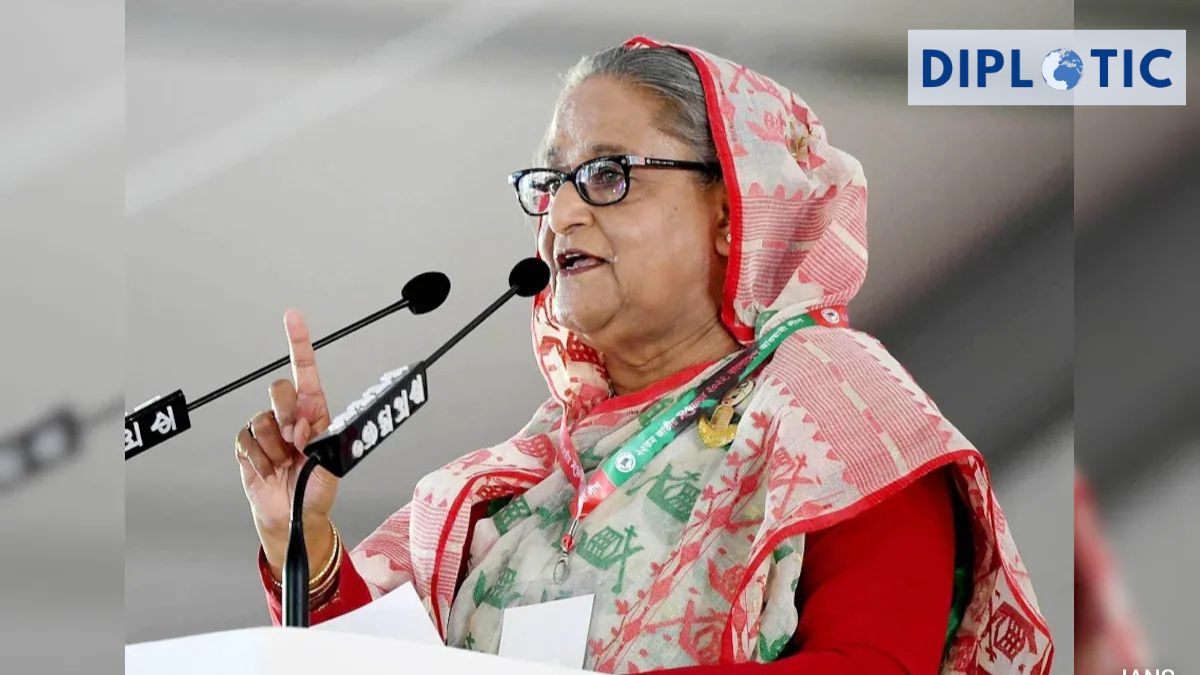
Bangladesh faces rising political and humanitarian concerns as former Prime Minister Sheikh Hasina accuses the Yunus-led interim government of targeting religious minorities following her removal from power.
Bangladesh Political Crisis Deepens as Minority Safety Comes Under Scrutiny
Bangladesh has entered one of the most volatile political chapters in its modern history following the dramatic removal of long-serving Prime Minister Sheikh Hasina. The political storm intensified further this week after Hasina, now ousted from office, publicly accused the interim administration led by Nobel laureate Muhammad Yunus of orchestrating widespread persecution of non-Muslim religious minorities across the country.
In a Christmas message released to the public, the 78-year-old Awami League leader delivered a sharply worded statement, alleging that the interim leadership had unlawfully seized power and unleashed a wave of intimidation, violence, and fear among minority communities. Her claims have sparked renewed national and international attention toward Bangladesh’s fragile political stability and its record on religious freedom.
Hasina Issues Strong Allegations from Political Exile
Sheikh Hasina’s message was one of her strongest since being forced from office earlier this year. Addressing the nation and the global community, she accused the Yunus-led interim regime of creating what she described as “horrific precedents” that have endangered minority citizens, including Hindus, Christians, and Buddhists.
Hasina’s statement followed reports of a recent mob killing involving a Hindu man, an incident that has reignited fears among Bangladesh’s minority populations. Although the government has yet to formally respond to her remarks, the allegations have intensified debates about the country’s ability to protect vulnerable communities during a time of political transition.
Minority Rights in Bangladesh: A Growing Concern
Bangladesh is constitutionally a secular nation, yet religious minorities have historically faced periods of social and political pressure. Hindus, who make up the largest minority group, have often been vulnerable during times of political unrest.
Human rights groups have previously documented cases of intimidation, forced displacement, and property seizures affecting minority populations. The latest political upheaval has revived concerns that these long-standing issues could worsen if firm protections are not reinforced by the current leadership.
Community leaders across Bangladesh are now urging the interim government to publicly reaffirm its commitment to religious harmony and to guarantee the safety of all citizens, regardless of faith.
The Yunus Interim Government Under Pressure
Muhammad Yunus, internationally respected for his pioneering work in microfinance, assumed leadership of the interim government amid a national political deadlock. His administration was tasked with stabilizing the country and preparing for new elections.
However, the interim government now faces mounting criticism from opposition figures and civil society organizations who argue that the transition has been mishandled. The allegations raised by Hasina, whether fully substantiated or not, add to a growing list of challenges confronting Yunus’s leadership.
Observers warn that failure to address public concerns swiftly could erode both domestic trust and international confidence in Bangladesh’s political transition.
International Community Watches Closely
Bangladesh is a key South Asian nation with strategic economic and geopolitical importance. Any prolonged instability raises alarms among international partners, including regional neighbors, humanitarian agencies, and development institutions.
Foreign diplomats and rights groups are closely monitoring developments, particularly regarding religious freedom and the rule of law. Several global organizations have emphasized the importance of transparent investigations into any reported violence, urging the interim authorities to demonstrate accountability.
International reaction could have implications for foreign aid, trade relations, and Bangladesh’s reputation as a stable emerging economy.
Awami League’s Warning of “Illegal Power Grab”
The Awami League, founded by Sheikh Hasina’s father and central to Bangladesh’s political history, has strongly criticized the current power structure. Party officials claim that the transition process violated constitutional norms and bypassed democratic principles.
Hasina’s message framed the interim leadership as an unelected group imposing authority without a legitimate mandate a charge that further fuels political polarization.
A Nation at a Crossroads
Bangladesh now stands at a critical crossroads. The coming weeks will likely determine whether the country can restore political calm, protect minority rights, and move toward credible elections or whether tensions will deepen further.
Calls are growing from religious leaders, civil society groups, and ordinary citizens for calm dialogue, lawful governance, and immediate reassurance for minority communities. Without swift and transparent action, the political divide could continue to widen.
Conclusion: Stability, Rights, and the Path Forward
Sheikh Hasina’s accusations have amplified an already fragile political climate in Bangladesh. Whether her claims lead to formal investigations or international intervention remains to be seen, but one issue is clear: the safety and rights of religious minorities have become central to the national conversation.
As Bangladesh navigates this uncertain chapter, the actions of the Yunus-led interim government will be closely judged not only by political rivals but by the global community watching how a nation rooted in secular ideals responds to one of its most serious political tests in decades.




