

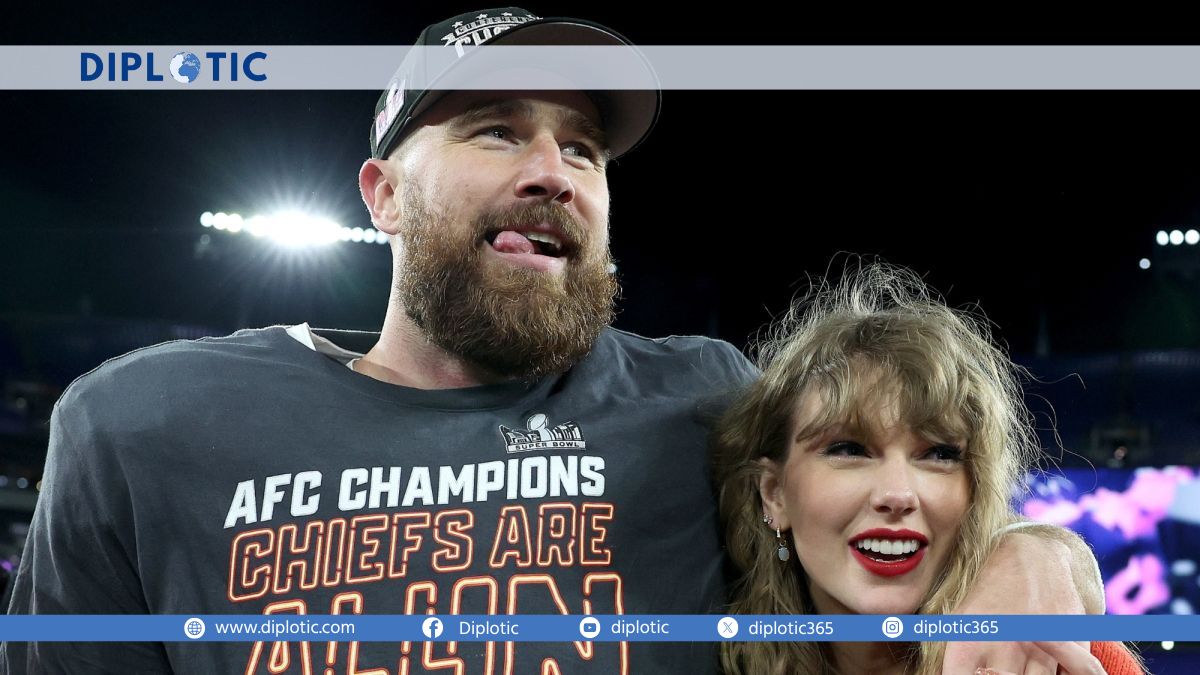
As Christmas approaches, images of abundance dominate public life, from store windows to holiday advertising. Yet behind this seasonal display, millions of families across the United States face empty refrigerators and growing uncertainty about their next meal. It is in this context that pop star Taylor Swift announced a one-million-dollar donation to hunger relief, drawing renewed attention to a crisis that has deepened quietly but steadily in 2025. Swift’s contribution, directed to Feeding America, arrived at a moment when food assistance systems are under strain, public trust in government responses is fragile, and charitable networks are being asked to fill widening gaps.
The donation was widely welcomed, but it also raises broader questions. What does such a high-profile act of generosity actually mean for hunger relief in the United States? How much difference can private philanthropy make when public programs face disruption? And why has food insecurity remained such a pressing issue in a country reporting overall economic growth? To understand the significance of Swift’s gift, it is necessary to look beyond the headline and examine the structural forces shaping hunger in America today.
Why hunger relief needs urgent attention in 2025
Hunger in the United States is not a new problem, but 2025 has exposed how fragile the food security system can be. Rising living costs, uneven wage growth, and policy disruptions have combined to place millions of households under pressure. While inflation has slowed compared to earlier years, prices for food, rent, and health care remain high relative to income growth for low- and middle-income families. For many households, especially those living paycheck to paycheck, even small shocks can lead to food shortages.
This year, the problem was worsened by a prolonged government shutdown that created confusion and delays around the Supplemental Nutrition Assistance Program, commonly known as SNAP. Benefits expired temporarily at the beginning of November, and a series of court battles followed, reaching as far as the Supreme Court. Although benefits were later reinstated, the interruption had real consequences. Families missed meals, food banks saw increased demand, and uncertainty spread among those who rely on assistance to survive.
Legal disputes have also intensified pressure on the system. In late November, Democratic officials from 21 states and Washington, D.C., filed legal action against the U.S. Department of Agriculture, accusing it of arbitrarily excluding many lawful permanent residents from food assistance. These cases reflect deeper disagreements over who deserves support and how limited resources should be distributed. While the courts debate policy boundaries, hunger continues to grow on the ground.
Feeding America, the nation’s largest hunger relief organization, operates a network of food banks that often serve as the final safety net when public programs falter. In 2025, that network has been stretched thin. Donations from individuals and corporations help, but they rarely keep pace with rising need. This is why high-value gifts attract attention. They do not solve the problem, but they provide breathing room at critical moments, especially during the holiday season when demand peaks.
Taylor Swift’s donation and the role of celebrity philanthropy
Taylor Swift’s one-million-dollar donation to Feeding America was announced by the organization’s chief executive, Claire Babineaux-Fontenot, who described it as a powerful reminder of what collective action can achieve. The donation was framed not as a one-off gesture, but as part of Swift’s ongoing support for social causes. Feeding America’s announcement even adopted visual elements inspired by Swift’s recent album branding, signaling both gratitude and cultural relevance.
Swift also donated one million dollars to the American Heart Association, honoring her father’s health struggles. Together, these gifts reinforce her public image as an artist who uses her influence and wealth to support causes beyond entertainment. Yet the importance of such donations goes beyond personal reputation. Celebrity giving plays a unique role in modern philanthropy by drawing attention to issues that might otherwise remain abstract or overlooked.
When a global figure like Swift supports hunger relief, the impact extends beyond the dollar amount. Media coverage expands awareness, encourages additional donations, and places pressure on institutions to respond. For Feeding America, such visibility can translate into increased support from smaller donors who might feel inspired to contribute what they can. In this sense, celebrity philanthropy functions as both financial aid and public advocacy.
However, there are limits. One million dollars, while significant, represents a small fraction of what is needed to address nationwide hunger. Feeding America serves tens of millions of people annually, and its operational costs run far higher. Swift’s gift can help stock shelves and stabilize programs during a critical period, but it cannot replace consistent public funding or systemic reform. This tension highlights the dual nature of celebrity philanthropy: it is both impactful and insufficient on its own.
Public policy gaps and the burden on charities
The growing reliance on charitable donations points to deeper weaknesses in public policy. Programs like SNAP were designed to provide a stable foundation for food security, reducing dependence on emergency food aid. When these programs are disrupted, charities are forced to compensate, often without the resources to do so effectively. The events of 2025 illustrate how quickly this balance can break down.
The recent government shutdown exposed how political conflict can translate into material hardship. Even temporary lapses in benefits caused confusion and fear among recipients, many of whom lack savings or alternative support. Charities reported spikes in demand just as they faced uncertainty about their own funding streams. In this environment, large private donations become essential stopgaps rather than supplements.
Critics argue that this dynamic risks normalizing a system in which hunger relief depends on goodwill rather than rights. Food security, they contend, should not hinge on whether donors step forward during crises. Legal challenges over eligibility rules further complicate matters, as they create uneven access across states and communities. The result is a patchwork system that leaves many people vulnerable.
Swift’s donation, arriving amid this turmoil, highlights both the generosity of individuals and the inadequacy of current structures. It draws attention to the fact that hunger persists even in a wealthy nation, and that policy choices play a central role in shaping outcomes. While charities can respond quickly, they cannot address root causes such as low wages, high housing costs, and inconsistent public support.
What the moment reveals about hunger, wealth, and responsibility
The response to Taylor Swift’s donation reveals a broader cultural conversation about responsibility in times of need. Many praised her generosity, seeing it as an example of how those with resources can make a difference. Others pointed out that no level of private giving can substitute for effective public policy. Both perspectives contain truth.
Hunger in the United States reflects structural inequalities that extend beyond seasonal hardship. Economic growth figures may look strong on paper, but they often mask uneven distribution of benefits. Millions of families remain one unexpected expense away from crisis. In this context, high-profile donations serve as reminders of both compassion and imbalance.
As Christmas approaches, Swift’s contribution has provided tangible relief and renewed focus on hunger at a critical moment. It has helped ensure that more families can gather around a full table, even as uncertainty persists. At the same time, it underscores a pressing question for the future. Will hunger relief continue to depend on emergency generosity, or will sustained policy action reduce the need for such interventions?
The past year suggests that without deeper reform, the answer remains uncertain. Swift’s donation shines a light on what is possible when resources are shared, but it also exposes how much work remains. The challenge ahead is to turn moments of generosity into lasting solutions that make hunger the exception, not the norm.




