

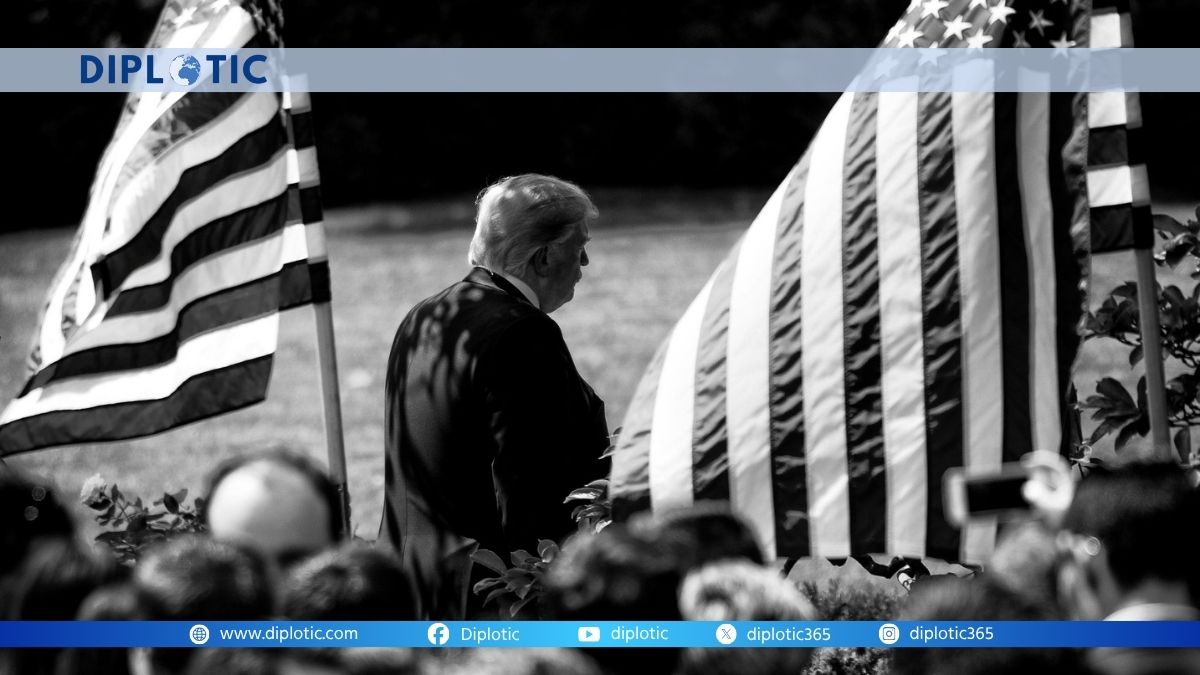
The year 2025 began with strong expectations and deep fears about the direction of United States foreign policy. Donald Trump had returned to the White House for a second term, and many observers believed this would mark a clear turn inward. His first presidency had been shaped by the slogan “America First,” sharp criticism of alliances, and repeated attacks on what he called endless foreign wars. Yet as 2025 closes, the record tells a more complex story. Instead of withdrawal, the United States has remained deeply involved across regions, conflicts, and negotiations. What has changed is not the level of engagement, but its form, tone, and logic. The central question now facing policymakers and allies is simple but serious: has Trump ended American internationalism, or has he reshaped it into something new?
Was Isolationism Ever the Real Plan?
When Trump won reelection in 2024, many voters and analysts assumed his second term would finally deliver the isolationist foreign policy he often promised. He had argued that global commitments drained U.S. resources and distracted leaders from domestic needs. He blamed past presidents for wars in Afghanistan and Iraq, calling them costly mistakes that brought little benefit. He also said that democracy promotion and human rights had been used as excuses for weak and endless intervention. These messages suggested a clear retreat from global leadership.
But as 2025 unfolded, the early signals challenged that assumption. Trump did not reduce the United States’ global footprint. Instead, he used direct and personal engagement as his main tool. Far from stepping back, he stepped forward, often placing himself at the center of diplomacy. His public calls to revisit control over the Panama Canal, repeated remarks about Greenland, and sharp language toward Canada were not signs of withdrawal. They were claims of influence, power, and reach. Isolationism usually avoids the world. Trump’s approach seemed to confront it head-on.
This pattern was also visible in conflict zones. Trump personally claimed credit for involvement in multiple international crises, including Gaza and Ukraine. He presented himself as a dealmaker who could achieve results where others failed. While critics questioned how deep or lasting these results were, the key point remained clear: Trump did not seek distance from global issues. He sought control over how the United States engaged with them.
The difference lay in method, not interest. Traditional U.S. foreign policy relied on institutions, alliances, and long-term commitments. Trump showed open distrust toward these tools. He preferred direct pressure, public threats, and transactional deals. This raised a deeper question. Can a country remain internationalist while rejecting many of the systems that once defined its leadership?
How Personal Power Replaced Institutional Strategy
One of the strongest features of U.S. foreign policy in 2025 was Trump’s reliance on personal diplomacy. He viewed foreign relations less as a shared system and more as a series of direct relationships. In his view, outcomes depended on strength, leverage, and personal authority rather than rules or norms. This approach shaped how the United States acted across regions.
Nowhere was this clearer than in the Caribbean and Latin America. Despite earlier criticism of military intervention, Trump authorized a major show of force against Venezuela. The U.S. Navy carried out strikes on vessels accused of drug trafficking, and a large carrier group was deployed to the region. This marked the biggest U.S. naval presence in the Caribbean in decades. While the administration framed the actions as law enforcement and deterrence, the scale sent a political message. It showed that Trump was willing to use force when he believed U.S. interests were challenged.
At the same time, the administration launched an ambitious plan for Gaza that went far beyond mediation. The proposal included a staged rebuilding process, international oversight, new governance structures, and a long-term security framework. Although U.S. troops were not sent into Gaza itself, American forces were deployed nearby to support ceasefire monitoring and aid delivery. The plan avoided language about democracy, but it involved shaping political and economic outcomes in a conflict zone. This closely resembled state-building, a practice Trump had once strongly criticized.
These actions revealed a tension at the heart of Trump’s foreign policy. He rejected past interventions as failures, yet pursued new forms of involvement when he believed they could be controlled, limited, and personally directed. The United States was not withdrawing. It was acting more selectively, often without broad consultation, and with a focus on visible leverage rather than shared rules.
Has Human Rights Truly Been Set Aside?
During the campaign, Trump made clear that human rights would no longer guide U.S. foreign policy. He argued that lecturing other countries created hostility and delivered few results. Early visits, including his trip to Saudi Arabia, reinforced this message. He stated that countries should manage their own internal affairs without U.S. pressure.
Yet as 2025 progressed, this position softened in practice. The administration took strong actions against several governments based on their domestic behavior. Brazil faced heavy tariffs, and a senior judge was placed under U.S. sanctions over the prosecution of former President Jair Bolsonaro. Nigeria was warned of possible military consequences over its treatment of Christian communities. South Africa was targeted through diplomatic boycotts and refugee policy decisions tied to Trump’s claims about discrimination against white citizens.
These actions suggested that human rights concerns had not disappeared. Instead, they were applied unevenly and often tied to Trump’s political instincts rather than universal standards. Unlike past administrations, which framed rights as shared values, Trump framed them as bargaining tools. Pressure was applied when it served a clear political or strategic purpose.
This shift created uncertainty among allies and partners. Without consistent standards, it became harder to predict U.S. responses. Supporters argued that this flexibility allowed for faster action. Critics warned that it weakened credibility and encouraged selective justice. Either way, it marked a break from past approaches that sought moral consistency, even when results were limited.
The question that followed was whether this selective approach could hold. Human rights, once used to build coalitions, now risked becoming sources of friction, applied case by case without clear rules.
Can Transactional Leadership Hold Under Pressure?
By the end of 2025, the outline of Trump’s foreign policy was clear. It was not isolationist. It was transactional. The United States remained active but avoided open-ended commitments. It favored pressure over persuasion and deals over institutions. Trump believed this approach reduced costs and delivered faster results.
But this model carries risks. Transactional diplomacy works best when leverage is strong and stakes are limited. As conflicts deepen, costs rise. Venezuela could escalate beyond coercion. Gaza’s fragile arrangements may require long-term support. Ukraine’s war demands sustained resources, not just negotiation. Each case tests whether selective engagement can replace long-term strategy.
There is also the challenge of global balance. Trump placed strong emphasis on homeland defense and influence in the Western Hemisphere. While this matched his priorities, it raised concerns about deterrence elsewhere, especially in the Indo-Pacific. Allies questioned whether U.S. commitments would hold during crises that required patience rather than pressure.
The broader lesson of 2025 is that American internationalism has not ended. It has been reshaped. Trump rejected moral language and institutional leadership, but he did not abandon global power. Instead, he recast it around personal authority, visible strength, and direct exchange.
Whether this approach proves lasting remains uncertain. Its success depends on results, public support, and the ability to manage conflicts without escalation. As history shows, foreign policy is judged not by intent but by outcome. The coming years will reveal whether this new form of internationalism can endure, or whether its internal tensions will force yet another shift in how the United States engages with the world.




