

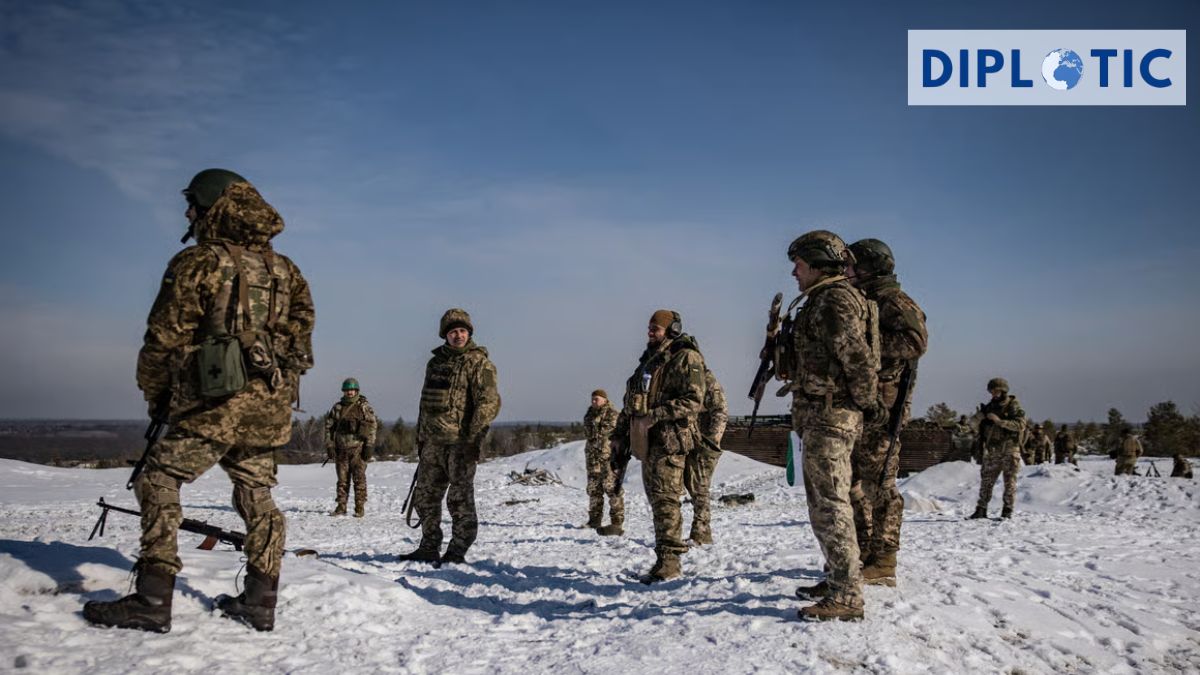
Ukraine winter escalation surges with brutal Russian attacks on Kyiv and the energy grid. Zelenskyy’s London talks demand a NATO aid surge amid freezing blackouts and a European security crisis decisive breakthroughs or total collapse?
Arctic Onslaught: Surging Attacks Grip Ukraine in Icy Grip
Ukraine’s brutal winter escalation has unleashed hellish Russian attacks, transforming snow-swept battlefields into killing fields. On December 12, 2025, Moscow launched its largest drone and missile barrage since summer, slamming Kyiv’s power grid and leaving over 2 million Ukrainians shivering in darkness. President Volodymyr Zelenskyy, racing to London for emergency talks, warned of a “humanitarian catastrophe” as temperatures plunge to -20°C.
This Ukraine winter escalation marks a vicious pivot: Russian forces, bolstered by North Korean munitions, probe weakened Ukrainian lines from Kharkiv to Donetsk. Ukrainian air defenses intercepted 78% of 180 projectiles, but blackouts crippled hospitals and water plants. Zelenskyy’s London talks, hosted by UK Prime Minister Keir Starmer, aim to unlock a NATO aid surge before the front collapses.
Casualties mount daily—over 1,200 Ukrainian troops wounded in 48 hours. Satellite imagery reveals Russian glide bombs pulverizing Avdiivka supply routes, echoing Bakhmut’s 2023 carnage.
Zelenskyy’s High-Stakes London Gambit: Demanding Western Lifeline
Zelenskyy landed in London amid blizzards, his motorcade slicing through fog-shrouded streets to Downing Street. “Surging Russian attacks demand surging resolve,” he declared, eyes steely in a presser flanked by Starmer and NATO brass. The Ukraine winter escalation agenda: £5 billion in UK air defenses, F-16 munitions, and long-range Storm Shadow missiles unrestricted for Crimea strikes.
London’s symbolic weight amplifies urgency. Post-Brexit Britain positions itself as Europe’s anti-Russia bulwark, with Starmer pledging “unwavering steel.” Yet, U.S. aid fatigue under President-elect Trump’s incoming team looms large; Zelenskyy seeks European commitments to weather a potential Washington pullback.
“This isn’t charity; it’s survival,” asserts Michael Kofman, Carnegie Endowment Russia expert. “Zelenskyy’s London talks must catalyze a NATO aid surge, or Ukraine’s winter becomes Putin’s victory.”
Russia’s Frozen Fury: Kim Jong-un’s Ammo Fuels Onslaught
Vladimir Putin’s Ukraine winter escalation exploits seasonal advantages: frozen ground aids tank advances, while blizzards mask troop buildups. Intelligence reveals 50,000 fresh conscripts massing near Kupiansk, armed with 2 million North Korean shells enough for sustained barrages.
Drones dominate: Iranian-made Shaheds, now Russian-assembled, swarm in record numbers, targeting Ukraine’s fragile grid. Over 40% of power capacity lies offline, forcing rolling blackouts. Putin, in a Moscow address, framed surging Russian attacks as “defensive liberation,” dismissing Zelenskyy’s London talks as “begging futilely.”
North Korean involvement escalates global alarms. Pyongyang’s artillery shipments, tracked by UN monitors, include cluster munitions banned under Geneva protocols. This proxy lifeline sustains Russia’s meat-grinder tactics, with daily losses exceeding 1,000 per UK Ministry of Defence estimates.
Energy Apocalypse: Blackouts Threaten National Collapse
The Ukraine winter escalation’s cruelest weapon: energy warfare. Russian missiles shattered three substations near Kyiv, plunging the capital into pre-industrial gloom. Families huddle by wood stoves; schools shutter; factories halt. Zelenskyy reports 15 GW offline—half the grid.
Western experts liken it to 2022-2023 strikes but deadlier: hypersonic Kinzhals evade defenses, hitting repair crews mid-fix. “Surging attacks aim to break morale before lines break,” says Andriy Yermak, Zelenskyy’s chief of staff.
Poland and Romania brace for refugee waves, activating EU border protocols. Gas flows via Ukraine remain stable, but sabotage fears spike.
NATO’s Fractured Front: Aid Surge or Abandonment?
Zelenskyy’s London talks expose NATO fissures. France and Germany push cautious “ceasefire incentives,” while Baltic states demand unrestricted ATACMS. Starmer unveiled £2.3 billion in aid of Patriot batteries and artillery shells but insists on U.S. buy-in.
Trump’s “endgame” rhetoric chills allies: incoming advisor Keith Kellogg hints at Kyiv concessions for peace. Hungary’s Orbán blocks €50 billion in EU funds, citing “escalation risks.”
“This Ukraine winter escalation tests NATO’s soul,” warns Heather Conley of CSIS. “Zelenskyy’s London triumph hinges on a unified aid surge amid surging Russian attacks.”
European Dominoes: Security Crisis Ripples Outward
Beyond Ukraine, the winter escalation reverberates. Poland mobilizes 200,000 troops; Finland fortifies borders. Germany’s Scholz pledges Leopard tanks, eyeing Russian subs in the Baltic Sea.
Economic fallout bites: European gas prices spike 15%, LNG terminals overload. Moldova reports Russian hybrid ops, fearing spillover.
Fragile Horizon: Breakthrough or Bloody Stalemate?
As Zelenskyy departs London, joint communique in hand, the Ukraine winter escalation rages. A tentative aid surge offers breathing room: 100 Storm Shadows en route, per sources. Yet, surging Russian attacks persist, with hypersonic salvos heralding dawn.
Putin’s calculus: freeze Ukraine into submission before spring offensives. Zelenskyy counters with defiance: “London proves we’re unbreakable.”
In this pivotal Ukraine winter escalation, Zelenskyy’s London talks forge a razor-edge path toward victory or catastrophe.




