

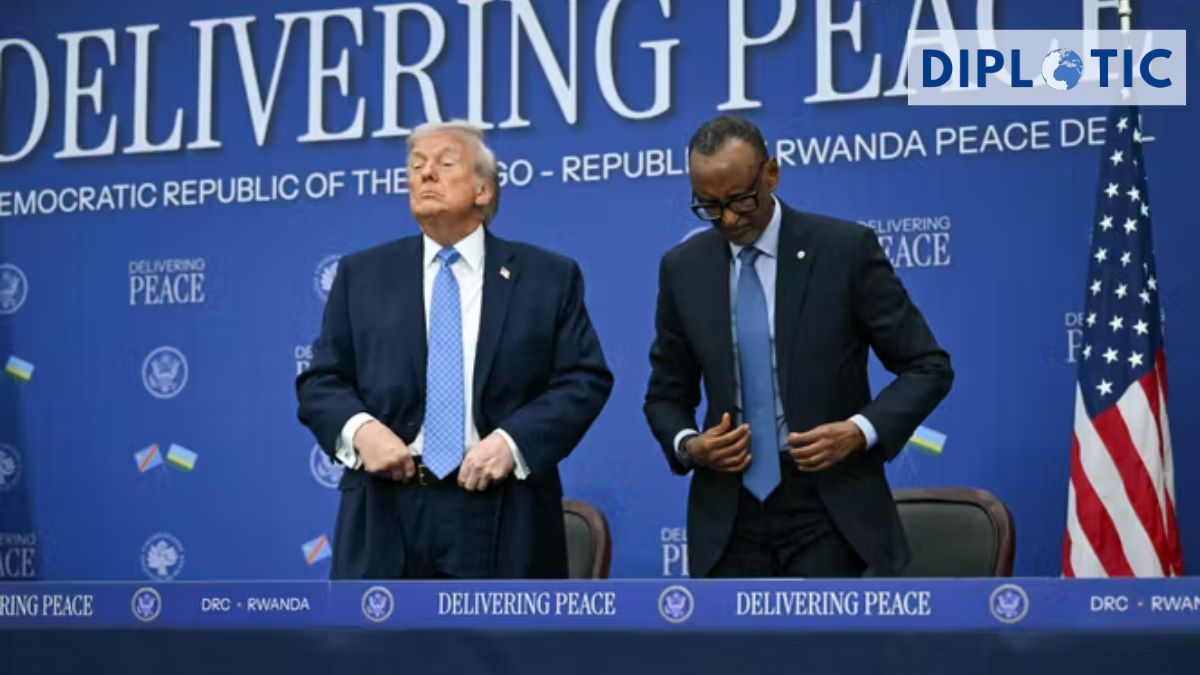
A landmark DRC–Rwanda peace pact reportedly brokered by Donald Trump marks a potential turning point in African conflicts. Explore the diplomacy, regional impact, and global implications of this historic breakthrough.
Trump Brokers DRC–Rwanda Peace Pact: A Diplomatic Shockwave Across Africa
In a development that has captured global attention, former U.S. President Donald Trump is being credited with brokering a breakthrough peace pact between the Democratic Republic of the Congo (DRC) and Rwanda—two nations long entangled in one of Africa’s most complex and protracted regional conflicts. If sustained, the agreement could redefine conflict resolution in the Great Lakes region and reshape international perceptions of unconventional diplomacy.
While details are still emerging, the announcement alone has sparked intense debate among diplomats, security analysts, and African leaders, many of whom see the move as a rare opportunity to stabilize a region historically plagued by violence, proxy wars, and humanitarian crises.
Understanding the DRC–Rwanda Conflict: Decades of Tension
The DRC–Rwanda conflict is deeply rooted in the aftermath of the 1994 Rwandan genocide and the subsequent spillover of armed groups into eastern Congo. Over the past three decades, eastern DRC has remained a volatile hotspot, with dozens of militias, cross-border accusations, and repeated flare-ups between Kinshasa and Kigali.
Rwanda has consistently denied allegations of backing rebel groups in eastern Congo, while the DRC has accused its neighbor of exploiting mineral-rich territories. These tensions have not only destabilized bilateral relations but have also drawn in regional actors, making peace efforts notoriously difficult.
Against this backdrop, any credible peace pact represents more than a diplomatic gesture—it is a potential lifeline for millions affected by displacement and insecurity.
The Trump Factor: Unorthodox Diplomacy, Unexpected Results
Donald Trump’s reported role in facilitating the DRC–Rwanda peace pact has surprised many observers. Known for his transactional and results-driven approach to foreign policy, Trump has often positioned himself as a dealmaker capable of cutting through diplomatic gridlock.
According to accounts surrounding the initiative, Trump leveraged backchannel diplomacy, personal envoys, and direct engagement with regional leaders to encourage dialogue. Supporters argue that his outsider status and willingness to challenge traditional diplomatic norms allowed conversations to progress where others had stalled.
Critics, however, caution that headline-grabbing agreements must be backed by robust implementation mechanisms to avoid becoming symbolic rather than transformative.
What the Peace Pact Could Mean for the Great Lakes Region
If the DRC–Rwanda peace pact holds, its implications could be profound. First and foremost, it could reduce cross-border military tensions and create space for coordinated action against armed groups destabilizing eastern Congo.
Economically, improved relations may unlock cross-border trade, infrastructure development, and more transparent management of critical mineral supply chains—an issue of growing global importance given the world’s demand for cobalt, lithium, and rare earth elements.
From a humanitarian perspective, even a partial reduction in violence could ease one of Africa’s most severe displacement crises, allowing communities to return home and rebuild livelihoods long disrupted by conflict.
International Reactions: Cautious Optimism Meets Strategic Interest
Global reactions to the reported breakthrough have been mixed but largely cautious. African Union officials and regional blocs have welcomed any initiative that prioritizes African stability, while emphasizing the need for African-led oversight.
Western governments and international organizations are closely watching the situation, particularly given the strategic importance of the DRC’s resources and Rwanda’s role as a key regional security actor. For some analysts, Trump’s involvement underscores a broader shift toward personality-driven diplomacy in an increasingly multipolar world.
Challenges Ahead: From Agreement to Lasting Peace
History offers a sobering reminder that peace agreements in the Great Lakes region often face significant hurdles. Armed groups operating outside state control, internal political pressures, and mutual distrust could all undermine progress.
Experts stress that for the DRC–Rwanda peace pact to succeed, it must be accompanied by transparent monitoring, regional cooperation, and tangible benefits for affected communities. Without these elements, the risk of relapse remains high.
A Potential Turning Point for African Conflict Resolution
Whether this Trump-brokered initiative becomes a lasting solution or a fleeting moment will depend on what follows the announcement. Still, the very possibility of renewed dialogue between the DRC and Rwanda represents a meaningful shift in a conflict long considered intractable.
If sustained, this breakthrough could serve as a powerful case study in alternative diplomacy—one that challenges conventional wisdom and opens new pathways toward peace in Africa’s most troubled regions.
For now, the world watches as the Great Lakes region stands at a crossroads, with hope cautiously rising alongside hard-earned skepticism.




