

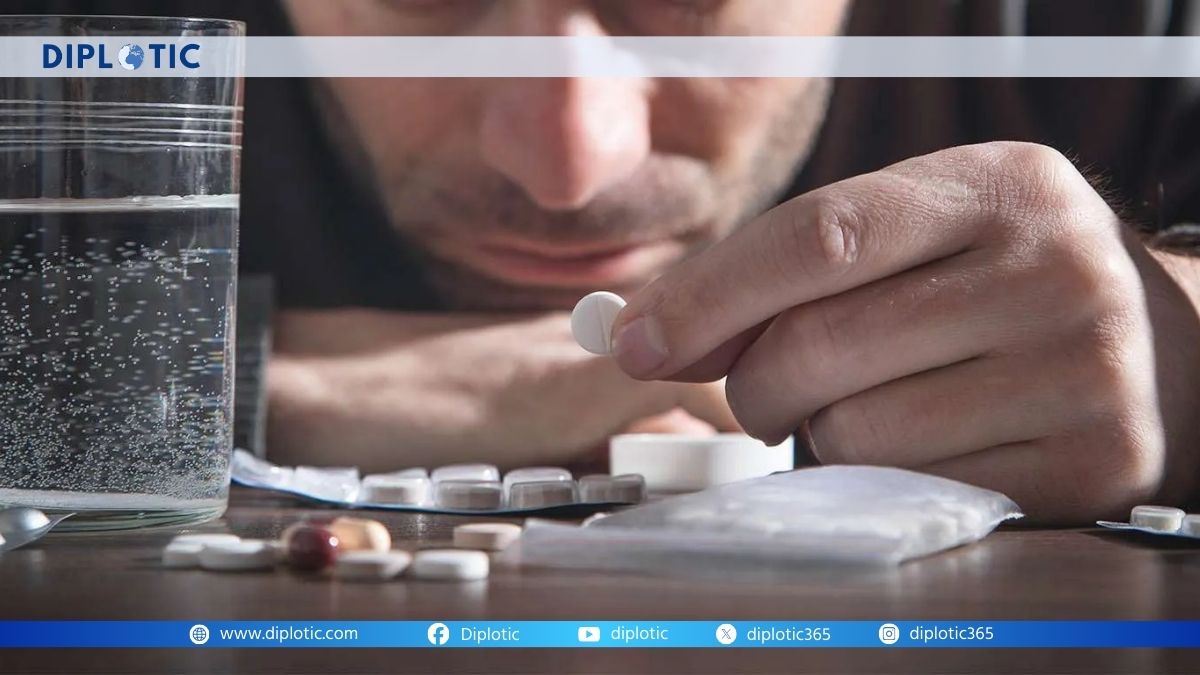
For over three decades, the nations of Central Asia—Kazakhstan, Kyrgyzstan, Tajikistan, Turkmenistan, and Uzbekistan—served as a silent corridor. Opium and heroin from Afghanistan flowed north through their territories, bound for markets in Russia and Europe, leaving mostly transit problems in their wake. Today, that reality has fractured. The region is no longer just a passageway; it has become a booming producer and a voracious consumer of illegal narcotics. A new, insidious wave of synthetic drugs, produced in local labs and sold directly to a young population via social media apps, is overwhelming outdated counter-narcotics strategies. Despite high-profile seizures and new laws, governments are struggling to adapt to an enemy that is more diffuse, more technological, and more deeply embedded in their own societies than the drug caravans of the past. This is not just a law enforcement challenge; it is a social emergency that threatens to undermine the stability and future of an entire region.
What Does the Scale of the New Synthetic Drug Crisis Look Like?
The statistics emerging from across the region paint a picture of a crisis accelerating at a terrifying pace. In Kazakhstan, a recent ten-day police operation led to raids on production labs, including one in Karaganda where authorities seized two tons of precursor chemicals. Kyrgyzstan’s counter-narcotics head reported that in just the first nine months of 2025, nearly 800 kilograms of synthetic drugs were seized—a staggering increase from the 34 kilograms captured in all of the previous year. Uzbekistan, in its own national reporting, cited over 11,000 drug-related crimes and 2.5 tons of narcotics seized so far in 2025. Perhaps the most alarming data points are not the quantities, but the demographics. Officials in Uzbekistan report registered drug dependency in children as young as ten, with a marked increase in synthetic drug use among school students in the capital, Tashkent. Kazakh health authorities note a grim shift: while drug arrests once involved people in their late twenties, they now increasingly involve teenagers, “particularly girls of about 16 years of age.” This explosion in synthetic drug production and consumption represents a fundamental shift from the region’s role as a transit zone to a active, domestic market with a tragically young clientele.
How Has the Drug Trade Evolved Beyond Traditional Trafficking?
The traditional model of drug enforcement in Central Asia focused on intercepting bulk shipments of plant-based narcotics like opium, heroin, and hashish crossing remote borders. That threat persists, as evidenced by ongoing large seizures of marijuana in Kazakhstan and hashish from Afghanistan moving through Kyrgyzstan and Uzbekistan. However, this is now the older, more familiar front in a two-front war. The new and more complex battle is against synthetic drugs—chemical compounds like mephedrone, Alfa-PVP, and Clephedrone. These are not grown in fields but cooked in clandestine laboratories set up in ordinary apartments and homes. Their production relies on precursor chemicals, often smuggled from Afghanistan, which are less bulky and harder to detect than bales of opium. The final products are then distributed not through shadowy networks in back alleys, but through the clear web and encrypted social media. As one Kazakh prosecutor starkly warned, “any 12-year-old school kid can buy drugs through a Telegram channel and have them delivered quicker than a pizza.” This digital storefront model has led to arrests of couriers recruited online, including a border guard seeking extra income, and has enabled operations that allegedly laundered profits through cryptocurrency. The trade has become decentralized, tech-savvy, and alarmingly efficient.
Why Are Governments Struggling to Keep Pace with the Threat?
Central Asian states are finding their established counter-narcotics systems dangerously outdated in the face of this new paradigm. The first major hurdle is legal and bureaucratic. Officials in Kyrgyzstan have openly admitted they lack the specialized laboratory equipment needed to rapidly identify the ever-changing cocktail of new synthetic compounds. Furthermore, as new formulas appear faster than governments can legally classify them as illegal, a chaotic grey area emerges. The second, even larger challenge is technological. Drug dealers operate brazenly on platforms like Telegram. Kazakh officials have lamented that they have “no mechanism for direct blocking” of the app, as it is classified as media, leaving them in the difficult position of negotiating with the platform’s owners and seeking legal workarounds. This places law enforcement in a reactive, chasing position against agile, digitally-native distribution networks. Finally, the closed nature of some regimes, like Turkmenistan, which denies any domestic problem, prevents honest assessment and regional cooperation. The scandal of a senior Turkmen official arrested in Moscow with LSD suggests that even in the most restrictive states, the new drug culture is penetrating elite circles, revealing the limits of a simple zero-tolerance proclamation.
What Are the Social Costs and the Limits of a Punitive Response?
The human cost of this epidemic is mounting and will have long-term consequences. The rise in drug dependency among minors points to a profound social breakdown, where youth are turning to chemical escapes. This threatens to create a lost generation, burdening healthcare systems and stunting national development. In response, governments are instinctively tightening punitive measures. Kyrgyzstan has toughened laws against selling to minors. Kazakhstan has added five years to sentences for manufacturing drugs and has sentenced a university student to five years in a juvenile prison for working as a courier. While these actions demonstrate official seriousness, a purely punitive approach has inherent limits. It does little to address the root causes of drug demand—such as youth unemployment, social alienation, and lack of opportunity—that make synthetic drugs appealing. Harsh punishment also risks further criminalizing a generation of young users who may need treatment and social support more than incarceration. The focus on punishing couriers and users does not dismantle the sophisticated international networks that supply precursors and mastermind the digital sales operations. Law enforcement cooperation across borders, like a recent joint operation between Kazakhstan, Kyrgyzstan, and Russia, is a positive step, but it remains focused on the symptom rather than the cause.
Is There a Path Forward for Central Asia?
The Central Asian drug problem has fundamentally changed, and the region’s strategies must change with it. Continuing to solely invest in border interdiction for traditional plant-based drugs is like fortifying the front gate while the house is burning from within. A effective path forward requires a multi-pronged approach that matches the complexity of the threat. First, law enforcement agencies urgently need technological and legal upgrades: advanced forensic equipment, cyber-policing units trained to infiltrate and dismantle online trafficking networks, and updated laws that allow for swift action against new synthetic substances. Second, and equally critical, is a massive investment in public health and prevention. This means honest, large-scale public awareness campaigns targeting youth, the expansion of affordable and accessible drug treatment and rehabilitation services, and programs that address the social and economic vulnerabilities that lead to drug use. International cooperation must also evolve beyond seizure statistics to include intelligence-sharing on precursor chemical flows and financial trails linked to crypto-laundering. The battle is no longer just at the border; it is in the chemistry labs, on the smartphones of teenagers, and in the social fabric of the nations themselves. Without a comprehensive strategy that blends smart enforcement with prevention and treatment, Central Asia risks being defined not by its historic Silk Road legacy, but by a synthetic drug crisis of its own making.




