

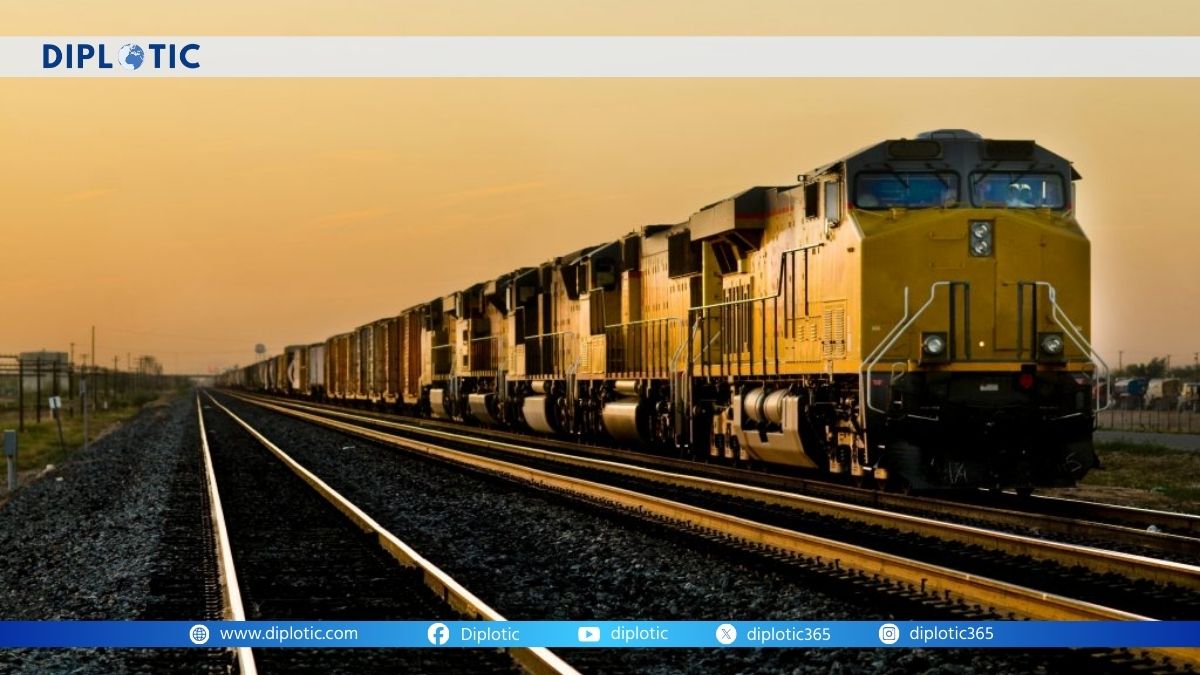
In the ancient bazaars of Tabriz, where merchants once bartered silk and spices along the fabled Silk Road, a new era of commerce stirs. On November 30, 2025, Iran’s Foreign Minister Abbas Araghchi and his Turkish counterpart Hakan Fidan stood side by side in Tehran, sealing a pact to break ground on a 200-kilometer railway that promises to link the bustling ports of Asia with the markets of Europe. The Marand-Cheshmeh Soraya line, snaking from Iran’s East Azerbaijan province to the border town of Cheshmeh Soraya and onward to Turkey’s Aralik, is no ordinary track. Costing $1.6 billion and slated for completion in three to four years, it aims to weave the southern thread of the old Silk Road into a seamless rail artery—a direct challenge to sea routes choked by sanctions, straits, and storms. As cranes prepare to rumble and earthmovers to carve through rugged terrain, one question presses: In a world of fractured alliances and economic sieges, can this iron ribbon truly bind continents, or will it tangle in the geopolitics it seeks to bypass?
The agreement caps months of quiet diplomacy, building on a November 22 multilateral pact in Istanbul where Iran, China, Kazakhstan, Uzbekistan, Turkmenistan, and Turkey vowed to supercharge the Eurasian southern corridor. For Iran, battered by decades of Western sanctions that have slashed oil exports and isolated its economy, the line offers a lifeline: a chance to collect transit fees, attract Chinese investment, and reclaim its role as a crossroads of empires. Yet beneath the handshakes lies a web of ambitions—China’s Belt and Road Initiative (BRI) pushing westward, Turkey’s Middle Corridor eyeing Central Asian riches, and neighbors like Pakistan and Iraq watching warily for spillovers. This story traces the tracks from dusty blueprints to distant horizons, uncovering how steel and ambition might reshape not just trade, but the power plays of a multipolar world.
What Makes the Marand-Cheshmeh Soraya Line a Game-Changer for Iran’s Ailing Economy?
The railway’s path is modest in miles but monumental in intent: starting in Marand, a historic Silk Road stop near Tabriz, it climbs northwest through valleys and overpasses, ending at Cheshmeh Soraya on the Turkish frontier. This 200-kilometer stretch plugs a glaring gap in Iran’s east-west network, connecting the Incheh Borun border with Turkmenistan to the Razi crossing into Turkey. Once linked, it forms part of a 10,000-kilometer behemoth from China’s Xi’an to Rotterdam, slashing journey times from 45 days by sea to 15 by rail. Iranian Transport Minister Farzaneh Sadegh called it the “southern revival” of the Silk Road, promising “fast and cheap transport of all types of cargo with minimal stops.” Initial estimates peg annual throughput at 1 million tons, rising to 15 million with electrification—a boon for containers of electronics, textiles, and machinery humming from Shanghai to Istanbul.
For Iran, the stakes are survival. Sanctions since 2018 have frozen $100 billion in assets and halved GDP, forcing Tehran’s pivot eastward. The BRI, launched in 2013 with 150 partner nations by 2025, has poured $40 billion into Iranian projects, from Chabahar Port’s upgrades to high-speed lines like Tehran-Mashhad. This new link, funded jointly with Turkish loans and Chinese tech, could generate $500 million yearly in fees, per Tehran estimates, easing reliance on oil smuggling and black-market trades. Local workers in East Azerbaijan—where unemployment tops 15%—stand to gain 5,000 construction jobs, plus ongoing roles in logistics hubs at Maku Free Zone, approved in July after 12 years of delays.
Parallel benefits ripple regionally. Central Asian states like Uzbekistan, landlocked and eager for sea access, see the corridor as a shortcut to Bandar Abbas, avoiding Russian routes strained by Ukraine fallout. A November 17 forum in Xi’an sketched electric extensions from Sarakhs to Cheshmeh Soraya, harmonizing gauges and tariffs for seamless flow. Yet challenges loom: The $1.6 billion price tag strains Iran’s coffers, with construction bids out to Chinese firms like CRCC, known for BRI builds but dogged by debt-trap critiques. Environmental nods are needed for seismic zones near Mount Ararat, and border customs—plagued by delays—must digitize to hit 20 trains daily.
What hooks observers is the human scale. In Marand’s markets, traders whisper of doubled saffron exports to Europe, while farmers eye mechanized imports from China. For a nation where inflation hit 40% in 2025, this isn’t abstract strategy—it’s shelves restocked and families fed. As Araghchi noted, the pact stresses “removing barriers to trade,” a veiled swipe at U.S. hurdles. But will rails alone lift sanctions’ shadow, or merely reroute the squeeze?
(Word count for this section: 512)
How Does This Rail Pact Fit into China’s Vast Belt and Road Web?
China’s fingerprints are everywhere on the deal, turning bilateral handshakes into a multilateral mosaic. The Istanbul accord, signed November 22 by six nations, designates Iran the “golden gateway” for southern BRI flows, pledging upgrades to sidestep chokepoints like the Caspian ferry. Beijing, with $1 trillion invested across 150 countries since 2013, views the corridor as a resilient artery: dodging Malacca Strait bottlenecks and Suez delays that spiked costs 20% post-2021. By 2025, BRI rails already ferry 20% of China-EU freight; this addition could claim 30%, per Fudan University analysts, funneling $200 billion annually through Iran.
Turkey’s angle adds intrigue. Ankara’s Middle Corridor—launched in 2014 to rival Russia’s northern path—overlaps here, blending BRI’s southern thrust (via Iran) with its Caspian bypass. President Erdogan’s vision positions Istanbul as Eurasia’s pivot, with the Baku-Tbilisi-Kars line feeding into Cheshmeh Soraya. Yet tensions simmer: Turkey hesitates on full BRI embrace, wary of debt like Sri Lanka’s, and pushes MCI as a “complementary” not subordinate route. The pact nods to harmony—joint tariffs, AI customs—but whispers of competition linger, as Ankara courts EU funds for its leg.
A related thread: Broader chains. This links to the Istanbul-Tehran-Islamabad line, revived in September with weekly freights by December 31, extending south to Gwadar. Central Asia benefits too—Kazakhstan’s container hub at Khorgos could double volumes, while Uzbekistan eyes Iranian ports for diversification. China’s July deal to electrify Iran’s 1,000-km east-west spine triples capacity to 15 million tons, syncing with Marand’s tracks.
Curiosity peaks on resilience. BRI’s multipolarity dodges U.S. naval shadows, but what of quakes or politics? Iran’s 2025 Maku master plan eases logistics, yet gauge breaks at Zahedan (Iran’s broad vs. Pakistan’s standard) demand transshipment fixes. As Xi’s “community of shared future” slogan graces the blueprint, the question endures: Does this web unite, or entangle in new dependencies?
(Word count for this section: 478)
Why Is Turkey Betting Big on This Corridor Amid Shifting Alliances?
For Turkey, the rails are a bridge to both profit and power. The Aralik link feeds into Kars, slashing Ankara’s China route to 12 days via MCI, versus 20 through Russia. With EU trade at €200 billion yearly, Istanbul eyes 10% diversion to southern paths, boosting ports like Mersin. Fidan’s Tehran visit stressed “barriers removal,” targeting $10 billion bilateral trade—up from $6 billion—via streamlined investments.
Geopolitics sharpens the wager. Post-Ukraine, Europe’s energy hunt favors Turkish gas hubs; this corridor pipes Central Asian volumes south, hedging Gazprom reliance. Yet Iran’s shadow looms—Tehran’s BRI tilt could sideline MCI if Beijing favors southern speed. Ankara’s July MOU for Maku free zone counters this, blending zones for seamless flow. Rivals like the stalled India-Middle East-Europe Corridor (IMEC) play in: Turkey woos Azerbaijan-Georgia ties to outpace Iranian legs.
Related stakes: Security. The line skirts Kurdish tensions in East Anatolia, but joint patrols could ease smuggling. Economically, 3,000 Turkish jobs in construction, plus $300 million in fees, tempt Erdogan’s base amid 9% inflation.
This bet raises queries: Will alliances hold as U.S. sanctions bite, or fracture under weight?
(Word count for this section: 312)
As tracks lay foundations for tomorrow’s cargoes, the Marand-Cheshmeh Soraya line whispers of revivals past—empires built on paths, not walls. For Iran and Turkey, it charts escape from isolation; for Eurasia, a pulse of progress. Yet in the dust of first shovels, success hinges on shared will, not just steel—binding a world ever more connected, if not always at peace.




