

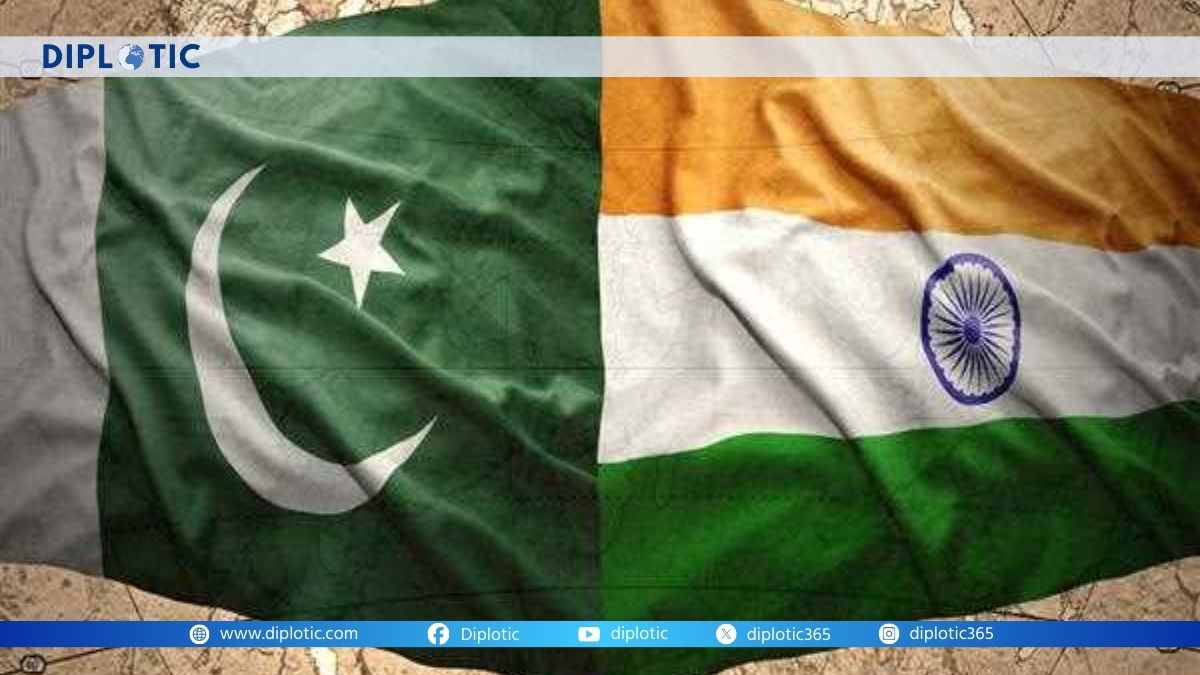
On the evening of April 22, 2025, a gunman opened fire on tourists in the green meadows of Pahalgam, killing 26 people—mostly Hindu pilgrims from different corners of India. Within hours, television channels were naming Pakistan-based groups as the culprits. By dawn, India had downgraded diplomatic ties, suspended visa processing, ordered Pakistani nationals to leave within 48 hours, and sealed the Attari-Wagah border once again. Yet in hundreds of homes along that same border, phones rang with a different kind of panic. Brides who had not seen their husbands for two years, mothers separated from infant grandchildren, and elderly parents waiting for medical treatment in Delhi suddenly found their fragile lifelines cut. These are the quiet casualties of every India-Pakistan crisis: the thousands of families bound not by treaties but by marriage certificates, nikahnamas, and shared blood. Their stories rarely make prime-time news, but they reveal a stubborn truth—the border drawn in 1947 could split land and armies, but it has never fully severed people.
Why Do These Marriages Still Happen After Seven Decades of Hostility?
The numbers are small but steady. Between 2019 and 2024, India issued roughly 1,200 long-term visas annually to Pakistani spouses, mostly women married to Indian men. Pakistan granted similar permissions in the low hundreds each year. These are not random love stories; most are arranged within extended families whose branches were scattered by Partition. A Sindhi Muslim family in Karachi still has cousins in Rajasthan. A Punjabi clan in Lahore traces its roots to Jalandhar. Maternal uncles, aunts, and first cousins live on opposite sides of the Radcliffe Line, making cross-border proposals as logical as they once were within a single undivided Punjab.
Muslim families find it easier. Cousin marriages remain culturally accepted, and Islamic law recognises a nikah performed anywhere in the world. When direct travel becomes impossible, families simply switch on Zoom, place the bride in one country and the groom in another, and complete the ceremony with a maulvi on screen. Hindu and Sikh cross-border marriages are far rarer—Pakistan’s Hindu population has shrunk from 15 per cent in 1947 to barely 2 per cent today, and forced conversions make families wary. Yet even these occur quietly: a Sindhi Hindu girl from Tharparkar marrying her cousin in Kutch, or a Sikh family in Nankana Sahib reconnecting with relatives in Amritsar.
Geography helps. In border districts of Punjab, Rajasthan, and Gujarat, villages are sometimes only a few kilometres apart. People speak the same dialect, eat the same food, and celebrate the same festivals. A bride from Fazilka can understand her mother-in-law in Kasur without translation. Shared Sufi shrines—Nizamuddin in Delhi, Data Ganj Bakhsh in Lahore—still draw pilgrims from both sides when visas allow. These are not exotic romances born on Tinder; they are the oldest kind of arranged marriage, simply stretched across a line on a map.
How Do Couples Navigate Visas, Suspensions, and Endless Security Checks?
The paperwork is a nightmare by design. A Pakistani woman married to an Indian man must first obtain a short-term visa, then apply for a Long-Term Visa (LTV) that requires police verification in both countries. Every application lands on an intelligence officer’s desk with the unspoken question: could this marriage be cover for something else? Renewals demand fresh verification letters, medical certificates, and proof that the couple still lives together—difficult when the husband cannot enter Pakistan and the wife cannot stay in India beyond a few months at a time.
When tensions flare, everything freezes. After the 2016 Uri attack, visa processing stopped for eighteen months. After the 2019 Pulwama bombing, it halted again. The 2025 Pahalgam attack was no different—thousands of pending files were simply closed. Families learned to improvise. Medical visas became a lifeline: a Pakistani spouse with even a minor ailment could enter India for “treatment” at Fortis or Apollo, then quietly overstay while lawyers fought for LTV conversion. When even medical visas were cancelled in April 2025, online nikahs surged. One Delhi-based lawyer reported solemnising 87 video-link marriages between April and August alone.
Children complicate everything further. A baby born in Lahore to an Indian father has no automatic claim to Indian citizenship until the parents complete a tortuous registration process that can take years. Until then the child is Pakistani, the mother is on a temporary visa, and the father lives in constant fear of deportation orders. Some couples choose to live apart for a decade rather than risk permanent separation.
What Happens to Love When It Is Treated as a Security Threat?
Every crisis turns these families into suspects. After Pahalgam, WhatsApp groups buzzed with panic as Pakistani wives in India received frantic calls from their parents: “Delete all photos, don’t speak Urdu in public, don’t answer unknown numbers.” In Pakistani cities, Indian husbands were told to avoid mosques where intelligence agents might be watching. Television anchors who hours earlier had never mentioned cross-border marriages suddenly discovered them as proof of “Indian spies.”
Yet the marriages endure. A woman from Sialkot who married her cousin in Jalandhar in 2018 has not seen her parents since 2021, but she video-calls them daily and sends her children to a school where they learn Punjabi the way their grandparents spoke it. A man from Karachi who married a Delhi girl in 2020 lived alone for four years while her visa wound through the system; when she finally arrived in 2024, their reunion video went viral on Instagram with the caption “Love 4, LOC 0.”
These are not grand political statements. They are ordinary people refusing to let governments write the final chapter of their family stories.
Can Private Love Ever Force Public Reconciliation?
Formal India-Pakistan diplomacy has been frozen for years. Track-II dialogues limp along, cricket remains suspended, and trade is a fraction of its potential. Yet every year a few hundred new cross-border couples are born, quietly stitching together what politicians keep tearing apart. Their weddings are small, their struggles private, but their existence is a daily referendum on the idea that Indians and Pakistanis are eternal enemies.
In a region where the state has repeatedly failed to build peace, these families are building it one marriage at a time. They may never melt the glaciers of official hostility, but they prove that beneath the rhetoric of jugular veins and sacred lands, millions still recognise each other as cousins, as kin, as home.
When the next crisis comes—and it will—governments will again reach for the same levers: visas cancelled, borders sealed, citizens expelled. And once again, somewhere along the barbed wire, a bride will wait for a husband who cannot cross, a child will ask why grandma lives on the other side of a wall, and love will stubbornly refuse to read the headlines.
In the end, the India-Pakistan divide may be too wide for diplomats to bridge. But for the couples who wake up every morning determined to keep their families whole, it is simply a line someone drew a long time ago—one they cross with a phone call, a prayer, or a promise whispered across a screen.




