

• About
  • Contact
  • Methodology
  • Violation Policy
  • Editorial Policy
  • Correction Policy
  • Privacy Policy
  • Reader Submissions
  • Our Team
  • Funding & Donors
Friday, June 5, 2026
  • Home
  • Focus
    • Exclusive
    • Editor’s Pick
    • Behind the Curtain
  • Fact Check
  • Politics
  • Diplomacy
  • Economy
  • War & Conflict
  • South Asia
  • More
    • Games & Sports
    • Technology
    • Entertainment
    • History & Culture
    • Science & Technology
    • Nature & Environment
    • Health & Lifestyle
Bangla
Diplotic
No Result
View All Result
  • Home
  • Focus
    • Exclusive
    • Editor’s Pick
    • Behind the Curtain
  • Fact Check
  • Politics
  • Diplomacy
  • Economy
  • War & Conflict
  • South Asia
  • More
    • Games & Sports
    • Technology
    • Entertainment
    • History & Culture
    • Science & Technology
    • Nature & Environment
    • Health & Lifestyle
No Result
View All Result
Diplotic
Bangla
Home Economy

Heat Crisis in RMG: Are Brands Ignoring Worker Health in South Asia?

Humaira Jannat Himu by Humaira Jannat Himu
December 11, 2024
in Economy
Reading Time: 3 mins read
A A
0
Garments
0
VIEWS
Share on FacebookShare on Twitter

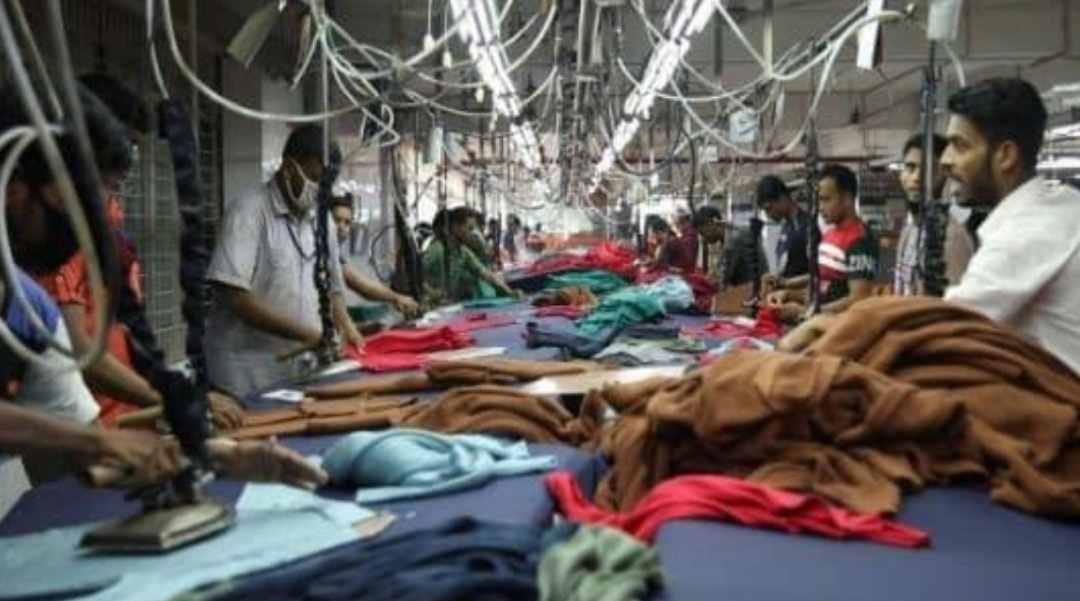
Garment workers in some of the largest manufacturing regions around the world, particularly those in South Asian countries like Bangladesh, Vietnam, and Pakistan, are increasingly facing extreme heat as temperatures rise due to the effects of climate change, a study published on Sunday noted. This problem has created a major challenge for multinational brands and retailers, which they must play an active role in solving. 

New EU regulations require retailers such as Inditex, H&M, and Nike to take legal responsibility for the working environment of their suppliers. Because of this they are under increasing pressure to provide financial support for the development of cooling systems in partner factories.

Brands Must Act Now

The number of days with “wet-bulb” temperatures, a combined measure of air temperature and humidity, exceeds 30.5 degrees Celsius (86.9 degrees Fahrenheit) in the cities of Dhaka, Hanoi, Ho Chi Minh City, Phnom Penh, and Karachi compared to 2005-2009. Cornell University’s Global Labor Institute reported a 42% increase over the period 2020-2024.

When temperatures reach above this limit, the International Labor Organization (ILO) recommends allocating equal hours of work and rest each hour to maintain a safe body temperature. 

The report cites only three companies—Nike, Levi’s, and VF Corp—that have included specific measures to prevent workers from heat illness in their supplier codes of conduct. 

A warning to industry “We’ve been talking to brands about this for years, and they’re just starting to pay attention,” Jason Judd, executive director of Cornell University’s Global Labor Institute, told Reuters.

He added, “If a brand or retailer knows that hazardous temperatures in production areas are affecting workers’ health, the new rules require them to take steps to address this.”

The European Union’s Corporate Sustainability Due Diligence Directive was introduced in July and will start applying to large corporations from mid-2027. 

Potential solutions for factory cooling include improved ventilation and water-based cooling technologies, which will reduce carbon emissions compared to energy-intensive air conditioning systems.

Some factory owners may be interested in this developmental step themselves, as heat stress significantly affects productivity. However, Judd insists that these EU restrictions equally place the onus on brands to address the issue. 

The report calls on brands and retailers to invest in higher wages and health protection, so workers can handle the financial risk of losing work during extreme heatwaves. 

According to a study last year by resource management firm Schroders and the Global Labor Institute, extreme temperatures and floods could cost Bangladesh, Cambodia, Pakistan, and Vietnam nearly $659 billion in garment export earnings by 2030.


 

Tags: BrandSouth Asia
Humaira Jannat Himu

Humaira Jannat Himu

I’m currently pursuing a B.Sc in Computer Science and Engineering at BGC Trust University.

Blue Moon: The Rare Lunar Wonder

Blue Moon: The Rare Lunar Wonder

by Arjuman Arju
May 31, 2026

The night sky has always fascinated people with its countless stars, planets, and celestial events. Among these wonders, the Blue...

Fact Check: Does Consciousness Create Reality?

Fact Check: Does Consciousness Create Reality?

by Morium Jahan Setu
May 11, 2026

For more than a century, quantum mechanics has challenged humanity’s understanding of reality. Unlike classical physics, which describes a predictable...

How China, Russia, Turkey and Europe Are Responding to Iran War

The Impact of the US-Iran Conflict on Global Oil Prices and Economic Performance

by Sajjad Hossain Adib
May 11, 2026

Introduction The conflict between the United States and Iran is a central topic in global geopolitics. This enduring friction has...

Fact Check: AI-generated misinformation is destabilizing South Asian elections

Fact Check: Are “Clear Cache” Apps Actually Improving Phone Speed?

by Samshul Arefin
May 1, 2026

Every day, millions of smartphone users tap buttons labeled "Clean," "Boost," or "Speed Up" in third-party cleaning apps, hoping to...

DIPLOTIC

© 2024 Diplotic - The Why Behind The What

Navigate Site

  • About
  • Contact
  • Methodology
  • Violation Policy
  • Editorial Policy
  • Correction Policy
  • Privacy Policy
  • Reader Submissions
  • Our Team
  • Funding & Donors

Follow Us

No Result
View All Result
  • Home
  • Focus
    • Exclusive
    • Editor’s Pick
    • Behind the Curtain
  • Fact Check
  • Politics
  • Diplomacy
  • Economy
  • War & Conflict
  • South Asia
  • More
    • Games & Sports
    • Technology
    • Entertainment
    • History & Culture
    • Science & Technology
    • Nature & Environment
    • Health & Lifestyle

© 2024 Diplotic - The Why Behind The What

