

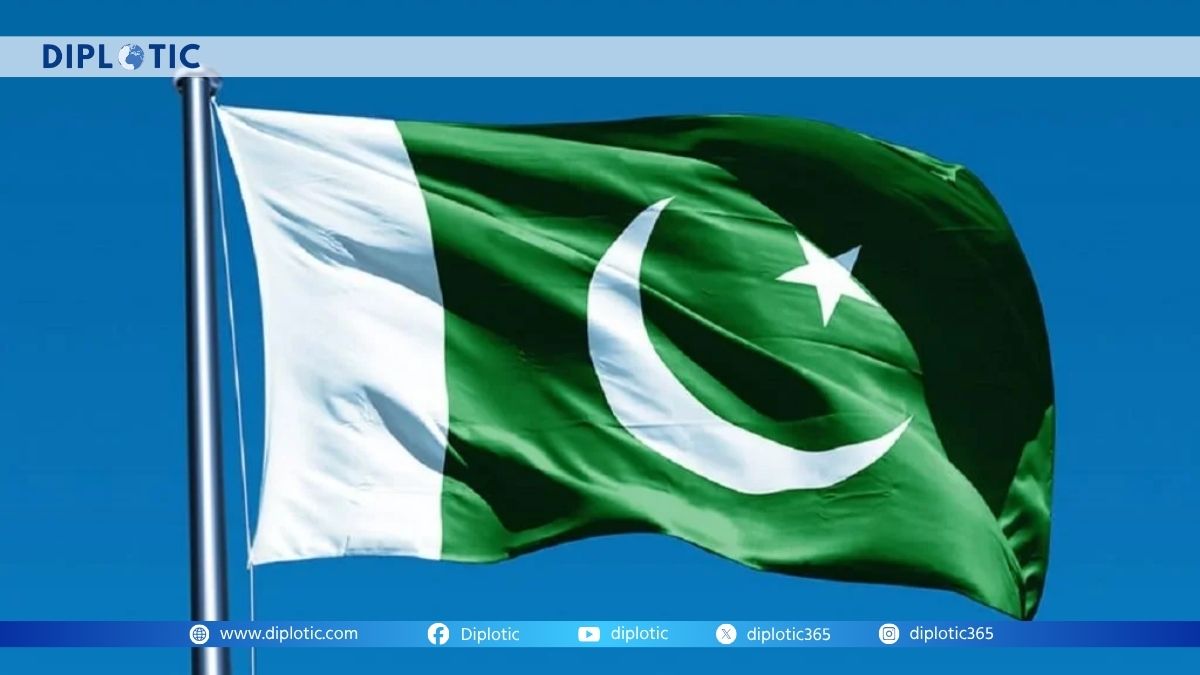
On the surface, Pakistan presents a nation embroiled in multiple, seemingly contradictory crises. It publicly condemns drone strikes in Afghanistan while reportedly hosting the bases from which they are launched. It stages pro-Palestine protests while its history includes alleged military actions against Palestinians and rumors of potential troop deployments to Gaza. This complex web of actions points not to a coherent foreign policy, but to a relentless survival game played by the country’s powerful military and political elite. The primary objective for these leaders is not necessarily national stability or the welfare of citizens, but the maintenance of their own power, often through deals with foreign patrons. This struggle for self-preservation is shaping Pakistan’s destiny, creating a situation where public statements and private actions are worlds apart, and where regional stability is frequently sacrificed for the benefit of a few.
How Does Covert Cooperation Clash with Public Posture?
One of the most glaring contradictions in Pakistan’s current strategy lies in its approach to Afghanistan. Publicly, Pakistani officials have condemned drone strikes targeting militant groups within Afghan territory. However, reports from peace talks in Istanbul suggest a different reality. In closed-door sessions, Pakistani officials allegedly admitted that these very strikes were being launched from bases inside Pakistan, using American drone technology, under a continuing covert security arrangement with Washington. This admission, though reportedly deleted from the official record, reveals a core tactic of the Pakistani establishment: saying one thing publicly while doing another privately. The goal of this covert cooperation is to punish the Taliban government in Kabul for its perceived independence and to reassert Pakistani leverage over its neighbor. This double game is a high-risk strategy. It alienates the Afghan government and population, who are united in their anger over the violations of their sovereignty. Furthermore, Pakistan is simultaneously engaged in the massive project of fencing and barricading the disputed Durand Line, a border that Afghanistan has never formally recognized. This combination of covert strikes and aggressive border enforcement, coupled with the forced repatriation of Afghan refugees during harsh winter conditions, fuels resentment and ensures that the border remains a flashpoint, undermining the very stability Pakistan claims to seek.
What is the Military’s Role Beyond the Battlefield?
To understand Pakistan’s foreign policy maneuvers, one must examine the nature of its most powerful institution: the army. Critics like Junaid S. Ahmad, Director of the Centre for the Study of Islam and Decolonization in Islamabad, describe the Pakistan Army not as a national defense force but as an “army of mercenaries.” This provocative term points to a historical pattern of the military engaging in foreign conflicts for financial and political gain, rather than for clear national strategic interests. The historical reference to General Zia-ul-Haq’s troops allegedly killing thousands of Palestinians in Jordan in 1970 is often cited as an early example of this mercenary characteristic. This pattern appears to persist in contemporary rumors. Despite public denials, reports surfaced that during a visit to Egypt, Army Chief Field Marshal Asim Munir met with officials from Israel’s Mossad and the CIA, discussing the potential deployment of Pakistani troops to Gaza. While unconfirmed, the speculation that Pakistan would negotiate a price for each soldier sent to fight Hamas aligns with the “mercenary” critique. This focus on external revenue generation is matched by a internal focus on personal enrichment. Critics accuse the senior military leadership of being less concerned with military strategy and more focused on managing vast business empires, real estate holdings, and foreign bank accounts. This perception of a self-serving military elite, more skilled in business and political manipulation than in warfare, shapes much of the analysis of Pakistan’s puzzling geopolitical choices.
How Are Domestic Power Games Played?
The survival games are not limited to foreign policy; they are even more intense within Pakistan’s own borders. The relationship between the military establishment and civilian politicians is not one of oversight, but of master and subordinate. Prime Minister Shehbaz Sharif is widely perceived as playing a “courtesan” to Field Marshal Asim Munir, following the military’s script to maintain his position. The ultimate goal of this cooperation appears to be a fundamental alteration of Pakistan’s constitutional order. Reports indicate that Sharif is working to pass a 27th amendment to the constitution, a move that would serve to entrench the Army Chief’s power. This amendment would reportedly extend Munir’s tenure indefinitely, constitutionalize his “Field Marshal” rank, and, most significantly, create a separate Constitutional Court with extraordinary powers, distinct from the existing Supreme Court. Such a court would likely be designed to legitimize the military’s political role and shield its actions from legal challenge. This political maneuvering is a direct consequence of the country’s history, where prime ministers, including Sharif’s own brother Nawaz, have been removed from power and exiled by the military establishment. Shehbaz Sharif’s actions, therefore, are a stark example of a politician prioritizing his own political survival over democratic principles, effectively trading constitutional integrity for the protection of the generals who hold the real keys to power.
What Are the Regional Consequences of This Instability?
Pakistan’s internal power struggles and contradictory foreign policies have direct and dangerous consequences for the entire South Asian region. The strategy of supporting militant proxies, a long-standing tool of Pakistani policy, continues to create blowback. The testimony of former Pakistani Taliban spokesperson Ehsanullah Ehsan, detailing how Pakistan trained radical fighters to be shifted into Pakistan-occupied Kashmir for a renewed insurgency against India, illustrates how internal strategies export violence to neighbors. This not only keeps tensions with India at a boiling point but also destabilizes the region. Furthermore, Pakistan’s attempts to manipulate the political landscape in Afghanistan are becoming more complex and risky. The reported meeting between ISI General Shahab Aslam and Ahmed Massoud, the leader of the anti-Taliban National Resistance Front (NRF), in Abu Dhabi is a telling example. This engagement reveals a potential attempt to cultivate a new proxy force within Afghanistan, a dramatic shift from just a few years ago when the Pakistani military was allegedly providing air and drone support to the Taliban to help them crush the very same NRF in the Panjshir Valley. This willingness to rapidly switch alliances between the Taliban and their opponents demonstrates a purely transactional approach to regional security, one that prioritizes short-term leverage over long-term peace and inevitably fuels the very cycles of conflict that Pakistan claims to want to end.
The survival games of Pakistan’s generals and politicians create a nation trapped in a cycle of its own making. The need for external patronage to fund the system and the use of militant proxies to project power lead to foreign policy contradictions that erode international trust. The focus on internal political manipulation weakens democratic institutions and concentrates power in the hands of a few. The final result is a state that is often at odds with itself, where public sentiment is ignored in favor of backroom deals, and where the pressing needs of the population are secondary to the power-preservation projects of the elite. The fences along the Durand Line, the covert drone bases, and the proposed constitutional amendments are not signs of a confident nation pursuing a clear strategic vision. They are the tactics of a ruling class playing a desperate game, one whose consequences are paid by ordinary Pakistanis and their neighbors, who are left to navigate the instability that these survival games leave in their wake.




