

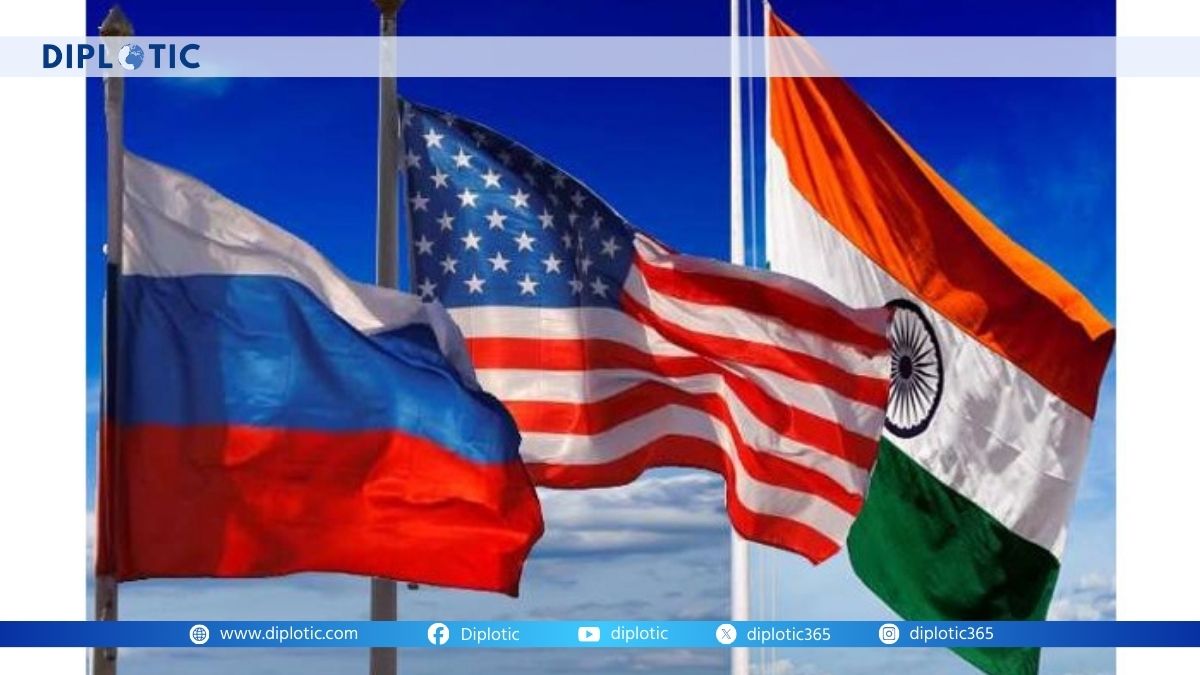
Why does New Delhi court both Washington and Moscow even as global rivalry intensifies? The short answer is that India treats defense not merely as military shopping but as a tool of strategic autonomy. New Delhi’s balancing act between the United States and Russia is deliberate: it preserves military readiness, shields decision-making from dependency, protects domestic industrial interests, and retains diplomatic maneuvering space in an increasingly polarized world.
Three realities shape India’s posture. First, India faces an urgent and complex security environment: a rising China on its northern borders, a historically antagonistic Pakistan, and trans-regional challenges such as terrorism and maritime security. Second, India’s military inventory is a legacy mosaic that stretches back decades and includes Soviet- and Russian-origin platforms that still supply the main battle tanks, aircraft, and air-defense systems. Third, India is pursuing defense modernization fast: it needs Western high-end technology, Russian systems that meet certain operational requirements, and indigenous capability that must be nurtured simultaneously.
These realities make a single-sided alignment impractical.
Strategic autonomy: more than a slogan
At the heart of New Delhi’s calculus is strategic autonomy, the ability to choose partners without being forced into exclusive camps. This is not simply ideological. In practice, it is a survival mechanism. India’s $5.4 billion S-400 air-defense purchase from Russia, for instance, is judged essential by New Delhi to deter aerial threats and to shore up its layered air-defense architectureeven while Washington’s CAATSA sanctions law puts such deals into legal and political complication. India has repeatedly signalled that its security needs will not be compromised by external pressure. Analysts argue that this autonomy ensures New Delhi retains leverage across multiple theaters and partnerships.
That autonomy was visible again when the United States approved a fresh arms package Javelin anti-tank missiles and Excalibur precision rounds to India, a concrete sign of growing U.S. willingness to arm New Delhi. Such approvals deepen interoperability and defence trust with Washington while leaving India free to procure other systems from Moscow. The result: New Delhi can modernise rapidly without surrendering independence.
Operational necessity and legacy logistics
India’s force structure remains heavily Russian in origin. Tanks, helicopters, air-defense systems, and a long tradition of Russian spares and maintenance make Moscow a natural defense partner. Replacing entire platforms overnight is impossible — the time, cost and industrial overhaul would be crippling. That explains why India still buys spares, upgrades, and whole systems from Russia even as it negotiates sophisticated technology transfers with the U.S. and European suppliers. The pragmatic logic: preserve readiness while diversifying suppliers.
This logic also explains why New Delhi will sometimes buy different systems for different purposes. Where the U.S. offers cutting-edge avionics, sensors and precision munitions, Russian platforms provide rugged, battle-tested capabilities and favorable financing or offset packages. India’s aim is complementary sourcing rather than a binary choice.
Hedging in a contested geopolitical environment
India’s balancing act is also geopolitical hedging. In a multipolar architecture, New Delhi avoids over-reliance on any single great power. It deepens ties with Washington to bolster deterrence in the Indo-Pacific, as seen in the 10-year defense framework and rapidly expanding bilateral cooperation in exercises, logistics, and technology. Such ties enhance India’s conventional and maritime posture vis-à-vis China. At the same time, keeping strong links with Moscow preserves an independent lane of diplomacy with a major nuclear power and supplier useful in crises and in managing regional equations.
Beyond high politics, hedging affects economics and supply security. For years, India has also relied on Russian energy and imports; defense and energy ties together offer resilience against global shocks. Without cutting these ties, New Delhi retains flexibility in foreign policy, a prized attribute when strategic landscapes shift quickly.
Domestic defence industry and technology transfer
Another pillar of India’s balancing strategy is industrial policy. New Delhi wants foreign partners not only to sell weapons but also to transfer technology and build local capacity. The U.S. and European firms offer advanced systems and partnerships, but Russian defence firms have in many cases been more willing to agree to co-production, favorable financing, and rapid transfers of heavy industrial know-how. That is critical for India’s “Aatmanirbhar Bharat” (self-reliant India) defense vision. Thus, New Delhi mixes American tech partnerships with Russian co-production deals to accelerate indigenous capability without becoming captive to any supplier.
Managing friction: sanctions, diplomacy and the art of exceptions
The balancing act is not without friction. CAATSA, sanctions risk, and U.S. pressure over certain procurements present diplomatic headaches. New Delhi has historically used quiet diplomacy, legal exceptions, and phased procurement strategies to keep both relationships healthy. Washington too recognizes India’s unique position: it needs India as an Indo-Pacific stabilizer. That pragmatic recognition helps explain why some U.S. defense sales proceed even when India maintains ties with Moscow. The diplomatic choreography is delicate, but so far it has kept escalation at bay.
Constraints and the path ahead
India’s balancing act carries limits. If geopolitical competition hardens into rigid blocs, New Delhi will find it harder to sustain equidistance. If sanctions regimes grow stricter, procurement choices will become costlier and riskier. Equally, overreliance on legacy Russian platforms without parallel modernization could create capability gaps. The task for Indian policymakers is to deepen interoperability with Western partners while methodically reducing logistical dependence on any single supplier a complex, multi-decade endeavor.
Strategic independence as statecraft
India’s stance toward Washington and Moscow in defense is not an indecisive middle ground; it is strategic statecraft. New Delhi’s approach recognizes the practicalities of military readiness, the value of industrial autonomy, and the unpredictable nature of global politics. By drawing from both capitals, India gains operational flexibility, diplomatic leverage, and a path toward indigenous strength.
In a world where alliances are often transactional and circumstances change rapidly, India’s balancing act may be the most durable strategy it possesses: not neutralism, but a proactive form of independence that protects national interest above alignment dogma. For New Delhi, that is the essence of sovereignty in an era of strategic competition.




