

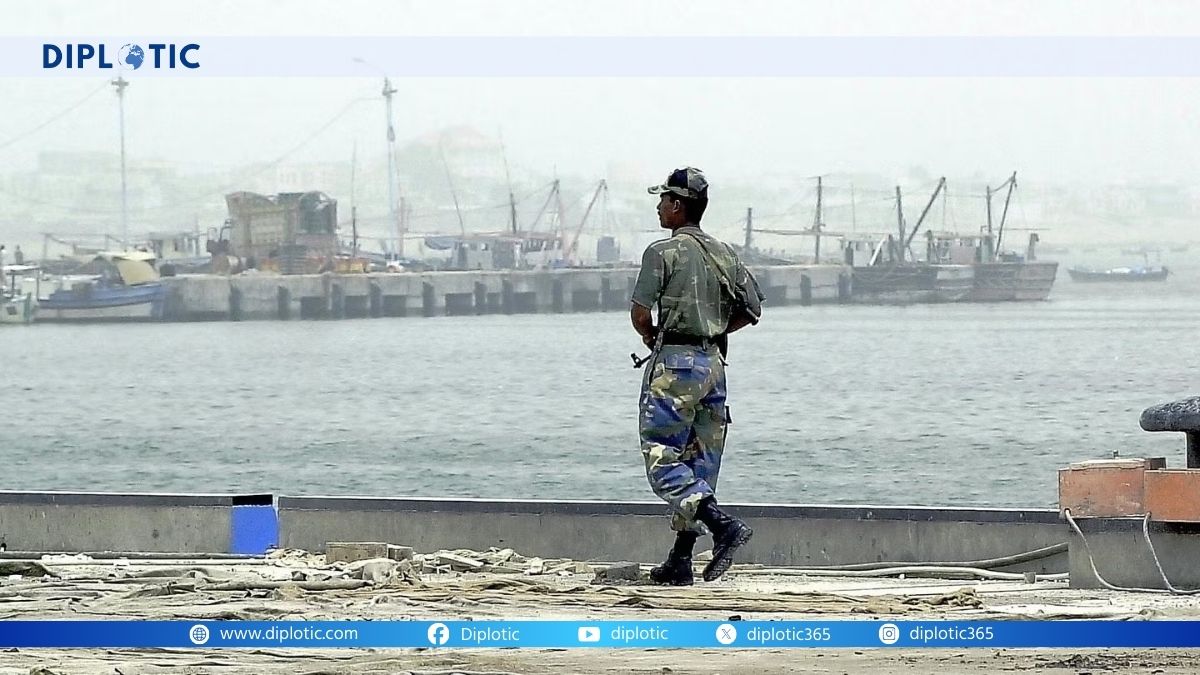
In the sun-baked coastal town of Pasni, where fishing boats bob alongside modest jetties on Pakistan’s Arabian Sea shore, whispers of a $1.2 billion port project have stirred unease far beyond the Makran coast. Reported in October 2025, the plan—pitched by Islamabad to Washington—envisions U.S. investors building and operating a deep-water terminal to export Balochistan’s vast mineral riches, from copper at Reko Diq to rare earths essential for green tech. Just 110 kilometers from China’s flagship Gwadar Port, this move signals Pakistan’s bid to diversify partnerships amid economic woes and great-power jockeying. Yet, as the proposal hangs in preliminary limbo, it casts a long shadow over a province already scarred by insurgency, resource disputes, and foreign footprints. With Iran a mere 160 kilometers across the border and India watching Chabahar’s rival rise, the question sharpens: Does Pasni promise prosperity, or does it court neo-colonial rivalries that could engulf Balochistan in fresh turmoil?
What Is the Pasni Port Proposal, and Why Is It Surfacing Now?
Pasni, a quiet fishing hamlet of about 70,000 in Balochistan’s Gwadar district, has long eyed expansion beyond its fish harbor and naval outpost. The current pitch, floated by advisers to Army Chief Field Marshal Asim Munir in late September 2025 meetings with U.S. officials, outlines a commercial deep-sea terminal focused on mineral exports. Costing $1.2 billion in mixed Pakistani-U.S. funding, it would link via rail to inland mines like Reko Diq—home to $50 billion in untapped copper-gold—and Saindak, channeling output to global markets. No military basing is proposed, emphasizing private-sector involvement to sidestep sensitivities.
This emerges from Pakistan’s economic desperation. Facing a $350 billion external debt and 22 percent inflation, Islamabad seeks alternatives to Chinese loans that ballooned to $30 billion under the China-Pakistan Economic Corridor (CPEC). A September 8 trial shipment of Baloch minerals to Missouri’s U.S. Strategic Metals—via a $500 million military MoU—tested the waters, with Pasni as the logical hub. Prime Minister Shehbaz Sharif, during his September 25 White House visit with President Trump, urged private U.S. investment, framing it as mutual gain: America secures supply chains for EVs and defense tech, Pakistan gains jobs and revenue.
Yet, official silence reigns. Neither Islamabad nor Washington has confirmed details, terming talks “exploratory.” Analysts see it as hedging: CPEC’s $62 billion promise delivered unevenly—Gwadar’s traffic lags, locals gripe over jobs—prompting diversification. A September MoU with U.S. firms for Reko Diq’s revival, after Barrick Gold’s stake, underscores the mineral lure: Balochistan holds 6 percent of global copper, plus lithium and cobalt. For Pakistan, it’s a lifeline; for outsiders, a strategic prize in the U.S.-China minerals race, where Beijing controls 80 percent of processing.
This timing probes deeper currents. Post-2024 elections, Trump’s “America First” thawed ties strained by Afghanistan’s fallout. Pakistan, eyeing IMF bailouts and FATF gray-list exit, dangles assets to curry favor. But in Balochistan—Pakistan’s largest, least developed province—the plan revives ghosts of unkept pledges. Past “game-changers” like CPEC’s Gwadar left locals sidelined, with 70 percent unemployment and royalties funneled federally. As whispers grow, the core query lingers: Is Pasni a pragmatic pivot, or a pawn in superpowers’ chessboard, blind to the board’s boiling resentments?
(Word count: 512)
How Might Pasni Fan Geopolitical Tensions Between the U.S., China, and Neighbors?
Nestled on the Makran coast, Pasni’s strategic perch—70 miles east of Gwadar, 100 from Iran’s border, 300 from India’s Chabahar—positions it as a fulcrum in South Asia’s maritime web. A U.S.-backed port here would pierce China’s CPEC artery, which funnels Xinjiang goods to the Arabian Sea via $60 billion in roads, rails, and power plants. Beijing, stung by 20 Baloch attacks killing 50 Chinese since 2018, views Pasni as encirclement: U.S. terminals could siphon mineral flows, undercutting Gwadar’s monopoly and exposing supply chains to scrutiny.
Washington’s calculus is twofold: Diversify from China’s rare earth dominance—vital for F-35s and solar panels—and monitor Iran, whose nuclear sites loom 160 kilometers west. Post-June 2025 U.S. strikes on Iranian facilities, a Pasni foothold aids surveillance via commercial shipping, echoing Diego Garcia’s role. Yet, it risks escalation: Tehran, already wary of Chabahar’s Indian tilt, could see U.S. presence as provocation, stirring proxy clashes in Baloch Sistan or Hormuz disruptions. Analysts warn of a “port duel,” with Gwadar-Pasni mirroring Chabahar’s hedge.
India, too, eyes warily: Pasni bolsters Pakistan’s naval reach, complicating Mumbai’s Arabian Sea patrols. New Delhi, investing $500 million in Chabahar since 2016, fears a U.S.-Pakistan axis diluting its Central Asian access via the International North-South Corridor. For Beijing, it’s a betrayal: Pakistan, CPEC’s poster child, now courts the rival that sanctioned Huawei’s 5G bids. Recent snubs—like shelving China’s J-35 jet in July—signal fraying trust.
This rivalry probes Balochistan’s powder keg. Insurgents like the Baloch Liberation Army (BLA), who bombed Gwadar in 2024, decry “colonial auctions.” A U.S. influx could spawn tit-for-tat attacks, as seen in Saindak strikes. Iran’s Baloch kin across the border add volatility, with Tehran accusing Islamabad of harboring militants. As Trump prioritizes minerals—vowing 100 percent domestic sourcing—Pasni tempts, but at cost: Alienating China risks $20 billion in annual trade, while inflaming locals erodes Islamabad’s writ. The deeper hook: In a multipolar scramble, does Pakistan’s hedging secure survival, or sow seeds of regional strife?
(Word count: 428)
Why Does Balochistan’s Insurgency Make Pasni a Tinderbox?
Balochistan, spanning 44 percent of Pakistan yet holding 6 percent of its people, simmers with grievances rooted in 1948’s forced accession. Separatists demand resource shares—royalties from Sui gas and Reko Diq barely trickle locally—fueling a low-boil insurgency since the 2000s. The BLA, blacklisted by the UN in 2024, claims 150 attacks yearly, targeting Chinese convoys and pipelines, decrying “occupation.” Unemployment tops 40 percent, literacy lags at 40 percent, and enforced disappearances—over 5,000 reported—breed radicalism.
CPEC amplified woes: Promised 2 million jobs, it delivered 75,000, mostly to Punjabis, per 2025 HRCP reports. Gwadar’s $1.6 billion port idles at 5 percent capacity, locals barred from prime contracts. Pasni risks repeat: U.S. firms, like Barrick in Reko Diq, prioritize security over inclusion, hiring outsiders amid BLA threats. A September 2025 trial mineral shipment to the U.S. sparked protests in Quetta, with nationalists vowing sabotage.
Handing ports to foreigners evokes neo-colonialism: Britain’s 19th-century leases, now China’s 40-year Gwadar deal. BLA manifestos rail against “Baloch blood for Beijing dollars,” a sentiment Pasni could redirect at Washington. Iran’s proximity adds peril: Baloch cross-border ties fuel smuggling and militancy, with Tehran arming proxies against Sunni extremists. A U.S. presence might draw Iranian retaliation, as in 2024’s Chabahar skirmishes.
Locals, per Baloch rights groups, seek equity: Revenue shares, veto on projects, cultural safeguards. Islamabad’s opacity— no consultations announced—deepens distrust. Fiscal federalism reforms, like the 18th Amendment’s devolution, falter in practice, with 70 percent of Baloch GDP extracted federally. As insurgency claims 200 lives yearly, Pasni probes a vicious cycle: Foreign cash buys arms to quell unrest, breeding more. Without inclusive pacts, it risks turning a fishing town into a fortified enclave, echoing Gwadar’s “ghost city” fate.
(Word count: 378)
What Lessons from Past Projects Could Guide Pakistan’s Next Steps?
Balochistan’s “game-changers” offer stark warnings. CPEC, launched 2013, promised transformation: $62 billion for energy, roads, and ports. Yet, by 2025, only 30 percent materialized, per official audits, with debt servicing eating 10 percent of Pakistan’s budget. Reko Diq, revived in 2022 with Barrick’s 50 percent stake, eyes $5 billion yearly revenue—but locals get 2 percent royalties, sparking 2024 blockades. Saindak, Chinese-run since 2002, extracts $1 billion in copper yet leaves environmental scars and few jobs.
These echo colonial patterns: British rail barons in the 1880s funneled cotton to Manchester, sidelining locals. Post-1947, federal neglect—pouring 80 percent of gas revenues from Sui to Punjab—fueled the 1970s uprising. Transparency lapsed: CPEC’s Authority, military-led, bypassed assemblies, breeding corruption claims.
For Pasni, alternatives exist. Community models like Bolivia’s lithium pacts—50 percent state control, indigenous boards—cut unrest 40 percent. Pakistan could mandate 30 percent local hires, revenue splits, and veto rights via provincial councils. Iran’s Chabahar, with 70 percent Iranian ownership, balances foreign input sans full handover.
Islamabad must clarify: Announce consultations, per 2025 NFC Award mandates. Engage BLA via Jirgas, as in 2018 ceasefires. With IMF demanding reforms for $7 billion aid, Pasni offers leverage—for equity, not extraction. The query endures: Can Pakistan break the cycle, turning ports into shared boons, or will it fuel the flames it seeks to douse?
(Word count: 312)
From Gwadar’s gleaming cranes to Pasni’s untrod sands, Balochistan’s ports symbolize promise and peril—a province rich in earth yet starved of voice. As superpowers circle, Pakistan holds the reins: Prioritize people over pawns, and Pasni might yet sail toward equity. Ignore them, and the waves of unrest will swamp all shores, a reminder that true security lies not in foreign docks, but in the trust of those who call the land home.




