

Will U.S. Missiles Help Melt the Frost in India–U.S. Trade Talks? The U.S. approval of a $93 million arms sale to India signals progress toward a long-delayed trade deal, exploring the strategic, political, and economic motives shaping the next phase of India–U.S. relations.
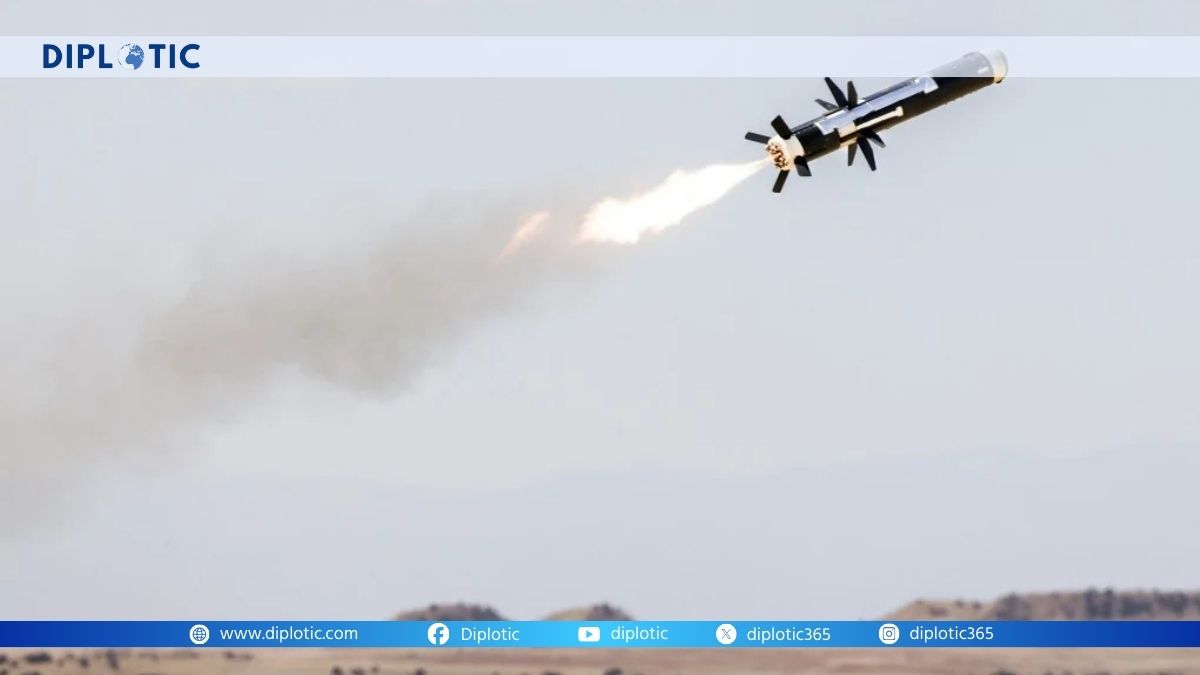
When Washington approved a $93 million arms package for New Delhi, including 100 Javelin anti-tank missile systems and up to 216 Excalibur precision-guided artillery rounds, many saw more than just a conventional defense deal. On paper, it strengthens India’s battlefield capabilities. But drilled down, analysts believe it is also a carefully calibrated geopolitical message to show that despite recent trade tensions, the U.S. remains deeply committed to India.
This signal comes against the backdrop of friction. Earlier this year, the U.S. imposed steep reciprocal tariffs on Indian goods, and New Delhi has responded with its own threats. Yet the arms deal emerges as a way to reset some of that tension. According to the U.S. Defense Security Cooperation Agency (DSCA), the sale “supports foreign policy and national security objectives” by helping to cement a “strategic relationship.”
It is noteworthy: this is the first major Foreign Military Sale to India since the tariff showdown began. That timing has not gone unnoticed in New Delhi or Washington. For the United States, delivering this kind of high-quality defense equipment could help neutralize domestic political pressure. For India, accepting the deal signals that it remains open to deepening ties, even as it defends its economic sovereignty.
From Defense to Diplomacy: Could This Unlock Trade?
Many analysts interpret this deal as more than military cooperation: it could be a prelude to a broader trade agreement. The logic is twofold. First, the U.S. gets a “deliverable” a concrete, public gesture of cooperation that could strengthen its political case, especially ahead of a possible presidential visit to New Delhi. Second, India benefits by reducing its trade surplus with the U.S., something that has long been a sticking point in negotiations.
Indeed, New Delhi has floated the idea of cutting tariffs on more than half of U.S. import goods worth as much as $23 billion in exchange for relief from U.S. reciprocal duties. That move could form a core component of a future India–U.S. deal. Analysts argue that the arms package could be symbolic leverage: by buying U.S. weaponry, India helps lower its trade imbalance, and Washington showcases its deepening strategic partnership without forcing India to open politically sensitive sectors like agriculture or dairy.
There’s also a domestic political angle for both. For the U.S., especially under President Trump, the defense sale showcases strength in foreign policy and economic diplomacy. For India, the deal reflects its desire to modernize its military but also to diversify away from traditional suppliers like Russia. Interestingly, this comes even as India reportedly considers more procurements from Moscow.
Strategic Depth Beyond Tariffs
The defense sale also ties into a broader effort by both countries to strengthen their Indo-Pacific posture. The DSCA has framed the deal as enhancing regional stability, noting that India is “an important force for political stability, peace, and economic progress in the Indo-Pacific.”
This dovetails with other efforts: in recent months, India and the U.S. renewed a 10-year defense cooperation framework, which provides a foundation for information sharing, co-production, and deeper military trust. By tightening this defense partnership, both sides may be hoping to offset their transactional friction in trade with long-term strategic alignment.
At the same time, India is looking to retain flexibility. While it imports more American systems, New Delhi continues to work with Russia on advanced platforms such as the S-400 air defense system. In other words, the arms deal is not a pivot away from its existing partners but part of a broader diversification.
Risks, Realities, and the Limits of Symbolism
Despite the positive signals, this arms deal is not a magic wand. For one, while $93 million is not a negligible sum, in the universe of defense budgets, it’s relatively modest. It’s unlikely to fundamentally transform India’s military posture. Indeed, the DSCA itself notes that the sale “will not alter the basic military balance in the region.”
Politically, there remain considerable hurdles to a full-fledged trade deal. India has made clear demands for assurances against future U.S. tariff hikes. Without guarantees, New Delhi may be wary of opening up too much. On the other side, key sectors such as Indian agriculture remain politically sensitive, especially when it comes to U.S. goods. Past trade talks have foundered on just these issues.
Furthermore, while analysts see Washington’s move as a gesture of goodwill, it could be partly driven by domestic politics in the U.S.: President Trump may use the sale to demonstrate foreign policy wins ahead of elections. That means the diplomatic weight behind the deal might not be as stable as it appears.
Why It Matters—and What Comes Next
This arms sale matters because, irrespective of its size, it marks a turning point in the U.S.–India relationship. It shows Washington’s willingness to use defense diplomacy to repair trade ties and demonstrates that New Delhi is open to reciprocation but on its own terms.
If leveraged well, this could become a foundation for a more comprehensive trade deal: one that balances strategic interests with economic realities. But the path will not be easy. Trust must be rebuilt not only through symbolism but also through binding guarantees, reciprocal commitments, and detailed negotiations.
In this sense, the $93 million weapon package is not just about missiles and artillery; it may be about testing whether economic diplomacy can be rebuilt on the basis of strategic trust. If it works, this deal could be the opening act of a deeper, more resilient U.S.–India partnership in both defense and trade.




