

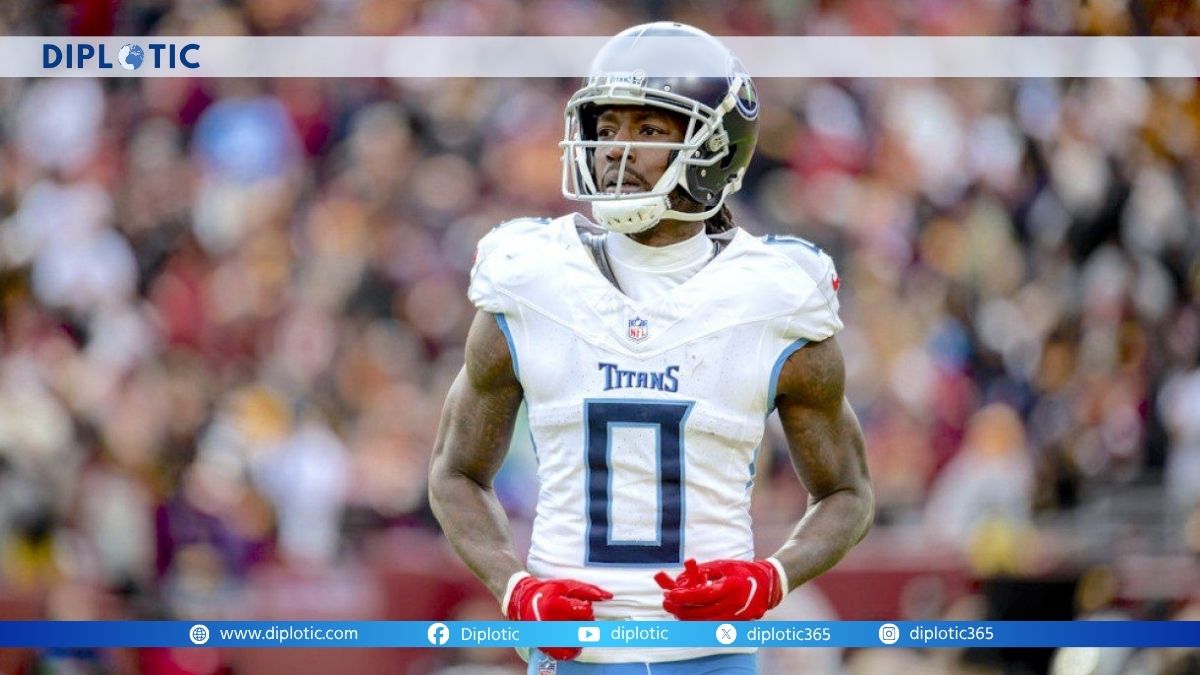
The Tennessee Titans faced a sudden setback in their game against the Houston Texans on November 16, as star wide receiver Calvin Ridley was forced to leave the field after sustaining another injury. Ridley, who had returned to action after missing three games with a hamstring issue, appeared in the game’s opening drive but could not stay on the field long enough to impact the contest. His latest injury has raised questions about his availability for upcoming matchups and the broader implications for the Titans’ season.
How the Injury Unfolded
Ridley’s return began with promise. On the very first play from scrimmage, he secured a 13-yard pass, advancing the ball and picking up a first down for Tennessee. It seemed a strong start for a receiver who had been sidelined for multiple weeks, and fans were optimistic about his ability to reintegrate into the Titans’ offensive scheme. However, the optimism quickly faded. After completing the play, Ridley appeared to favor his ankle and soon limped off the field. Medical staff escorted him to the locker room via cart, a clear sign that the injury was serious enough to prevent him from continuing.
The Titans officially listed Ridley as questionable to return, though his immediate removal suggested the team was preparing for the worst. This incident represents another challenge for the Titans’ offense, which relies heavily on Ridley’s experience and ability to create opportunities downfield. The fact that Ridley has now suffered consecutive injuries—first a hamstring and now an ankle—underscores both the physical toll of the NFL season and the precarious nature of athlete recovery.
Impact on the Titans’ Season
The Titans’ offensive strategy has already been tested by Ridley’s absence in previous weeks. Without their veteran wide receiver, the team has had to rely on younger and less experienced players to fill critical roles in the passing game. The disruption affects not only the Titans’ ability to execute deep passes but also their overall offensive rhythm. Ridley’s presence often forces defenses to adjust, creating space for other receivers and running backs, so his injury could have a ripple effect on the team’s effectiveness across multiple positions.
Historically, teams losing a primary receiver to injury face measurable drops in scoring efficiency and red-zone conversion rates. The Titans’ current struggles illustrate this pattern, with other receivers seeing increased targets but lacking Ridley’s reliability and field awareness. If Ridley remains sidelined for multiple games, the team may need to adjust its offensive schemes to focus more heavily on the run game or short-yardage passing, strategies that could limit scoring potential against stronger opponents.
Broader Concerns About Player Health
Ridley’s recurring injuries highlight a broader concern in professional football: the cumulative impact of repeated physical stress on player performance and career longevity. Ankle injuries, in particular, can be persistent, leading to lingering instability and increased risk of additional injuries. For Ridley, the combination of a recent hamstring injury and a new ankle issue raises questions about his conditioning and readiness for consecutive games, especially as the season progresses toward critical matchups.
Medical teams often face difficult decisions balancing short-term availability against long-term health. For players like Ridley, returning too quickly can exacerbate injuries, while extended absences may affect team performance and player morale. The Titans’ staff will need to weigh these factors carefully, coordinating rehabilitation efforts to ensure Ridley can return safely without compromising his future in the NFL.
Looking Ahead for Ridley and the Titans
The immediate concern for the Titans is how to adjust in Ridley’s absence. Backup receivers and tight ends may see expanded roles, while quarterback play may shift to accommodate the team’s reduced deep-threat options. Coaches may also reconsider game plans to emphasize ball control and minimize exposure to further injuries among key players.
For Ridley, the focus will be on recovery and rehabilitation. Medical staff will likely conduct thorough assessments to determine the severity of the ankle injury, including imaging and physical evaluation, before establishing a timeline for return. Given the physical demands of professional football, even minor ankle injuries can require several weeks of treatment to restore full mobility and confidence on the field.
As the Titans navigate this challenge, the situation underscores the fragility of team dynamics in the NFL. Success often hinges on the health and availability of star players, and recurring injuries like Ridley’s can have both immediate and lasting effects on team performance. Fans, teammates, and analysts alike will be closely monitoring updates, knowing that the next few weeks could be critical not only for Ridley’s career but for the Titans’ prospects in the season ahead.




