
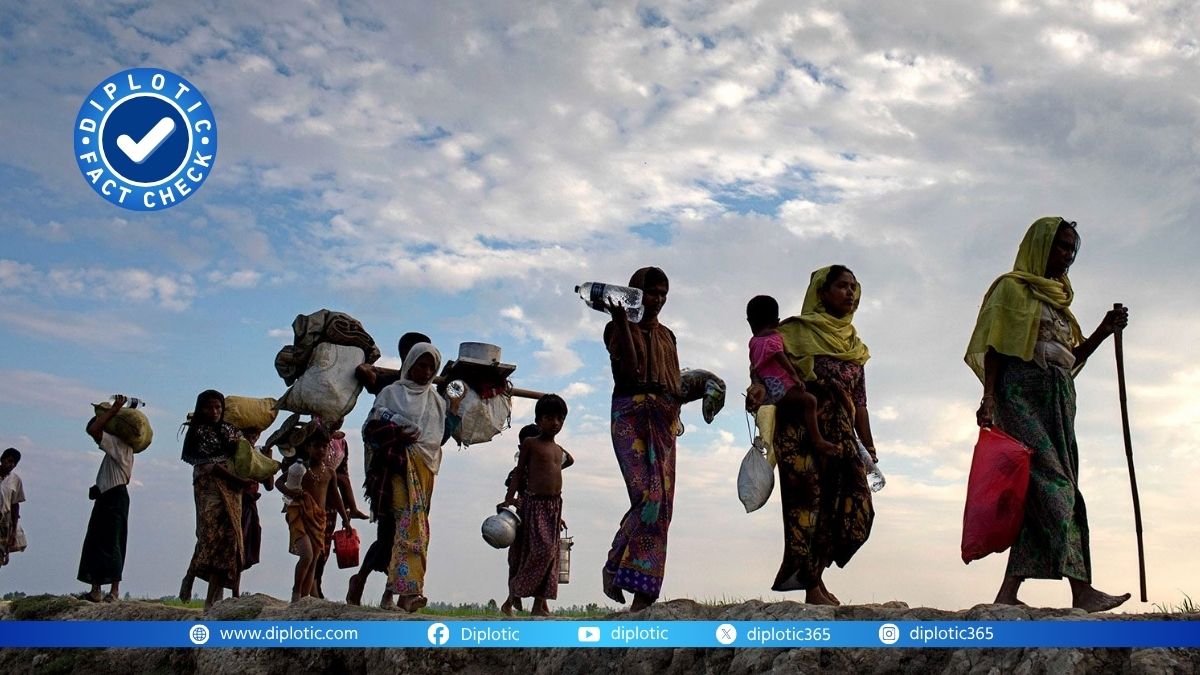
Imagine a rickety boat slicing through the Bay of Bengal at dawn, packed with desperate souls from Myanmar’s Rakhine State. They don’t dream of staying in Bangladesh’s muddy camps—they eye distant shores: Malaysia’s bustling ports, Indonesia’s islands, even Europe’s faint glow. But the engine sputters, the waves rise, and headlines scream: “Another Rohingya Boat Sinks—Bangladesh’s Refugee Nightmare.” In Dhaka’s tea stalls and global think tanks, the chatter swells: Bangladesh isn’t just a refuge anymore; it’s a launchpad, a transit zone swelling with stateless shadows, straining borders and begging for international cash.
This narrative packs a punch. Bangladesh, a delta nation of 170 million already wrestling monsoons, floods, and 1.1 million Rohingya refugees, faces fresh whispers of becoming South Asia’s unwilling gateway. Since 2017’s exodus—when 750,000 fled Myanmar’s torch-and-bayonet horrors—new waves hit: 150,000 more since early 2024, per UNHCR. Boats tripled in 2025, carrying 1,088 souls to sea in six months, including 87 kids. The stakes? A humanitarian crunch that could spark regional ripples—border clashes, aid wars, or worse, radical whispers in camps. But is this “transit zone” truth, or hype? As funding dips (JRP 2025 at 28% funded), and boats capsize (25 dead off Malaysia in November), we sift five claims, blending camp-ground grit with history’s long shadows and the ethics of who pays when the world looks away. Plain talk, no borders—just the human cost of maps drawn in blood.
Claim 1: Thousands of Rohingya Are Using Bangladesh Camps as a Launchpad to Europe and Beyond
Social feeds explode: “Rohingya flood Bangladesh, then vanish to Italy—transit hell!” Claim: Camps in Cox’s Bazar aren’t endpoints; they’re pit stops for 10,000+ yearly escapes to the West.
Cross-check: UNHCR dashboards show 1,088 Rohingya left by boat Jan-Jun 2025—triple 2024’s 364, mostly to Southeast Asia (Malaysia, Indonesia). Europe? Rare—fewer than 500 resettled via UNHCR since 2017; most boats target Jakarta or Kuala Lumpur, where 117,000 Rohingya scrape by undocumented. November’s sinking: 90 aboard, 25 drowned near Thailand-Malaysia—no Euro route. Total “transit” departures? Under 2,000 yearly, per IOM—not the tidal wave tales.
History haunts: Rohingya’s 1982 Myanmar citizenship strip—British colonial gift—turned them eternal wanderers, echoing Partition’s refugee rivers. Theory simple: “Secondary movement” from despair—aid cuts (rations halved) push sea gambles. Contradiction: Bangladesh bars camp exits, yet smuggling rings thrive on desperation. Ethical twist: Label them “transit migrants,” and aid dries—refugees become “illegals” unworthy of shelter. Deeper: These boats aren’t highways; they’re coffins, birthing more orphans than opportunities. Implication? Hype ignores the 99% stuck, begging bowls empty.
Verdict: Misleading. Sea escapes spike, but to Asia’s doors—not Europe’s; camps trap, don’t transport.
Claim 2: Bangladesh’s Borders Are Flooded with New Myanmar Arrivals, Turning It into a Permanent Influx Hub
Headlines howl: “150,000 Rohingya storm in 2025—Bangladesh’s gates crumbling!” Claim: Fresh Myanmar chaos (Arakan Army clashes) makes Dhaka a magnet, not a stopover.
Verify: UNHCR: 150,000 crossed since early 2024—biggest since 2017’s 750,000 surge. But “hub”? No—border’s “officially closed,” guarded tight; arrivals trickle via informal paths, biometrically tagged (121,000 by June). JRP 2025 plans for 50,000 confirmed newbies + 50,000 hiding in camps—no mass welcome. Myanmar’s Rakhine inferno? Real—junta vs. rebels displace thousands—but Bangladesh absorbs, doesn’t reroute.
Context: 1940s Bengal Famine ghosts—British rice hoards starved millions; today’s “proximity burden” echoes, with Dhaka hosting 90% of Rohingya load. Trade-off: Open borders save lives, but strain locals (Cox’s Bazar hosts lose jobs to camp labor). Hypocrisy: World lauds 2017 mercy, then cuts 2025 funds (28% of $934M JRP). Street truth: Bandarban villagers near Myanmar whisper of “ghost crossings”—families slip in, beg for rice, not routes out.
Verdict: Partially True. Influx strains, but it’s refuge, not relay—borders bend, don’t break.
Claim 3: Chittagong Hill Tracts Violence Is Spawning a New Refugee Wave from Bangladesh to India
Local lore: “CHT’s tribal fires rage—Kuki-Chin flee to Mizoram, Bangladesh bleeds refugees!” Claim: 2025 clashes make CHT a mini-Rohingya, exporting thousands across borders.
Facts: CHT conflict simmers—Kuki-Chin National Front insurgency since 2022 seeks autonomy; military ops displace hundreds, not hordes. Zo Reunification Org pleads India shelter kin in Mizoram (thousands already there), but no “wave”—post-Hasina 2024 shift eased ops, cutting outflows. UNHCR: No CHT-specific refugee stats; focus stays Rohingya (950,000+). 2025: Bawm youth deaths in custody spark outrage, but no mass flight.
Social scar: 1997 Peace Accord’s unhealed wounds—land grabs, military camps—fuel low-boil beefs, per IWGIA. Philosophy: “Internal transit”—CHT’s 11 tribes eye India as kin, not escape. Contradiction: Dhaka touts “stability” post-Accord, yet RAB raids persist. Ethical bind: Call it “refugee wave,” and India slams doors—kinship ignored for security theater.
Wider: Mizoram shelters quietly, defying Delhi—humanity vs. headlines.
Verdict: False. CHT simmers, displaces dozens—not a flood; claims exaggerate ethnic embers.
Claim 4: Funding Cuts Are Forcing Rohingya into Dangerous “Transit” Routes, Proving the Zone Shift
Donor drought tale: “Aid slashed—Rohingya bolt by boat, Bangladesh pays!” Claim: 2025’s 28% JRP funding turns camps into trampolines for global treks.
Check: JRP seeks $934M for 2025; 28% in by August—US $73M, EU €32M, but gaps halve rations, spike anxiety. Boat triples link direct: Desperation drives departures, but to ASEAN (1,088 H1 2025), not transcontinental caravans. Resettlement? Token—Italy’s €2.5M aids protection, not exits.
Geopolitics: Myanmar’s junta (post-2021 coup) + Arakan Army turf wars block returns; 180,000 “eligible” per April pact, but zero shipped home. Trade-off: Cuts save donor bucks, cost Rohingya lives—November sinking: 25 drowned fleeing rations. Hypocrisy: G7 slams Myanmar, skimps Bangladesh—Ukraine gets $20B, Rohingya rations rice dust.
Deeper: Women, kids (half the camps) bear brunt—sea voyages breed abuse, not asylum.
Verdict: Partially True. Cuts fuel flights, but “transit” stays regional—despair’s engine, not destiny.
Claim 5: Bangladesh’s “Generous” Hosting Masks a Transit Strategy to Offload Rohingya Pressure
Dhaka’s line: “We save lives, but world’s ignoring—transit talk deflects blame!” Claim: Government quietly funnels refugees onward, easing its load.
Evidence: No—Bhasan Char island relocates 35,000 (forced, per critics), but as containment, not conveyor. April 2025: Jamaat-e-Islami floats “Rohingya state” in Rakhine—repatriation ploy, not transit. Border guards push back boats; no state “offload” policy. Yunus era: BIMSTEC nods 180,000 returns, but Myanmar stalls.
Culture code: Bengali-Muslim solidarity opened 2017 gates; now, host fatigue (Cox’s Bazar jobs lost) breeds resentment. Theory: “Burden-sharing dodge”—Dhaka begs donors, gets crumbs. Contradiction: Bars movement in/out, yet smuggling blooms. Ethical jab: “Generous” hides restrictions—no work, school caps—trapping transit dreams in mud.
Implication: Offload myth shames Bangladesh, ignores Myanmar’s denial machine.
Verdict: False. Hosting’s heroic, not хитрый—pressure builds returns, not routes.
The Overloaded Oasis: Bangladesh’s Bind, Not Boulevard
Sift the silt: Bangladesh isn’t a transit turnstile—it’s a pressure cooker, camps crammed (1.3M in 24 sq km), boats born of broken promises. Exaggerations? They sting: “Zone” hype scares donors, spikes xenophobia, dodges Dhaka’s $1B tab. Fearless truth: Hypocrisies heap—Myanmar torches homes, world tallies tweets; Bangladesh hugs hordes, gets half-rations. Strategic slip: No repatriation = endless influx; 200,000 more by year-end?
For camp kids sketching boats to nowhere, or Teknaf fishers sharing shrinking seas, the fix is fierce: Fund full (reverse cuts), force Myanmar (sanctions bite), build bridges (resettlement visas). Ethics echo: Refuge isn’t relay—it’s right. As 2026 looms with Rakhine flames, will headlines hail heroes, or hype horrors? Bangladesh teaches: Safe havens sink without shared shoulders. Time to lighten the load—or watch the waves claim more.