

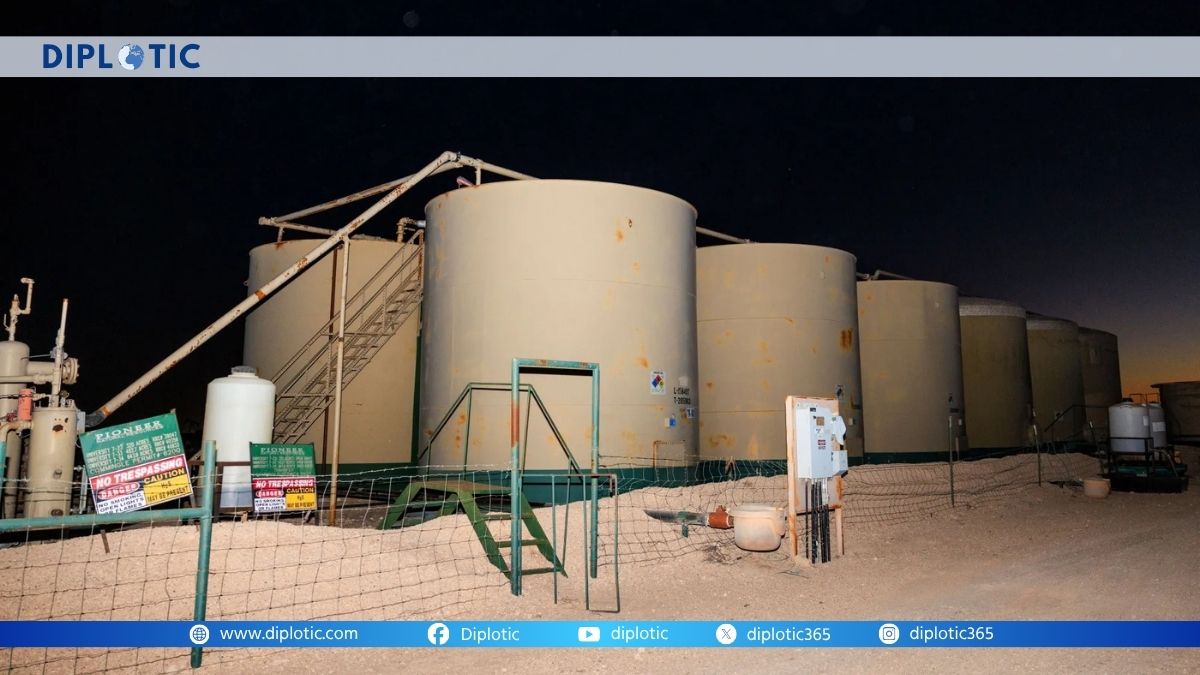
The International Energy Agency has reversed its earlier forecasts, predicting global oil and gas demand could rise until 2050. Explore what this shift means for climate goals, fossil fuel investment, and the future of global energy markets.
The End of ‘Peak Oil’? A Global Energy Shift Reimagined
The long-standing theory of “peak oil”—the idea that global oil demand would soon reach its highest point before declining—may no longer hold true. In a major reversal, the International Energy Agency (IEA) said in its 2025 World Energy Outlook that global demand for oil and natural gas could continue rising through 2050, challenging the notion of a near-term transition away from fossil fuels.
This new forecast, released Wednesday, marks a dramatic departure from the agency’s earlier projections made during the Biden administration, which predicted oil demand would peak by the end of this decade. The latest report comes amid mounting political pressure from Washington, where President Donald Trump has called on US energy producers to expand oil and gas development and criticized the IEA’s previous emphasis on climate-focused scenarios.
Under the IEA’s updated “current policies scenario,” global oil demand could hit 113 million barrels per day by mid-century—a roughly 13% increase from 2024 levels. The scenario assumes no major new climate commitments and reflects only existing government policies. This projection suggests that, despite rapid growth in renewable energy, global consumption of fossil fuels remains deeply entrenched in the world’s industrial and economic systems.
In its press briefing, IEA Executive Director Fatih Birol explained that the reinstated scenario aims to reflect the reality of “diverging energy choices” made by governments worldwide. The move acknowledges that some nations continue to prioritize energy security and economic growth over immediate carbon reduction targets.
Why the IEA’s New Outlook Marks a Turning Point
For years, the IEA had been seen as a champion of the global clean energy transition, urging an end to new investment in oil, gas, and coal projects to meet net-zero emissions by 2050. But the latest report signals a recalibration, aligning more closely with real-world trends in production and consumption.
The shift has reignited debate within the energy community. Trump’s Energy Secretary Chris Wright dismissed the earlier “peak oil” predictions as “nonsensical,” arguing that global demand growth remains robust, particularly in emerging markets across Asia and Africa. The Organization of the Petroleum Exporting Countries (OPEC) welcomed the IEA’s new approach, declaring on its website that the world had likely “passed the peak in the misguided notion of ‘peak oil.’”
The IEA’s new model highlights how energy policy and geopolitics are colliding with economic realities. Despite historic growth in renewable power capacity, fossil fuels still account for more than 80% of global energy use. Rapid industrialization, population growth, and surging demand for electricity from data centers and artificial intelligence technologies are all fueling new demand for oil and gas.
Even in the agency’s “stated policies scenario,” which includes planned but not yet fully implemented energy measures, oil demand is projected to peak only around 2030 before plateauing rather than falling sharply. This implies that a full energy transition remains decades away, far longer than climate scientists deem safe to limit global warming below the 1.5°C threshold agreed upon in the Paris Climate Accord.
Natural Gas and LNG Investment Surges to Record Highs
The IEA’s outlook doesn’t just paint a picture of persistent oil use it also points to explosive growth in liquefied natural gas (LNG) production and trade. The report finds that final investment decisions for new LNG projects surged in 2025, reflecting soaring demand from the power sector and heavy industry.
Between now and 2030, roughly 300 billion cubic meters (bcm) of new annual LNG export capacity will come online—representing a 50% increase in global supply. Under the current policy scenario, global LNG demand is projected to grow from 560 bcm in 2024 to 880 bcm in 2035, eventually reaching 1,020 bcm in 2050.
This expansion is being driven in part by the energy needs of emerging digital infrastructure. The IEA noted that global investment in data centers could reach $580 billion in 2025, surpassing the $540 billion invested annually in oil supply. With the rise of AI, cryptocurrency mining, and large-scale computing, electricity consumption is accelerating pushing utilities to rely more heavily on natural gas for stability and reliability.
While the LNG boom may help countries diversify energy supplies and reduce dependence on coal, it also risks locking in decades of carbon emissions. Critics argue that the rapid buildout of gas infrastructure undermines the world’s ability to meet net-zero targets. Yet energy analysts say the shift reflects a pragmatic response to growing energy insecurity, geopolitical volatility, and the need to sustain economic growth amid global uncertainty.
The Climate Challenge: 1.5°C Goal Slipping Away
Perhaps the most sobering takeaway from the IEA’s 2025 report is that no scenario examined keeps global warming below 1.5°C above pre-industrial levels a target agreed to by more than 190 nations at the 2015 Paris climate summit.
Even under the IEA’s most optimistic “net-zero emissions by 2050” pathway, the world’s emissions trajectory falls short of what scientists say is necessary to prevent the most catastrophic effects of climate change, including extreme weather, sea-level rise, and ecosystem collapse.
The agency warned that while progress in clean energy deployment has accelerated particularly in solar power, electric vehicles, and battery storage it remains far too slow to offset rising fossil fuel use. Global emissions from energy production remain stubbornly high, and demand for oil and gas continues to grow faster than green technologies can compensate.
Experts say the political shift in Washington has also reshaped the global conversation. The Trump administration’s renewed emphasis on fossil fuel expansion has emboldened traditional energy producers while complicating international climate diplomacy.
Still, Birol stressed that the IEA’s scenarios are not forecasts but explorations intended to show what different policy paths could yield. The world’s direction, he noted, “depends entirely on the choices governments make now.”
A Fork in the Road for the Global Energy Future
The IEA’s reintroduction of the “current policies scenario” underscores a pivotal reality: the clean energy transition is not guaranteed. While renewables are cheaper and more accessible than ever, fossil fuels remain deeply embedded in the global economy.
Whether oil demand truly continues rising through 2050 will depend on technological breakthroughs, political will, and how nations balance growth with sustainability. If the IEA’s latest projections hold true, the world may need to rethink not just its climate strategies but the entire narrative of the energy transition itself.
For now, “peak oil” appears to be postponed. And in the race between climate ambition and economic pragmatism, the finish line just moved further into the future.




