

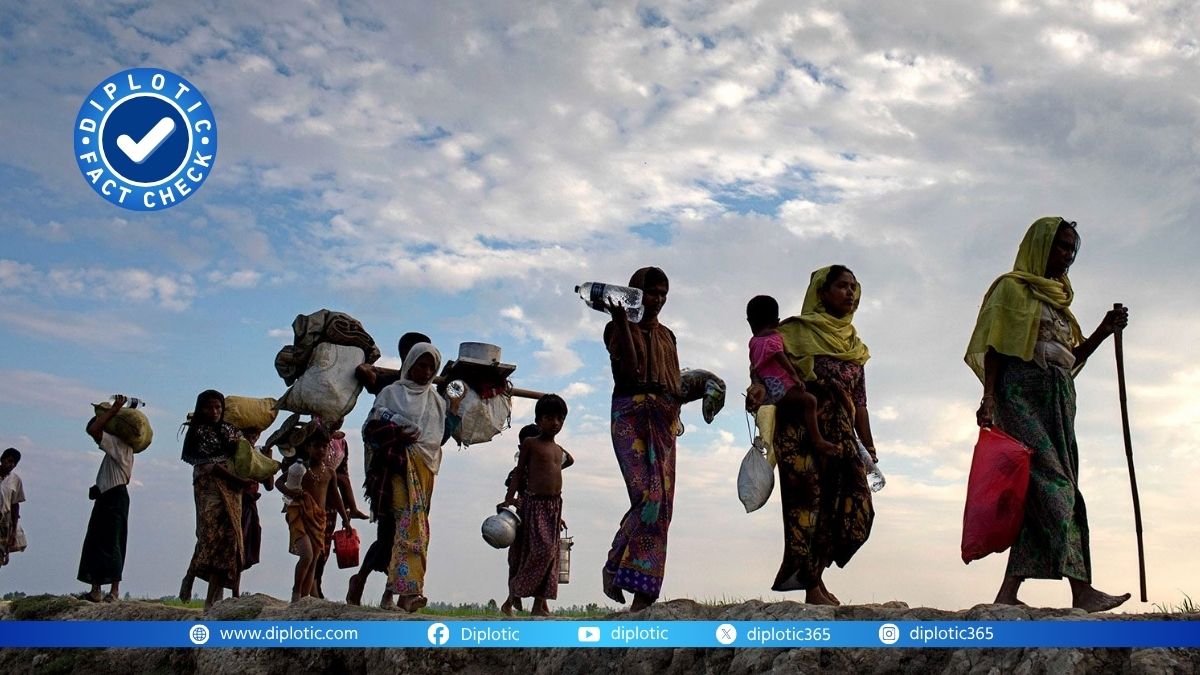
Flash back to 2017: Satellite images show Myanmar’s Rakhine State ablaze, villages torched, families fleeing with nothing but the clothes on their backs. Over 750,000 Rohingya Muslims pour into Bangladesh’s Cox’s Bazar, the world’s largest refugee camp springs up overnight, and global outrage peaks—headlines scream genocide, donors pledge billions, the UN calls it a “textbook example of ethnic cleansing.” Fast-forward to November 2025: A rickety boat carrying 200 Rohingya capsizes off Malaysia-Thailand, 21 dead, dozens missing. In the camps, food rations halve, kids skip school, and whispers grow: “The world forgot us.” Eight years in, with 1.1 million stateless souls crammed into mud-and-plastic shacks, the claim rings out— the Rohingya crisis is yesterday’s news, no longer an international priority.
This isn’t just a humanitarian footnote; it’s a litmus test for global compassion in a crowded calendar of wars and woes. Ukraine’s rubble, Gaza’s grief, Sudan’s starvation—do they crowd out the Rohingya, turning a slow-burn catastrophe into invisibility? Or does the machinery of aid and advocacy still hum, however faintly? South Asia feels the strain: Bangladesh shoulders 90% of the load, its economy buckling under $1 billion yearly costs, while Myanmar’s junta laughs off UN pleas. This probe dissects five viral claims, weaving fresh UN docs, donor tallies, and camp-ground truths with the ghosts of colonial borders and the ethics of selective empathy. Simple words, sharp edges—because forgetting isn’t neutral; it’s a choice with corpses.
Claim 1: UN Resolutions and Meetings on Rohingya Have Dried Up Since 2022
The narrative: Post-Security Council Resolution 2669 (2022), condemning Myanmar’s violence, the UN went quiet—no more big talks, no fresh mandates. Crisis off the agenda.
Cross-check: Far from silent, 2025 buzzed with action. The General Assembly’s High-Level Conference on Rohingya and Myanmar Minorities convened September 30 in New York, per Resolution A/RES/79/278 (2024), drawing world leaders to map “concrete, time-bound” returns and justice. Bangladesh hosted a precursor summit in August, feeding voices straight to UNGA. Human Rights Council passed Resolution A/HRC/RES/59/2 (July 2025), slamming junta atrocities and demanding accountability. Secretary-General’s August report (A/80/307) detailed ongoing horrors, urging ICC referrals.
History layers it: The 2017 exodus echoed British-drawn borders that stranded Rohingya as “Bengali interlopers” in Buddhist-majority Myanmar, fueling decades of denial. Theoretically, this is “agenda fatigue”—crises compete, but UN’s annual Rohingya resolution (A/RES/79/182, Dec 2024) bucks the trend. Contradiction: Security Council stalls on new action, veto shadows from China-Russia blocking Myanmar referrals. Ethical snag: Resolutions without teeth mock the dead—over 25,000 Rohingya killed since 2017. Deeper: In a multipolar world, ASEAN’s “non-interference” shields the junta, trading Rohingya lives for regional harmony.
Street pulse: Camp elders in Kutupalong say UN visits feel like photo-ops, not fixes—yet the September summit let Rohingya speak, a rare mic drop.
Verdict: False. UN’s engine revs on—resolutions roll, summits summon—but Security Council gridlock clips the wings.
Claim 2: Funding for Rohingya Aid Has Plummeted to Rock Bottom in 2025
Buzz online: Donors ditched the camps—2024’s 33% funding was bad; 2025’s a death knell. WFP halved rations, hospitals shuttered.
Verify: The 2025-26 Joint Response Plan (JRP), launched March 24 by UNHCR-IOM and Bangladesh, seeks $934.5 million for 1.48 million (refugees + hosts)—a multi-year first, signaling commitment. By August, 28% funded ($261 million gap), per FTS—grim, but US pledged $73 million (March), EU €32.3 million (Bangladesh slice of €76 million, March). Germany, UK cuts hit hard, but Education Cannot Wait’s $3.5 million (Nov 11) targets 180,000 kids. WFP vouchers dipped from $12.50 to $6 monthly, sparking child labor spikes (7% up).
Context: Global humanitarian pot shrank—2025’s $45.3 billion appeal at 21% (OCHA, Oct). Rohingya’s slice? Down from 70% in 2023, but 113 partners (half Bangladeshi NGOs) stretch every dollar. Trade-off: Prioritize food over education? Hypocrisy: Rich donors fund Ukraine ($20B+ yearly) while Rohingya kids forage—echoing 1940s Bengal famine, where colonial priorities starved millions.
Wider sting: Underfunding breeds desperation—November’s Andaman Sea sinking (21 dead) ties to ration cuts pushing sea gambles. Ethical bind: Aid as bandage, not cure—repatriation’s the fix, but who pays the wait?
Verdict: Partially True. Funding’s a trickle, not a flood—cuts bite deep, but fresh pledges keep the drip alive.
Claim 3: Repatriation Talks Between Bangladesh and Myanmar Are Dead in the Water
Claim: No progress since 2019 flops—junta ignores lists, Arakan Army fights rage, zero returns.
Facts: April 2025 breakthrough—Myanmar verified 180,000 Rohingya (from Bangladesh’s 800,000 list) as “eligible” after Bangkok talks. JRP’s top goal: “early, voluntary, sustainable” returns, with biometrics for 100,000 new arrivals. Yunus echoed at August summit: Justice first, then home. But Rakhine clashes (junta vs. AA) displaced 150,000 more since 2023; no safe zones.
Geopolitics twist: China’s “Belt and Road” props the junta, stalling ASEAN’s Five-Point Consensus (2017). Theory: “Proximity burden”—Bangladesh hosts 90%, but Myanmar’s denial (Rohingya as “Bengalis”) roots in 1982 citizenship law, a post-colonial poison pill. Contradiction: Junta approves lists but bombs villages—symbolic sops for sanctions relief.
Deeper: Rohingya youth, camp-born, eye third-country resettlement over “home” they’ve never known. Implication: Stalled talks trap generations—70,000 crossed in 2024 alone.
Verdict: Misleading. Talks tick (verifications, vows), but violence vetoes—progress on paper, peril on ground.
Claim 4: Major Donors Like the US and EU Have Pulled the Plug on Rohingya Support
Social feeds flare: Trump-era US froze aid; Europe echoes—Rohingya orphaned by budget hawks.
Reality: US unfroze $73 million via WFP (March), after brief 2025 dip—total $2.4B since 2017. EU’s €76 million (March) includes €32.3M for Bangladesh camps, pushing total near €1B since 2017. UK, Germany trimmed, but Canada, Germany (via ECW) fill gaps. Bangladesh itself donates big, per JRP.
Philosophy nudge: “Compassion fatigue” in donor fatigue—Ukraine’s $100B+ dwarfs Rohingya’s $934M ask. Hypocrisy: US preaches human rights, cuts via USAID overhaul. Trade-off: Short-term freezes save budgets, long-term spark boat tragedies.
Street echo: Cox’s Bazar moms ration rice, blaming “forgotten” donors—yet EU’s fuel kits arrive, a patchwork lifeline.
Verdict: Uncertain. Pullbacks sting (US dip, EU tweaks), but plugs aren’t pulled—pledges persist amid global squeeze.
Claim 5: Media and Public Attention Has Shifted, Proving the Crisis Is Faded
X scrolls and news cycles: Rohingya mentions tanked—Ukraine, Gaza dominate; boat sinkings get days, not months.
Check: 2025 spikes—UNGA summit dominated headlines (Al Jazeera, Reuters), August Bangladesh conference trended. November’s Andaman sinking lit up feeds (Reuters, X posts), with UNHCR-IOM alerts. Amnesty’s August push, HRW’s September call amplified voices. Rohingya-led podcasts, like SARIM’s November drop, reclaim narrative.
Culture code: In Muslim-majority Bangladesh, Rohingya kinships sustain buzz; globally, “brown Muslim” fatigue lags “white European” empathy. Contradiction: Media chases novelty—2017 inferno sold; 2025 simmer doesn’t. Ethical curve: Spotlight’s zero-sum—Gaza’s scream drowns Rohingya’s whisper, pitting pain against pain.
Implication: Faded coverage feeds funding falls—camps fade from view, needs fester.
Verdict: Partially True. Attention ebbs (global overload), but 2025 flares (summits, sinkings) prove it’s not pitch-black.
The Faint Pulse: Priority’s Pulse, Not Flatline
Peel it back: The Rohingya crisis isn’t shelved—UN summits summon, donors drip (28% funded, but $934M asked), repatriation lists lengthen (180K eligible, zero returned). Yet the heartbeat’s weak: Security Council paralysis, ration halves, boat graves. Fearless truth: It’s not “no longer”—it’s “not enough,” a victim of crisis overload where Ukraine’s urgency eclipses Rakhine’s rot. Hypocrisy crowns: Junta jets bomb while we bicker budgets; Bangladesh hosts heroes, donors dawdle. Strategic slip: Forgetting repatriation’s root—Myanmar’s ethnic engineering—dooms cycles.
For camp kids sketching homes they’ll never see, or Dhaka diplomats begging at UN doors, the cost is clear: Limbo isn’t living. Wider wake: Unchecked, it seeds extremism, strains seas—November’s sinking a siren. Ethics demand: Prioritize not by passports, but peril. As 2026 dawns, will the world refill the cup, or let it run dry? Rohingya teach: Humanity’s priority list has room— if we scribble them back on.




