

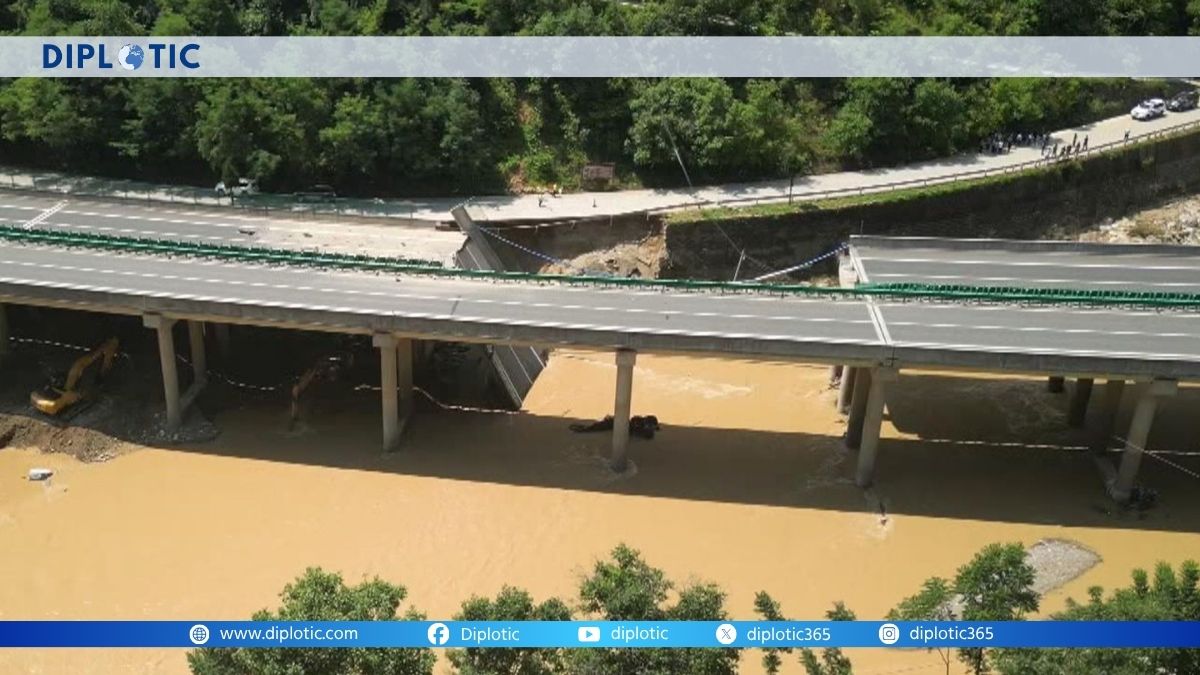
A cloud of dust, sudden and violent, rose from the river gorge in China’s southwestern Sichuan province. In a matter of seconds, a section of the Hongqi Bridge, a structure that had only just opened to traffic, was gone. The 758-meter bridge, a vital link on a national highway to Tibet, succumbed not to a dramatic explosion or a direct impact, but to something more insidious: the slow, shifting movement of the mountain it was built upon. Local authorities in Maerkang city confirmed the collapse, pointing to “worsening mountain conditions” and landslides that took down the approach bridge and roadbed. While no lives were lost, the event sends a chilling echo through the region, coming just months after a railway bridge under construction in Qinghai province collapsed, killing at least twelve workers. These back-to-back failures raise urgent, uncomfortable questions that transcend a single engineering report. The collapse of the Hongqi Bridge is not merely a story of concrete and steel giving way; it is a symptom of a much larger tension between the relentless drive for development and the immutable forces of the natural world.
Why Do New Structures Fail in Geologically Active Regions?
The immediate cause of the Hongqi Bridge’s failure appears straightforward. Officials reported that slope deformation was detected on the mountain’s right bank a full day before the collapse. This suggests that the ground itself, the very foundation the bridge relied upon, was moving. In geologically young and active areas like Sichuan province, this is a constant and formidable challenge. The region is part of the vast Tibetan Plateau, which is still rising as the Indian tectonic plate continues to push north into the Eurasian plate. This immense geological pressure creates a landscape prone to earthquakes, frequent landslides, and severe soil erosion. Building any structure here, let alone a massive bridge carrying a national highway, is an exercise in managing extreme risk. The engineers and contractors are faced with a landscape that is inherently unstable, where the bedrock can be fractured and the slopes perpetually on the verge of failure, especially after heavy rains that can saturate the soil and act as a lubricant. The promise of a bridge that can last for decades clashes with the reality of mountains that are, in geological terms, constantly in flux.
This specific incident forces a closer look at the site selection and ground investigation processes for such mega-projects. It is one thing to design a bridge to withstand known stresses, but it is another to accurately predict how the entire ecosystem of a mountain slope will behave over time. The collapse indicates a potential miscalculation or an underestimation of the slope’s instability. Perhaps the investigations before construction did not drill deep enough or monitor the area long enough to understand the full scope of the geological threats. Or, the mitigation measures put in place, such as rock bolting or retaining walls, were simply insufficient to contain the powerful forces at work. This is a common dilemma in rapid development. The imperative to complete a project and open a new transportation link can sometimes shorten the essential, time-consuming phases of geological surveying and environmental impact assessment. When a bridge collapses months after opening, it suggests that the models used to predict the behavior of the earth were incomplete. The mountain, in effect, presented data that the original engineering plans had not fully accounted for, revealing a fatal disconnect between human ambition and planetary reality.
How Does the Pace of Construction Impact Long-Term Safety?
The Hongqi Bridge was a new structure, celebrated in promotional material by its contractor, the state-owned Sichuan Road & Bridge Group, earlier this same year. Its rapid failure points directly to the pressures of China’s infrastructure boom. For decades, the country has fueled its economic growth by pouring trillions of dollars into massive public works projects. This has led to an unprecedented expansion of its highway, railway, and airport networks, connecting remote regions and boosting local economies. However, this breakneck speed of construction inevitably raises questions about quality control and oversight. When the goal is to build fast and at a low cost, there is a danger that corners may be cut, whether in the quality of materials, the rigor of construction practices, or the depth of safety inspections. The Qinghai bridge collapse in August, which occurred during a cable-tensioning operation, already hinted at potential flaws in construction protocols or worker training. While the Hongqi event is blamed on a landslide, the fact that two significant bridge failures have happened within months of each other creates a pattern that is difficult to ignore.
The system of contracts and incentives also plays a crucial role. Large state-owned enterprises like Sichuan Road & Bridge Group operate in a competitive environment where winning and completing projects is tied to political and economic achievements. The pressure to meet deadlines and stay within budget can be immense. This can create a chain of pressure that flows down from project managers to engineers and foremen on the ground. In such an environment, a cautious approach that might delay a project for further geological testing or more robust foundation work can be seen as a liability rather than a virtue. Furthermore, the regulatory oversight meant to act as a check on this process may not always be sufficiently independent or powerful enough to halt a project flagged with concerns. The official narrative following such collapses often attributes them to “natural disasters” or “isolated events,” which can preempt a deeper investigation into possible human or systemic errors. This creates a cycle where the fundamental causes of failure are not addressed, allowing the same risks to be replicated on other projects across the country’s challenging terrain.
What is the Human and Economic Toll of Infrastructure Failure?
The most immediate relief in the Hongqi Bridge collapse was the report of no casualties. This was likely due to the early detection of the slope deformation, which allowed authorities to evacuate vehicles and restrict access before the final failure. However, this fortunate outcome does not mean the event is without a significant human and economic cost. The bridge was a critical segment of a national highway linking central China to Tibet. Its loss severs a vital transportation artery, disrupting the flow of goods, commerce, and people. For the local communities that depend on this road, the collapse means longer, more expensive, and potentially more dangerous alternative routes. Truck drivers hauling freight are faced with delays that ripple through supply chains, and local businesses see their customer base shrink due to the new logistical barrier. The economic stagnation that can follow such an infrastructure failure is a slow-burning crisis for the region.
Beyond the local impact, these failures carry a heavy reputational cost for China’s global construction ambitions. Chinese firms are now major players in international infrastructure projects, building bridges, ports, and highways across Asia, Africa, and Europe. A series of high-profile collapses on domestic soil undermines the carefully cultivated image of engineering excellence and reliability. International partners and clients may begin to question the safety standards and long-term durability of projects built by Chinese companies. This could lead to more stringent oversight demands, higher insurance costs, and even the loss of future contracts. Furthermore, the domestic population’s trust in public infrastructure is also at stake. Every time a new bridge or building fails, it chips away at the social contract between the people and the authorities, fostering anxiety and doubt about the safety of the built environment that surrounds them daily. The collapse, therefore, is not just a physical event but a social and economic one, with consequences that extend far beyond the river gorge in Sichuan.
Conclusion: A Warning Written in Concrete and Dust
The dust from the Hongqi Bridge has settled, and the investigation into its precise causes will follow. The official account will likely emphasize the landslide, a powerful act of nature. Yet, the timing of this failure, so soon after construction and so close to another tragic collapse, tells a more complex story. It is a story about the limits of human engineering in the face of formidable geology and about the systemic risks that emerge when the pace of development outstrips the meticulous processes required for safe, durable construction. This bridge, intended to be a symbol of connection and progress, has instead become a stark monument to a critical global challenge: how to build a future that is not only ambitious but also resilient and safe. The collapse is a sobering reminder that the ground beneath our greatest achievements is not always solid, and that the true cost of infrastructure is not just in its construction, but in its ability to endure.




