

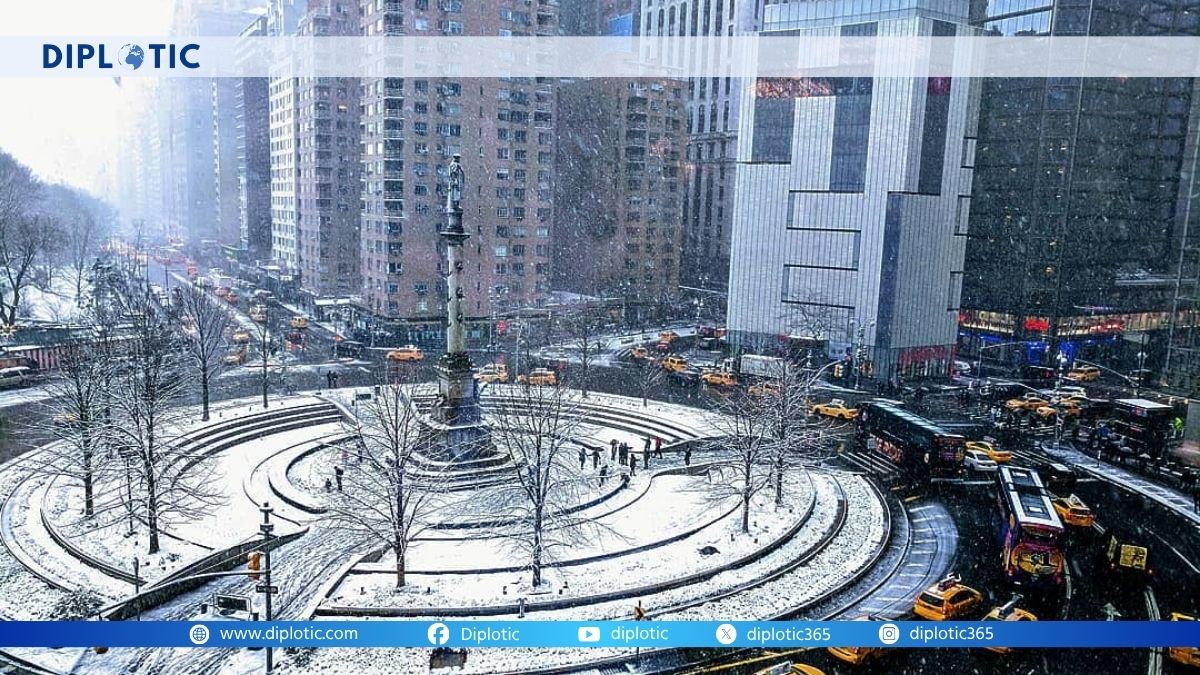
The first snow of the season always carries a particular magic, a silent announcement that shifts the city’s rhythm. On a Tuesday morning in November, New Yorkers awoke to this familiar yet sudden transformation. Flurries, delicate and fleeting, danced across the skylines of Queens and Brooklyn, dusting parked cars and coating the untreated metal of bridges with a whisper-thin layer of white. The morning commute gained a new element of caution, with slick spots appearing on sidewalks and roads as temperatures hovered just at freezing. This initial wintry kiss, following a freeze warning that spanned parts of three states, was brief, tapering off by late morning while leaving behind a persistent, cloud-heavy sky and a biting west wind. Yet, beyond the immediate disruptions and the seasonal novelty, this early snowfall invites a deeper investigation. Is it merely a typical November occurrence, or is it a data point in the larger, more complex narrative of a city—and a planet—grappling with a changing climate? The arrival of winter’s first call card is more than a weather event; it is a portal into understanding the intricate and often contradictory forces shaping our environment.
Is an Early Snowfall a Sign of a Harsh Winter to Come?
For many residents who glanced out their windows at the swirling flakes, the immediate question was one of precedent and prediction. Does a November snow signal the arrival of a long and severe winter? The instinct to look for these patterns is deeply human, a way to find order in the atmospheric chaos. Historically, New York City’s first measurable snow—defined as at least 0.1 inches—typically arrives in mid-December. An event in early November, while not unprecedented, sits on the earlier side of the norm. This particular system was driven by a pocket of unseasonably cold air plunging south from Canada, clashing with the residual moisture in the region. This is a classic setup for early season snow, but it is not, by itself, a reliable prophet. Meteorologists caution against using a single weather event to forecast an entire season. Weather is the day-to-day expression of the atmosphere’s mood, while climate is the long-term personality of a region. A cold, snowy day in a warming world is not a contradiction; it is part of the increasingly volatile variability that characterizes that world. The FOX 5 NY winter outlook mentioned in the source material, which suggests more frequent snow chances than the previous season, hinges on larger-scale patterns, such as the position of the jet stream and potential influences from El Niño or La Niña in the Pacific. These are the major drivers, not a single morning of flurries. The true significance of this early snow may therefore lie not in what it forecasts for the months ahead, but in what it says about the increasing unpredictability of seasonal transitions themselves, where traditional timelines become less reliable.
The curiosity about a harsh winter following an early snow is rooted in folklore as much as in science. Many remember winters that started early and stayed fierce, creating a powerful anecdotal link. However, scientific analysis of historical data reveals a noisy and inconsistent correlation. Some of the city’s most memorable blizzards have occurred in months like January and February following mild Decembers. The more relevant angle of investigation, then, is not the snow itself, but the nature of the cold air that made it possible. The freeze warning issued for the tri-state area, with lows dipping into the upper 20s, is a sharp cold snap for November. These intense, though brief, plunges of polar air are a feature of a climate system where the Arctic is warming faster than the mid-latitudes. This temperature difference can weaken and wobble the jet stream, the river of air that normally confines the coldest air to the far north. As a result, these frigid air masses can spill much farther south than they might have in a more stable climate regime, creating windows of opportunity for snow even as the overall global temperature rises. So, the question shifts from whether this snow predicts a harsh winter to why the conditions for November snow are occurring at all, within the broader context of a warming planet where extreme cold events can paradoxically become more likely in specific regions for specific periods.
How Does a Modern Megacity Adapt to Sudden Winter Shocks?
The sight of the first snow is quickly followed by the practical reality of a city of over eight million people adapting in real-time. The brief coating on bridges, overpasses, and side streets, as noted in the initial reports, immediately introduces a element of risk. The city’s infrastructure is put to an initial, gentle test. How effectively can a system designed for summer heat and autumnal rains switch its operations to address icy patches? The response is a massive, coordinated effort involving the Department of Sanitation and its fleet of salt spreaders and plows. An early season event like this serves as a critical drill, revealing any potential gaps in preparedness before a major storm hits. It tests communication channels, the readiness of equipment, and the public’s awareness. For commuters, the shift is immediate. The simple act of walking becomes more calculated, a careful negotiation of potentially hidden black ice. Traffic slows, not necessarily from accumulation, but from the collective caution that snow inspires, leading to ripple effects of delays across the subway and bus networks.
The economic implications begin almost instantly, though subtly. The morning’s freeze warning explicitly mentioned the danger to “sensitive plants,” a direct concern for the city’s nurseries, landscapers, and residents with gardens. The agricultural regions in the wider Hudson Valley and New Jersey, which supply the city’s farmers’ markets, also face threats from such an early hard freeze, which can damage late-season crops and affect yields. On a street level, the city’s social dynamics shift. For the unhoused population, a sudden drop into sub-freezing temperatures is a life-threatening emergency, triggering the city’s cold weather protocols and sending outreach teams to offer shelter. Conversely, for certain businesses, the first snow can provide a small, psychological boost. Coffee shops see a rush, hardware stores might sell out of ice melt, and online retailers see spikes in orders for winter coats and boots. This micro-economy of early winter is a direct result of the weather’s prompting. The city does not simply experience weather; it interacts with it in a continuous cycle of cause and effect. The flurries that seem so picturesque from a warm apartment window represent a complex logistical puzzle that must be solved simultaneously across hundreds of square miles, demonstrating the constant, and often invisible, work required to keep a modern metropolis functioning in the face of natural forces.
What Does the Science Say About Snowfall in a Warming Climate?
The most profound questions raised by this early snowfall extend beyond the five boroughs to global climate trends. At first glance, snow in a warming world seems like a paradox. How can cold-weather phenomena persist if the planet is getting hotter? The relationship, however, is not straightforward but deeply nuanced. A warmer atmosphere holds more moisture; for every degree Fahrenheit of increase, the air’s capacity to hold water vapor rises by about four percent. This means that when the temperature does drop below freezing, the storms that form can potentially produce more intense snowfall. The key is that the cold air must still be present, and as discussed, the disrupted jet stream can still deliver these cold spells. So, the character of winter is changing. The trend is not necessarily toward fewer snow events overall, but perhaps toward more variable and extreme ones—longer dry spells interrupted by major, intense nor’easters that dump historic amounts of snow in a short period. The FOX 5 NY winter outlook’s suggestion of “more frequent snow chances than last season” fits into this pattern of increased variability, where seasonal totals can swing wildly from one year to the next.
This scientific perspective requires looking at long-term data rather than a single season. While it is difficult to attribute any single snow flurry to climate change, the statistical trends in winter weather are revealing. Research indicates that the winter season is warming faster than any other season in the northeastern United States. The number of very cold days is decreasing, and the snow season is shortening, with the first snow arriving later and the last snow occurring earlier in the spring on a multi-decadal average. This makes an early November snow event, like the one just witnessed, more of an outlier within the long-term trend. The bigger picture is one of overall warming and less reliable cold. This creates a precarious balance. The same ocean that warms the city’s winters also fuels the storms that, when they collide with a passing cold air mass, can unleash unprecedented snowfall. The future of winter in New York may not be a simple story of snow disappearing, but a more complex and challenging narrative of whiplash—periods of unseasonable mildness suddenly broken by ferocious, record-breaking storms. The quiet flurries of a November morning are thus a piece in this much larger and more consequential puzzle, a reminder that the signals of a changing climate are not always found in heat alone, but also in the altered behavior of the cold.
Conclusion: The Silent Message in the Season’s First Flakes
The first snow of the year is always transient. The flurries that fell on New York City melted away, the clouds broke, and life continued with only the memory of the morning’s novelty and the lingering chill in the wind. Yet, its passage leaves behind more than just damp pavement. It serves as an annual reminder of the immense power of the natural world to command the attention of one of humanity’s largest urban centers. This event, minor in its meteorological impact, opens a window into the critical discussions of our time: our desire to predict the future, our capacity to adapt our complex societies to environmental shocks, and the urgent need to understand the subtle yet powerful ways in which human activity is reshaping the very rhythms of the seasons. The story of winter is being rewritten, not with a single dramatic event, but with countless small data points like a quiet Tuesday morning in November. As we look ahead to the rest of the season, the question is not just about inches of accumulation, but about how we will learn to read the complex and increasingly urgent messages carried on the winter wind.




